
A short hiss right after a flush is normal. It’s the fill valve refilling the tank, and it should stop within a minute or so once the water reaches its shutoff level. The problem starts when the sound doesn’t stop, when it returns a few minutes later with no one near the toilet, or when it has turned from a soft rush into a thin whistle. Each of those points to a slightly different fault, and most can be sorted out with a flashlight, a bit of food coloring, and a screwdriver.
What a Normal Refill Sounds Like
After a flush, the flapper drops and the fill valve opens. Water enters the tank through the valve and also sends a small stream down the refill tube into the overflow pipe to top off the bowl. That produces a steady hiss or rushing sound for roughly 30 to 60 seconds, depending on the valve and the household water pressure.
Normal behavior looks like this:
- The sound begins when the flush ends.
- It runs for up to about a minute.
- It stops completely, with a soft click or just silence.
- It doesn’t restart until the next flush.
Anything outside that pattern is worth a look. Removing the tank lid and watching a refill cycle usually narrows the cause quickly.
Hissing That Never Stops: Check the Water Level First
With the lid off, look at where the water sits relative to the overflow tube, the open vertical pipe in the middle of the tank. Many tanks have a fill line molded into the porcelain, and many fill valves have a mark on the body. If neither is present, the water level is typically set about an inch below the top of the overflow tube. Check the manufacturer’s instructions for your model.
Water at or above the top of the overflow tube. Water is spilling into the pipe and going straight down the drain, so the fill valve never gets the signal to shut off. The float, which is either a ball on an arm or a cup that slides up the valve, is set too high, or it’s stuck or damaged.
Water at the right level, but the hiss continues. The valve isn’t sealing even though the float has done its job. This points to debris or a worn internal seal. It’s common in older valves and in homes with sediment or hard water.
Adjusting the float
Float designs vary, so match the fix to what’s in the tank:
- Cup-style float (rides up and down the valve shaft): pinch the spring clip on the pull rod and slide the cup down, or turn the adjustment screw on top of the valve.
- Ball-and-arm float (older style): bend the arm gently downward or turn the adjustment screw where the arm meets the valve.
- Float on a vertical rod: squeeze the clip and slide the float lower.
Lower it a little at a time, flush, and watch the final water level. If the hiss stops and the tank still fills enough to flush well, that was the problem. If the float is waterlogged, cracked, or rubbing against the tank wall, replace the fill valve instead of adjusting it.
Hissing That Starts on Its Own: The Slow Leak
A toilet that hisses for 10 or 20 seconds every so often with no flush is usually refilling because the tank is losing water into the bowl. Some people call this a phantom flush. The usual cause is a flapper that no longer seals tightly. Chlorine in municipal water, drop-in cleaning tablets, and age all make flappers stiff, warped, or slimy. When the tank level falls just enough, the fill valve opens briefly to top it up.
The dye test
- Remove the lid and don’t flush.
- Add several drops of food coloring or a dye tablet to the tank water, enough to make it clearly colored.
- Wait 15 to 20 minutes. Don’t use the toilet in the meantime.
- Check the bowl. If color has appeared there, water is leaking past the flapper.
Replacement flappers are inexpensive and sold at hardware stores. Take the old one with you, because sizes differ (2-inch and 3-inch are common) and some brands use specific shapes. Make sure the chain has a small amount of slack: too tight and it holds the flapper slightly open, too loose and it can get caught under the flapper.
The seat the flapper rests on can also be the culprit. Run a fingertip along the rim of the opening. Mineral buildup or a nick can stop a new flapper from sealing, and a light scrub with a non-scratch pad often fixes it.
Leaks like this can waste more water than most people expect. The EPA’s WaterSense program has cited figures as high as hundreds of gallons per day for serious toilet leaks, though a slow flapper leak is usually far smaller. The point is that a quiet leak can show up on the water bill before anyone notices it.
A Thin Whistle or High-Pitched Squeal
A whistle differs from the broad hiss of a refill. It usually comes from water squeezing through a restricted opening, which can happen in a few places:
- A partly closed shutoff valve. The small valve on the wall or floor behind the toilet should be turned fully open. A valve that’s only halfway open can whistle, and so can one with a worn washer inside. If it’s stiff, don’t force it, because old stop valves can leak or break when operated roughly.
- A kinked or aging supply line. A line with a sharp bend or crushed section makes noise. Braided stainless steel lines are easy to replace and are a better choice than old plastic or vinyl ones.
- A fill valve with scale or debris inside. Narrowed passages change the pitch of the sound.
- High water pressure. Residential pressure is commonly in the range of 40 to 60 psi, and plumbing codes generally cap it at 80 psi. Pressure above that can cause noisy fixtures and shorten the life of valves and supply lines. A screw-on gauge from a hardware store, attached to an outdoor spigot or the washing machine connection, will tell you where you stand. If pressure is above 80 psi, the fix is a pressure-reducing valve at the main, and that’s a job for a licensed plumber.
If other fixtures in the house are loud or whistle as well, suspect the pressure or the main shutoff before you start replacing toilet parts.
Cleaning the Fill Valve Before You Replace It
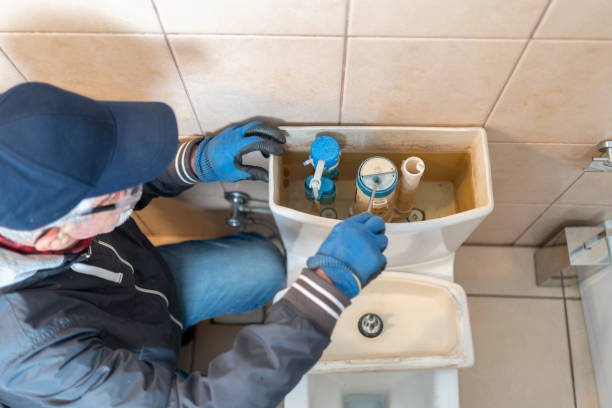
If the water level is right and the flapper passes the dye test, dirt in the fill valve is the next suspect. It’s more likely after plumbing work, a water main repair, or a boil-water event stirred up sediment. The steps vary by brand, but the common one is a cap that twists off.
- Turn off the water at the shutoff valve and flush to empty most of the tank.
- Twist the cap on top of the fill valve counterclockwise about a quarter turn and lift it off. On some models you’ll need to press a tab or release a clip first.
- Hold an inverted cup over the open valve body to block the spray, then turn the water on briefly. The burst of water flushes grit out of the valve.
- Turn the water off, wipe the seal on the cap, refit it, and reopen the water slowly.
Check the manufacturer’s instructions for your specific valve before taking it apart. If the rubber diaphragm or seal inside is cracked, hardened, or deformed, the whole valve is a better purchase than a repair.
When to Replace the Fill Valve
Replace it when:
- the float won’t adjust properly,
- the hiss continues with a correct water level and a clean valve,
- the housing is cracked, or
- the valve is old and has been repaired before.
A universal replacement fill valve is among the cheaper plumbing parts, and the job typically takes under an hour even for a beginner. The general sequence:
- Shut off the water, flush, and sponge out the remaining water from the tank bottom.
- Disconnect the supply line from the underside of the tank, and place a towel or small bucket underneath.
- Loosen the large plastic locknut holding the old valve in place and lift the valve out.
- Adjust the new valve’s height according to the instructions. The critical-level mark on the valve generally has to sit above the top of the overflow tube so the valve can’t siphon tank water back into the supply.
- Seat the valve, tighten the locknut by hand plus about a quarter turn with pliers if needed, and reconnect the supply line.
- Clip the small refill tube to the overflow pipe. Keep its end above the water line rather than pushing it down inside the pipe.
- Turn the water on slowly, check every connection for drips, and adjust the float.
Overtightening is the most frequent mistake. Plastic nuts against porcelain can crack a tank, and a cracked tank means replacing the toilet. Snug is enough, and a dry paper towel pressed around each connection will reveal a slow drip.
Other Hissing Sources Worth Ruling Out
Pressure-assist toilets. These have a sealed pressurized vessel inside the tank and a louder, more forceful flush. They also hiss more as the vessel refills, so some sound is expected. Persistent hissing may mean a problem with the pressure vessel or its cartridge, and repairs are best left to the manufacturer or a plumber.
Gurgling instead of hissing. Bubbling or gurgling noises from the bowl, sometimes with slow drains elsewhere, usually relate to venting or a partial drain blockage, not the fill valve. That’s a separate problem and not one to fix with tank parts.
Sound coming through the wall. If the hiss is loudest at the wall rather than at the tank, check the shutoff valve and supply line first. If it’s loudest elsewhere in the house, the toilet may just be the room where you noticed it.
When to Call a Plumber
Most hissing is a quick, cheap fix. Bring in a professional if:
- the shutoff valve is stuck, corroded, or leaks when you touch it,
- water pressure measures over 80 psi,
- the noise persists after a new fill valve and flapper,
- you find moisture around the base of the toilet or on the ceiling below, or
- you can’t shut off the water to the toilet at all.
Key Takeaways
Watch one refill cycle with the lid off and the cause often shows itself. Water spilling into the overflow tube means the float is too high or the valve is failing. A hiss that returns on its own means the flapper is probably leaking, and a dye test will confirm it. A thin whistle suggests a restricted shutoff valve or supply line, or high household pressure. Start with the float and flapper, which are the cheapest fixes, then move on to cleaning or replacing the fill valve. And keep drop-in bleach tablets out of the tank, since they speed up the wear on the very parts that cause this problem.
FAQ
Is it okay to leave a hissing toilet alone for a few days?
Usually, yes, as long as nothing is overflowing. A constant hiss means water is running, though, and that adds up on the bill. Closing the shutoff valve when no one needs the toilet is a reasonable stopgap.
Why does my toilet hiss only at night?
Household water pressure is often highest overnight, when demand drops. A fill valve that’s borderline or worn may only misbehave under those conditions. Checking pressure with a gauge will confirm it.
Can a hissing toilet damage anything?
The noise itself doesn’t, but the cause can. A leaking flapper wastes water, and a failing fill valve can eventually overfill the tank. Overfill can lead to leaks if the tank or connections are compromised.