
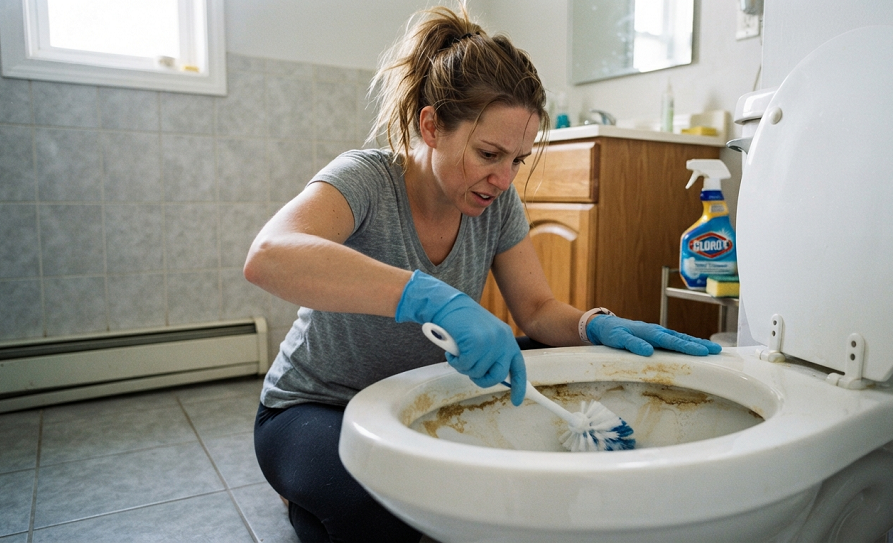
That orange-brown ring sitting at your toilet’s waterline isn’t going anywhere on its own. You can scrub it with a regular toilet brush every single day and it’ll just laugh at you. I know because I tried that exact routine in my first house for almost two months before I figured out what was actually happening under that bowl.
Hard water stains aren’t dirt. They’re mineral deposits — mostly calcium, iron, and magnesium — that build up layer by layer every time your toilet flushes or refills. Regular cleaners barely touch them because you’re not fighting grime, you’re fighting rock. Literally. Given enough time, those deposits calcify into something close to limescale, and generic blue toilet gel just slides right off.
The good news: you don’t need a plumber, and you don’t need to replace the toilet (a mistake I’ve seen more than one neighbor make out of pure frustration). You need the right acid, the right tools, and about 30 minutes of your Saturday.
What Causes Hard Water Stains in Toilet Bowls
Before you grab a scrub brush, it helps to know what you’re up against. Hard water contains a high mineral content, mostly calcium and magnesium carbonate, plus iron if your water source runs through older pipes or well systems. Every time water sits in your bowl, a tiny bit evaporates and leaves minerals behind. Do that a few thousand times and you’ve got a stain that’s basically welded itself to the porcelain.
Iron is the troublemaker behind those rusty orange-brown rings. Calcium and magnesium tend to show up as a chalky white or gray crust, usually right at the waterline or under the rim where you can’t see it without a flashlight. If your area has a rating of “hard” or “very hard” water — you can check this on your local water utility’s annual report — you’re basically guaranteed to deal with this at some point.
I learned this the hard way in a rental I had years back. The water was so hard you could practically feel it coating your teeth after a glass. That toilet bowl went from white to rust-colored in under four months, no matter how often I cleaned it. Once I understood it was mineral buildup and not just “gross bathroom stuff,” the whole approach to cleaning it changed.
One more thing worth mentioning: stains under the rim are usually worse than what you see on the surface, because that’s where mineral-laden water sits stagnant between flushes. If you’ve only ever cleaned the visible ring, that’s probably why the smell or discoloration keeps creeping back.
Household Products That Actually Dissolve Hard Water Stains
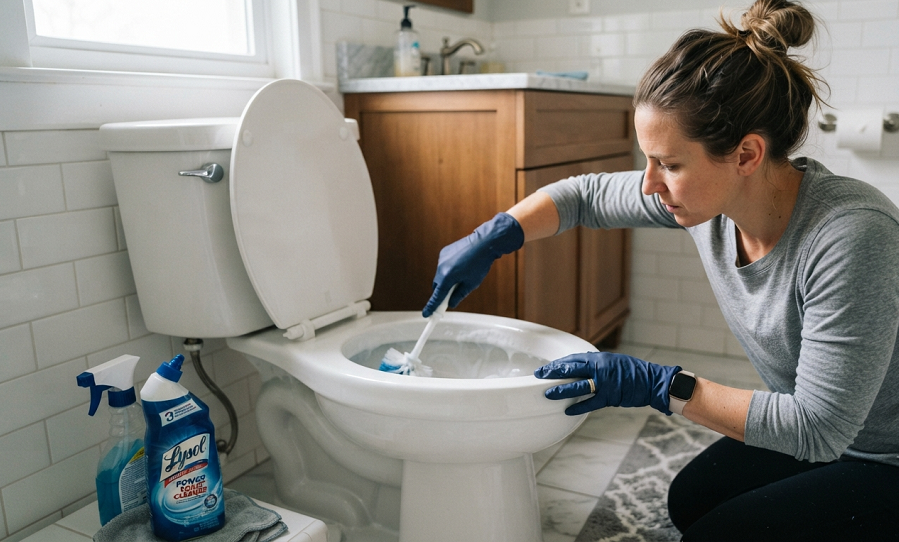
You don’t need a cabinet full of specialty cleaners. A handful of items you probably already own will handle 90% of hard water stains.
White vinegar. This is my go-to, and I’ll die on this hill: distilled white vinegar is more effective than half the “toilet bowl ring remover” products sold at the store, and it costs about two dollars a jug. The acetic acid breaks down mineral deposits without scratching porcelain.
Baking soda. On its own, baking soda is a mild abrasive. Paired with vinegar, it creates a fizzing reaction that helps lift stains out of porous or pitted porcelain. Not magic, just basic chemistry doing the heavy lifting.
Borax. An underrated pick. Borax is more alkaline than vinegar, and it works well on stains that have started to harden into a crust. I keep a box under the sink specifically for this.
Citric acid or lemon juice. If you don’t want the vinegar smell lingering, citric acid crystals (sold in the canning aisle) do the same job. Straight lemon juice works in a pinch, though it’s weaker and takes longer.
Pumice stone. This is the one people are scared to try, and it’s the one that actually finishes the job on old, stubborn rings. A wet pumice stone, used gently, will not scratch porcelain — I promise. It scratches glass shower doors and fiberglass tubs, so keep it away from those, but porcelain toilets can handle it just fine.
Step-by-Step: How to Remove Hard Water Stains From a Toilet Bowl
Here’s the method I use on every rust-ringed, chalky, neglected toilet I get my hands on. It takes about 30 minutes, most of which is just waiting.
- Shut off the water and drain the bowl. Turn the shutoff valve behind the toilet, then flush to empty most of the water. Use an old cup or a wet/dry vac to remove what’s left so the stain is fully exposed, not sitting under an inch of water.
- Coat the stain with vinegar. Pour 2 cups of white vinegar directly onto the stained areas, focusing on the waterline ring and under the rim. For stains under the rim, soak paper towels in vinegar and press them against the porcelain so the acid stays in contact instead of dripping away.
- Let it sit for at least 30 minutes. This is the step everyone skips, and it’s the reason their “vinegar didn’t work.” The acid needs time to break the mineral bonds. For older, thicker stains, I’ll let it sit for a full hour or even overnight.
- Add baking soda and scrub. Sprinkle a generous layer of baking soda over the vinegar-soaked areas. It’ll fizz — that’s normal and it’s doing its job. Use a stiff toilet brush and scrub in circular motions.
- Bring in the pumice stone for stubborn spots. Wet the stone first, always. Rub gently over any remaining discoloration. You’ll feel the stain lifting almost immediately; it’s oddly satisfying. Never use a pumice stone dry, and never use it on a colored or glazed fixture you’re not sure about.
- Flush and inspect. Turn the water back on, flush, and take a look. If a shadow of the stain remains, repeat steps 2 through 5. Second rounds are common on stains that have been there for years.
- Finish with a borax soak for extra insurance. Once the visible stain is gone, sprinkle a half cup of borax into the bowl and let it sit overnight before your last flush. This helps break down any mineral residue you can’t see yet, especially under the rim.
Preventing Hard Water Stains From Coming Back
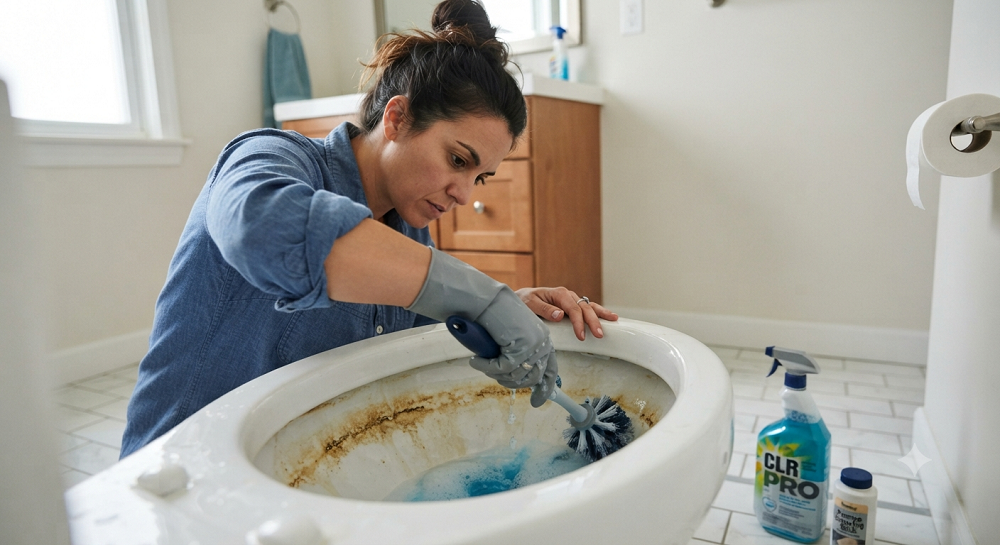
Removing the stain once is the easy part. Keeping it from coming back is where most people give up and just live with the ring.
Clean weekly, not monthly. I know that sounds excessive, but a 60-second vinegar wipe-down once a week prevents mineral buildup from ever hardening in the first place. Waiting until you can see the stain means you’re already behind.
Consider a water softener if your water is genuinely hard. This is the actual fix, not a workaround. A whole-house softener reduces the calcium and magnesium content before it ever reaches your toilet, your faucets, or your dishwasher. It’s a bigger investment, but if you’re re-cleaning every fixture in your house every few weeks, it pays for itself.
Drop a vinegar-soaked cloth on the waterline overnight, once a month. This is my low-effort maintenance trick. It keeps deposits from ever setting up hard enough to need the pumice stone.
Skip the bleach tablets that sit in your tank. I’ve found that these are a total waste of money, even though they look like the easy fix on the shelf. They can actually degrade the rubber components in your tank over time, and they do very little against mineral staining specifically. Save your cash.
Real Talk: What Doesn’t Work and What Can Go Wrong
Let’s talk about the stuff that wastes your time or your money, because there’s a lot of bad advice floating around out there.
Cola does not remove hard water stains, no matter how many times you see it recommended online. I tried it once out of curiosity, left a bottle sitting in a bowl overnight, and woke up to a sticky mess with the stain still fully intact. The mild phosphoric acid in soda just isn’t strong enough for mineral deposits that have had months to set.
Abrasive scouring pads and steel wool are a hard no. They will scratch porcelain, and once porcelain is scratched, it becomes rougher, which means stains grip onto it even faster than before. You’ll trade one problem for a permanent one.
Mixing bleach and vinegar is dangerous, not just ineffective. That combination releases chlorine gas, which is genuinely harmful to breathe in an enclosed bathroom. Never combine the two, and always rinse one product away completely before applying the other.
Some stains simply won’t come out, and that’s worth knowing before you spend three weekends attacking the same ring. If mineral deposits have been building for years, particularly on an older toilet with a rougher or already-etched surface, you may be looking at permanent discoloration or even mineral deposits that have started to pit the porcelain itself. At that point, no amount of vinegar or pumice is going to bring it back to white, and replacing the toilet is genuinely the more practical move.
And a quick side note: don’t bother with “as seen on TV” stain erasers that promise a one-wipe fix. I’ve tested three different brands over the years, and every one of them performed worse than a two-dollar jug of vinegar and a little patience.
Final Thoughts
Hard water stains feel permanent, but they’re just minerals that haven’t met the right acid yet. Vinegar, baking soda, and a little patience will handle almost every stain you’ll come across, and a pumice stone finishes off the ones that refuse to budge. The real secret isn’t a magic product — it’s staying ahead of the buildup with regular cleaning instead of waiting until the ring is impossible to ignore.
Have you battled a hard water ring that just wouldn’t quit? Drop your story in the comments below, and let me know what finally worked for you.