
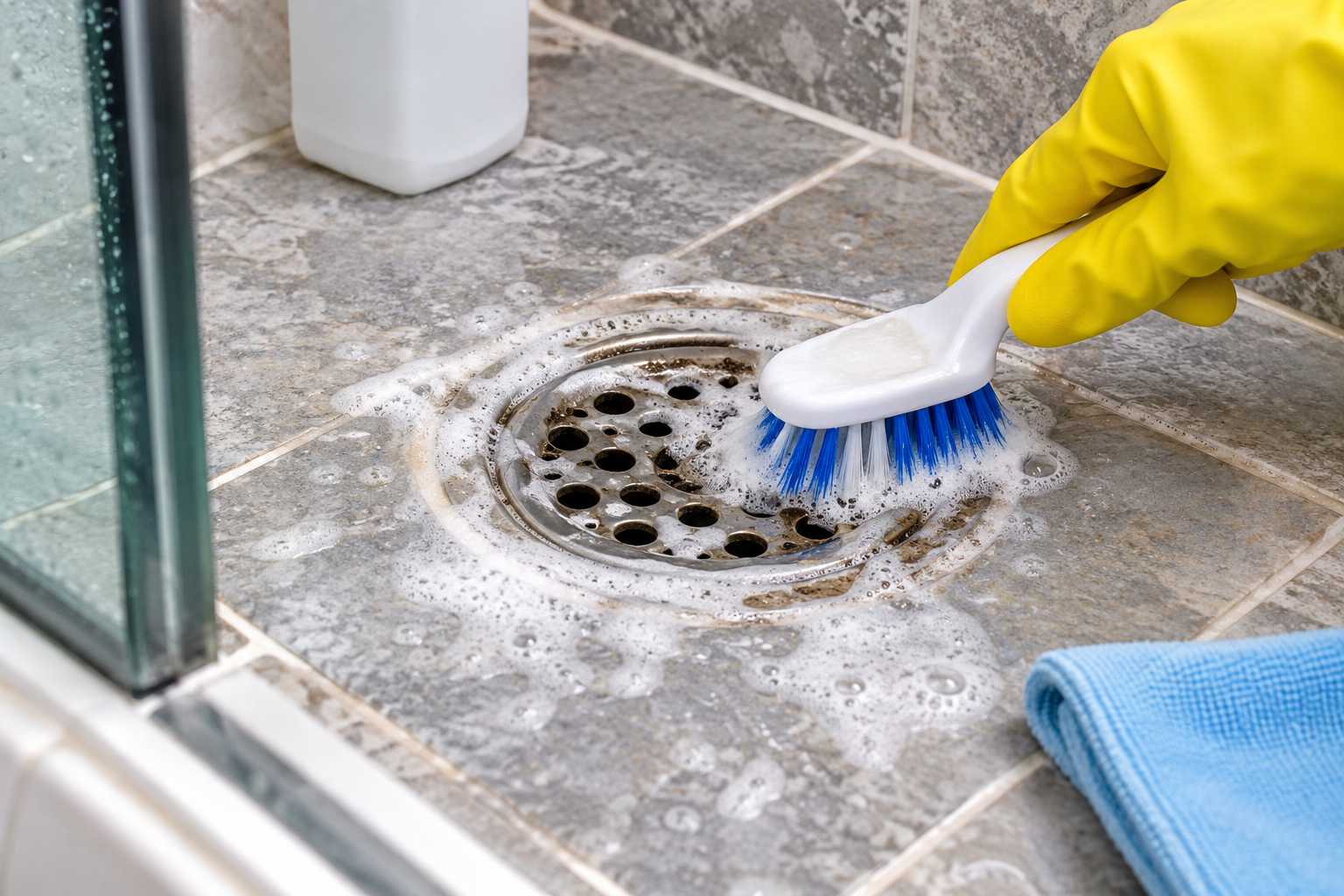
A rotten egg smell coming out of a shower drain usually means hydrogen sulfide gas is getting into the bathroom. That gas comes from one of two places: bacteria feeding on buildup inside the drain, or sewer gas escaping past a trap that has stopped doing its job. The two causes smell almost the same, but they need different fixes, and cleaning a drain that was never dirty is a good way to waste an afternoon.
This article covers how to tell the causes apart, what to do about each, and when the smell is a signal to call a plumber.
What Actually Produces the Smell
Hydrogen sulfide is the gas behind the classic sulfur smell. People can detect it at very low concentrations, which is why a small problem can seem much worse than it is.
In a shower drain, it typically forms in one of three ways.
- Bacterial buildup in the pipe. Hair, soap scum, skin cells and shampoo residue collect on the walls of the drain and the trap beneath it. Bacteria that thrive without oxygen break this material down, and some of them release hydrogen sulfide as a byproduct. This is the most common cause of a smell that appears only at one shower.
- Sewer gas coming through a dry or faulty trap. Every drain has a curved section of pipe, the P-trap, that holds a small plug of water. That water seals the drain against gases from the sewer line. If the seal evaporates or is siphoned away, the gas comes straight up.
- Something in the water itself. If the smell comes from the water rather than the drain, the cause is different, and it is covered below.
A Quick Way to Work Out Which Cause You Have
Before buying anything, spend ten minutes narrowing it down.
Check whether the smell is only at the shower. If the other drains in the house smell fine, a local buildup or a dry trap is far more likely than a main sewer problem. If several drains smell at once, particularly on the lowest floor, the issue may be further down the line.
Think about when the shower was last used. A smell that appears after the room has been unused for a few weeks points to a dry trap. Guest bathrooms and basement showers are common culprits, because the water seal can evaporate over weeks or months.
Run the shower for a minute. If the smell fades quickly after fresh water goes down, the trap was probably dry and is now refilled. If it gets stronger, you are likely stirring up buildup.
Smell the water, not the drain. Fill a clean glass from the shower or a nearby tap, carry it to another room, and smell it. If the water itself smells of sulfur, the source is the supply and not the drain. Try the cold and hot taps separately. A smell only from hot water often relates to the water heater, which is a separate fix (see below).
Fixing a Dry Trap
If the shower has gone unused, the simplest fix is to run water down the drain for a minute or so to refill the trap. That is often all it takes.
For a drain that gets used rarely, the seal will keep evaporating. Running the water for a short time every week or two keeps it topped up. Some people pour a small amount of mineral oil or cooking oil into an infrequently used drain after refilling it, since a thin film on the surface slows evaporation. Check this against your plumber’s or local code’s advice before doing it routinely, as opinions on it vary.
If the trap is full of water and the smell persists, the seal itself may be fine and the problem lies elsewhere.
Cleaning Out Buildup
For a smell that comes from organic buildup, the work is mostly physical removal. The aim is to get the film off the pipe walls, not to mask the odor.
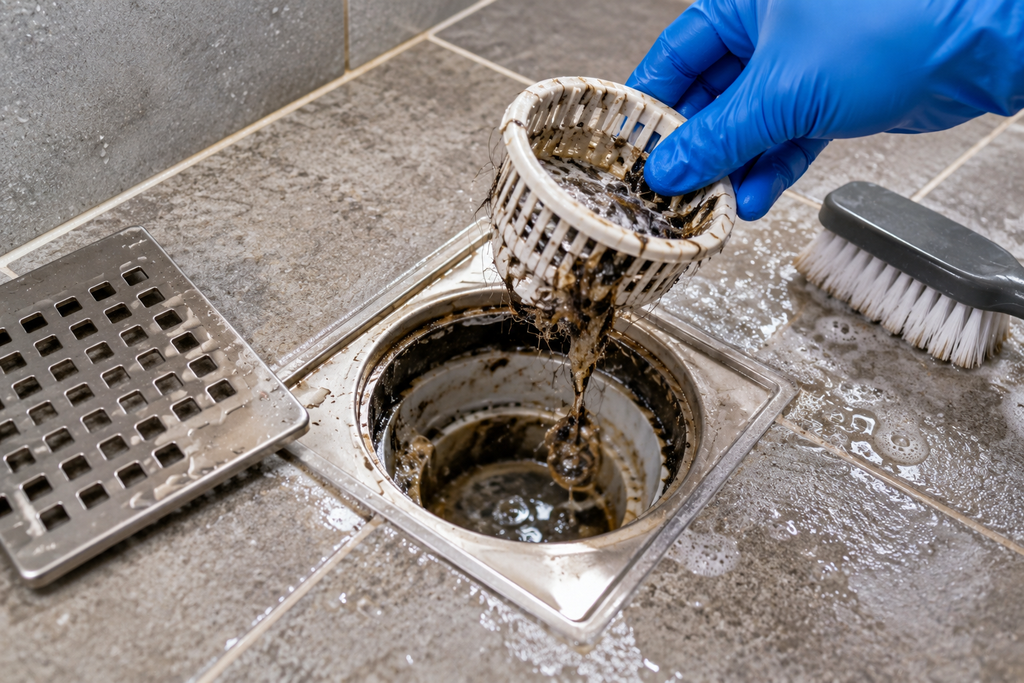
Remove the drain cover and pull out what you can. Many shower drains have a cover held by a screw or a simple friction fit. Hair that collects just beneath it is often the main source. A disposable pair of gloves and a plastic drain tool with barbs, the kind sold as a hair snake, will pull out a surprising amount. Do this first, before any cleaner goes down.
Scrub the visible surfaces. Use an old brush and warm, soapy water on the underside of the cover and the top few centimeters of the drain. Residue here is easy to reach and often smells the worst.
Flush with hot water. Very hot tap water helps loosen soap residue. Avoid pouring boiling water down pipes that are PVC, since it can soften the joints. Hot tap water is enough.
Use an enzymatic or bacterial drain cleaner if buildup is the problem. These products work by breaking down organic material gradually and are generally gentler on pipes than caustic chemicals. They tend to work best when left overnight, so use the shower sparingly during that time. Follow the instructions on the label, because the contact time and dosing differ between brands.
Baking soda and vinegar is a popular home method. It will produce fizzing and may help loosen light residue, but it rarely clears a serious buildup on its own. Treat it as a light refresh rather than a fix for a persistent smell.
Chemicals to Be Careful With
Drain cleaning is one of the easier places to cause a chemical accident. Never mix cleaning products, and in particular:
- Do not combine bleach with ammonia-based products or with acidic cleaners such as vinegar. Bleach mixed with ammonia or acids can release toxic gases.
- Do not pour a second drain cleaner on top of one that did not work. Leftover product from the first can react with the second.
- Ventilate the bathroom by running the exhaust fan and opening a window, and wear gloves and eye protection.
- Keep children and pets out of the room while using any chemical cleaner, and follow the label on contact times and rinsing.
Caustic or acid-based drain openers are also hard on older pipes, and they are dangerous if the water does not drain and later splashes back. If a store-bought product has not worked, stop and consider mechanical clearing or a plumber instead of adding something stronger.
When the Smell Comes From the Plumbing Layout
Sometimes the drain is clean and the trap is full, yet the smell comes back. That points to a venting or installation problem.
Plumbing drains rely on vent pipes to let air in behind the water as it flows out. A blocked or missing vent can let the water seal get pulled out of the trap, which brings sewer gas into the room. A gurgling sound from the shower drain or nearby fixtures, slow draining across several fixtures, and smells that come and go with other water use are signs worth noting.
A trap that is poorly installed, or a shower that was added during a renovation without a proper vent, can cause repeat problems. These are not things to fix with a cleaner. Vent work and drain alterations typically need a licensed plumber, and local building rules often apply.
If the Hot Water Is the Real Source
If the smell is strongest when the hot tap runs, the water heater is a likely suspect. Many tank-type water heaters contain a magnesium anode rod, which helps protect the tank from corrosion. In some water supplies, sulfate-reducing bacteria can interact with the rod and produce hydrogen sulfide. The result is a sulfur smell from hot water only.
The usual fixes involve flushing the tank, replacing the anode rod with a different type, or disinfecting the tank. Water heaters involve hot water, gas or electricity, so shut off the power or gas and consult the manufacturer’s instructions, or hire a professional. Do not drain or open a water heater without turning off its energy supply first.
If the smell is in both hot and cold water, the cause may be in the supply itself, which is common with well water. A water test from a certified laboratory is the reliable way to confirm what is in it. Treatment options depend on the results.
Signs You Should Call a Plumber
Most shower drain smells can be handled at home. These situations are worth a professional visit:
- The smell returns within days of cleaning and refilling the trap.
- More than one drain is slow, gurgling or smelling.
- You see sewage backing up in a shower, tub or floor drain.
- The smell is strong enough to cause headaches, nausea or irritation. Hydrogen sulfide at high concentrations is hazardous, so ventilate the space and get help rather than trying to push through it.
- You suspect a vent or main line problem.
If you ever smell gas that resembles natural gas (a different, more distinct odor added to the supply), leave the house and contact your gas provider. Do not confuse the two.
Keeping It From Coming Back
A few habits make a difference:
- Use a hair catcher over the drain. It prevents most of the material that feeds bacteria.
- Rinse the drain with hot water after showers occasionally to carry residue along.
- Run water in unused showers every week or two.
- Clean the drain cover and visible area every month or so.
- Use an enzymatic cleaner as occasional maintenance, not only after a smell begins.
Final Thoughts
Start with the cheapest checks: refill the trap, pull out the hair, scrub what you can reach, and smell the water itself. That sequence resolves most cases and tells you quickly if the cause lies somewhere else. If the smell persists after you have cleaned the drain and refilled the trap, it is usually a venting or sewer-line issue, and a plumber is the right next step.