
You’re standing in your bathroom holding a tape measure, three browser tabs open, and a Pinterest board that’s basically a fantasy at this point. You want a tub that looks expensive but doesn’t cost a second mortgage. You want something you can actually install without hiring a crew of six. And you definitely don’t want to end up with a tub that’s too narrow, too shallow, or too heavy for your floor joists to forgive.
I get it. Picking a tub feels small until you’re the one carrying 100 pounds of acrylic up a staircase, swearing at a doorway that’s two inches too narrow.
Drop-in tubs are my favorite category for a reason. They sit inside a custom-built deck or platform instead of an enclosed apron, which means you control the look completely. Tile it, wood it, stone it, whatever your heart wants. After a decade of remodeling bathrooms for myself, my sister, and basically anyone who asked nicely, here are the seven drop-in tub ideas I keep coming back to, plus the Amazon best-sellers that actually match the hype.
What Makes a Drop-In Tub Different From an Alcove or Freestanding Tub
Quick clarification before we get into picks, because this trips people up constantly.
A drop-in tub has no finished sides of its own. It’s designed to be “dropped into” a frame you build, usually out of plywood and cement board, then finished with tile or stone. An alcove tub already has a finished apron on the front and sits between three walls. A freestanding tub stands on its own with finished sides all the way around, like the clawfoot style your grandma probably had.
This matters because if you buy a drop-in tub thinking it’s plug-and-play, you’re in for a surprise. You need a deck. That deck needs framing, support, and a way to access the plumbing underneath. It’s more work upfront but way more flexible on style.
Now let’s get to the good stuff.
1. The Classic Alcove-Style Drop-In Soaker for Small Bathrooms
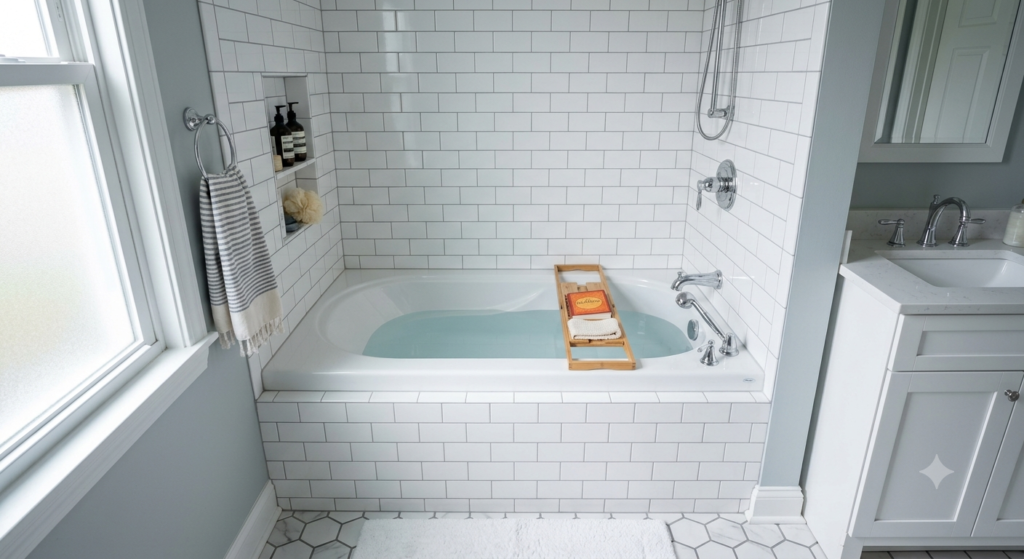
If you’re renovating a small bathroom and want a tub that won’t eat your budget, start here. A 60-inch acrylic drop-in soaker, like the popular Kingston Brass contemporary models on Amazon, is the workhorse of the category. It’s reinforced with fiberglass, it comes in left or right drain configurations, and it slides into almost any standard three-wall bathroom layout.
I put one of these in my first house, in a bathroom so small I could touch both walls standing in the middle of it. The trick was building a low deck around it with the same subway tile as the shower surround, so the whole room felt like one connected design instead of a tub plopped into a corner. That little design choice cost me an extra Saturday and maybe forty bucks in tile, and it made the bathroom look twice as expensive as it actually was.
These tubs run anywhere from $250 to $450 depending on size and finish, which is a steal compared to custom stone options. The acrylic surface is also easy to clean, which matters more than people think until they’re the one scrubbing it.
My honest opinion: skip the cheapest no-name version of this style. I’ve found that the bargain-bin acrylic tubs flex under your weight and develop a hollow, plasticky sound that you will hear every single time you step in. Spend the extra fifty dollars on a name brand with proper fiberglass backing. Your future self will thank you.
2. The Deep-Soak Drop-In Tub for People Who Actually Want to Soak
Standard tubs are shallow. I don’t know who decided 14 inches of water counts as a “bath,” but I disagree with them on a personal level.
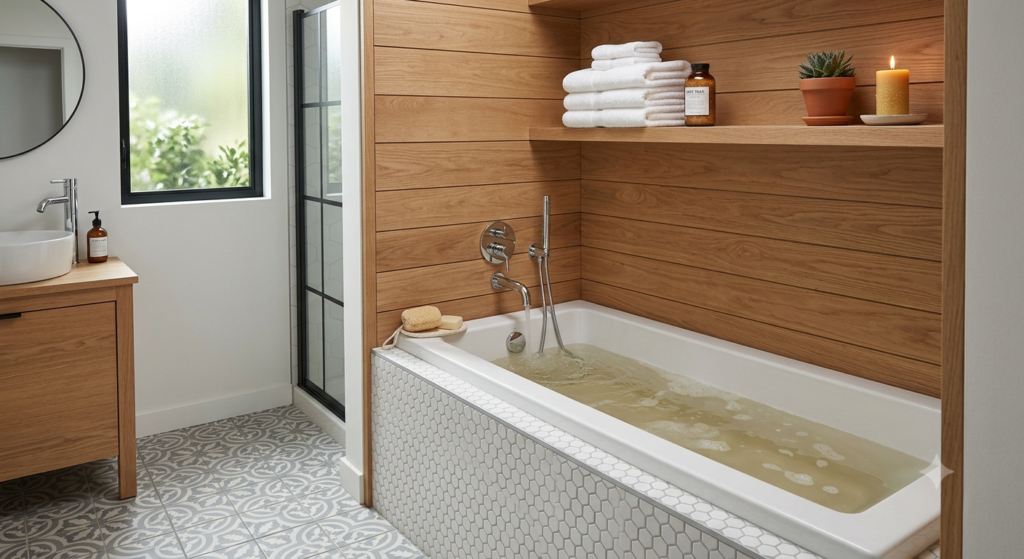
A deep-soaking drop-in tub, like the American Standard Evolution deep soak model, gives you closer to 20 inches of water depth. That’s the difference between a quick rinse and an actual soak where your shoulders are submerged and you can finally relax.
These tubs are usually 60 inches by 32 inches, which is a standard footprint, so they fit into most existing bathroom layouts without you needing to rebuild walls. The dual molded-in armrests on several of these models are a small touch that makes a real difference after a long day. I didn’t think armrests mattered until I had them, and now I notice their absence everywhere else.
The catch is weight. A deep-soak tub holds significantly more water than a standard model, and that water weighs a lot. We’re talking 400 to 500 pounds once it’s full with a person inside. If you’re installing this on an upper floor, talk to someone about your floor joists before you fall in love with the design. I learned this lesson the hard way during a project where I almost didn’t double-check the subfloor span, and a contractor friend talked me out of a very expensive mistake.
If you have the structural support, this is hands-down my favorite category for anyone who actually uses their tub instead of just owning one for resale value.
3. The Corner Drop-In Tub for Awkward Bathroom Layouts
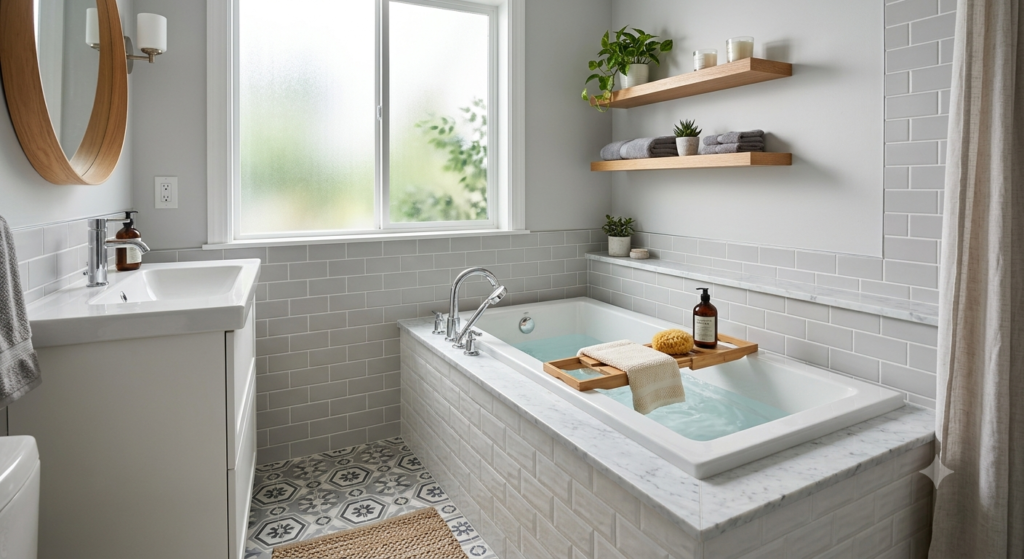
Every house has that one bathroom with a weird layout, an angled wall, or a dead corner that doesn’t fit anything. Corner drop-in tubs exist specifically for that problem.
Models like the ANZZI Petra or the Jacuzzi Signature corner soaker are built with a diagonal footprint that tucks into a 90-degree corner, freeing up the rest of the floor plan for a bigger vanity or a walk-in shower. These usually run 60 by 60 inches, which sounds large, but because the shape is triangular rather than rectangular, it often takes up less visual and physical space than you’d expect.
I redesigned a guest bathroom for my zucchini-obsessed neighbor a few summers back (yes, the same summer her garden tried to take over the entire ZIP code) and a corner drop-in was the only way to fit both a tub and a separate shower stall into her tiny footprint. It worked beautifully, and it became the selling point when she eventually listed the house.
Corner tubs do require a custom deck on two sides instead of one straight wall, so plan on slightly more framing and tile work. It’s worth it if your layout genuinely has nowhere else to put a standard rectangular tub.
4. The Whirlpool or Jetted Drop-In Tub for a Spa Feel
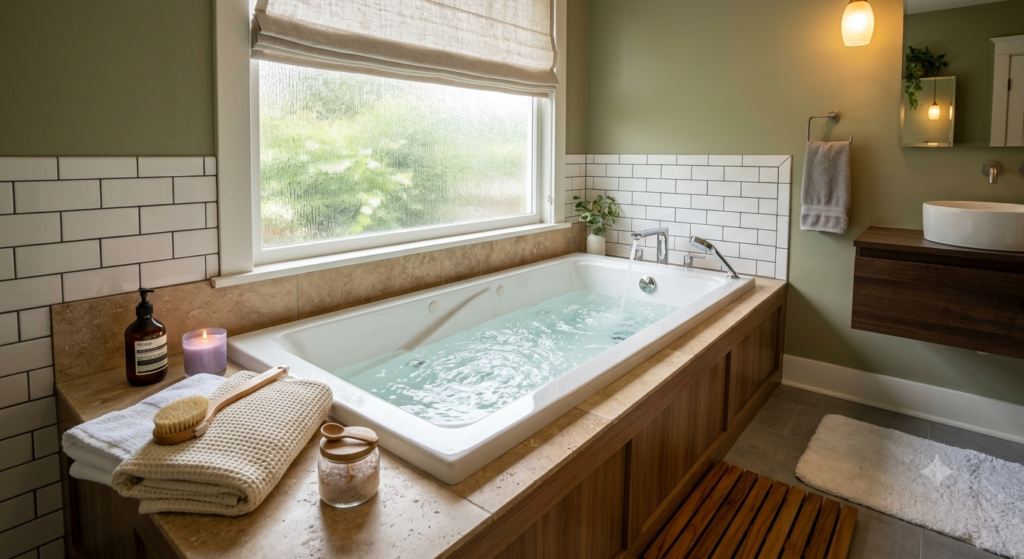
If you want your bathroom to feel like a hotel suite instead of a place you brush your teeth, a jetted drop-in tub is the move. Brands like Empava sell acrylic whirlpool tubs with anywhere from 8 to 11 adjustable jets, plus chromatherapy lighting in some models, all built into a standard drop-in footprint.
The hydromassage feature genuinely helps with sore muscles, and I say that as someone who threw out his back moving a cast iron tub down a flight of stairs (don’t ask, just know that I deeply regret every decision that day). A 20-minute soak with the jets running on my lower back saved me from a chiropractor visit more than once.
These tubs need a dedicated electrical circuit for the pump motor, which usually means an electrician needs to get involved unless you’re comfortable running GFCI-protected circuits yourself. Don’t skip this step or wing it. Water and electricity have a complicated relationship, and your bathroom is not the place to test that relationship.
Maintenance is the other consideration nobody mentions in the glossy product photos. Jetted tubs need periodic flushing with a cleaning solution to keep mold and mineral buildup out of the jet lines. If you’re not willing to do that every few months, this style will turn into a hassle instead of a luxury fast.
5. The Skirted Drop-In Tub for an Easy Builder-Grade Upgrade
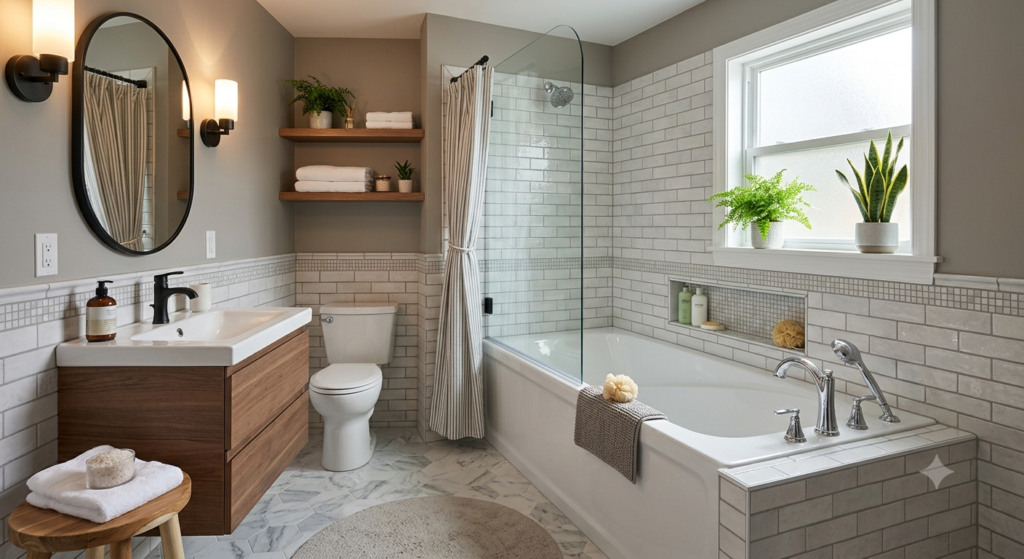
Sometimes you don’t want a full custom tile deck. You just want to swap an old, stained tub for something that looks better without redoing your entire bathroom structure. That’s where skirted drop-in tubs come in.
Models like the PROFLO Lansford skirted soaking tub have a finished front panel already built in, so you don’t need to construct a full deck. You’re essentially getting the easy installation of an alcove tub with a slightly more upscale soaking profile.
This is the option I recommend most often to people doing a budget refresh rather than a gut renovation. You can usually swap the old tub for one of these in a weekend, assuming the plumbing rough-in lines up, which it usually does if you’re replacing a standard 60-inch tub with another standard 60-inch tub.
I’ll be opinionated here: skirted tubs are the practical, unglamorous choice, and that’s exactly why I like them for rental properties or starter homes. They photograph less dramatically than a custom tile deck, but they get the job done at a fraction of the time and cost. Not every bathroom needs to be a showpiece.
6. The Walk-In Style Drop-In Tub for Aging-in-Place or Accessibility Needs
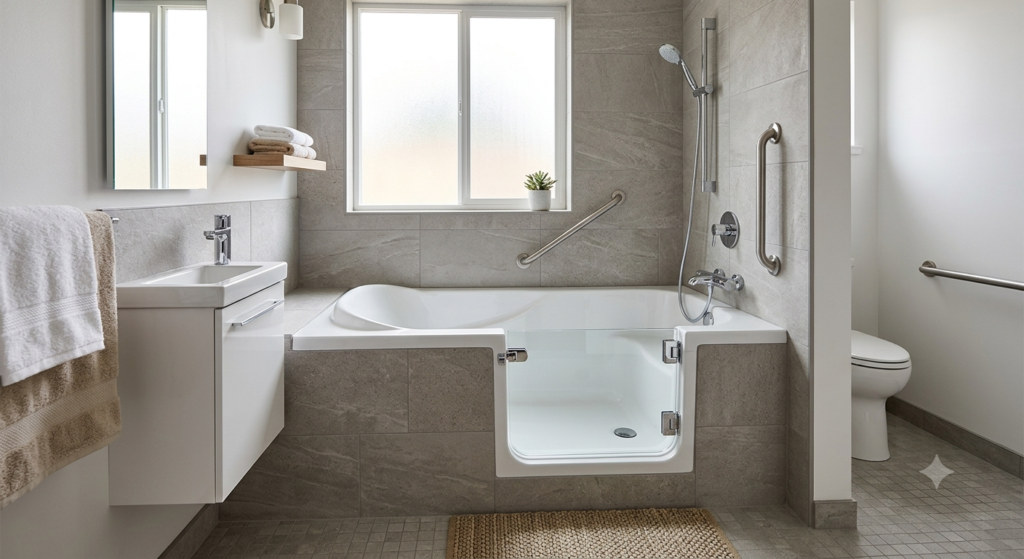
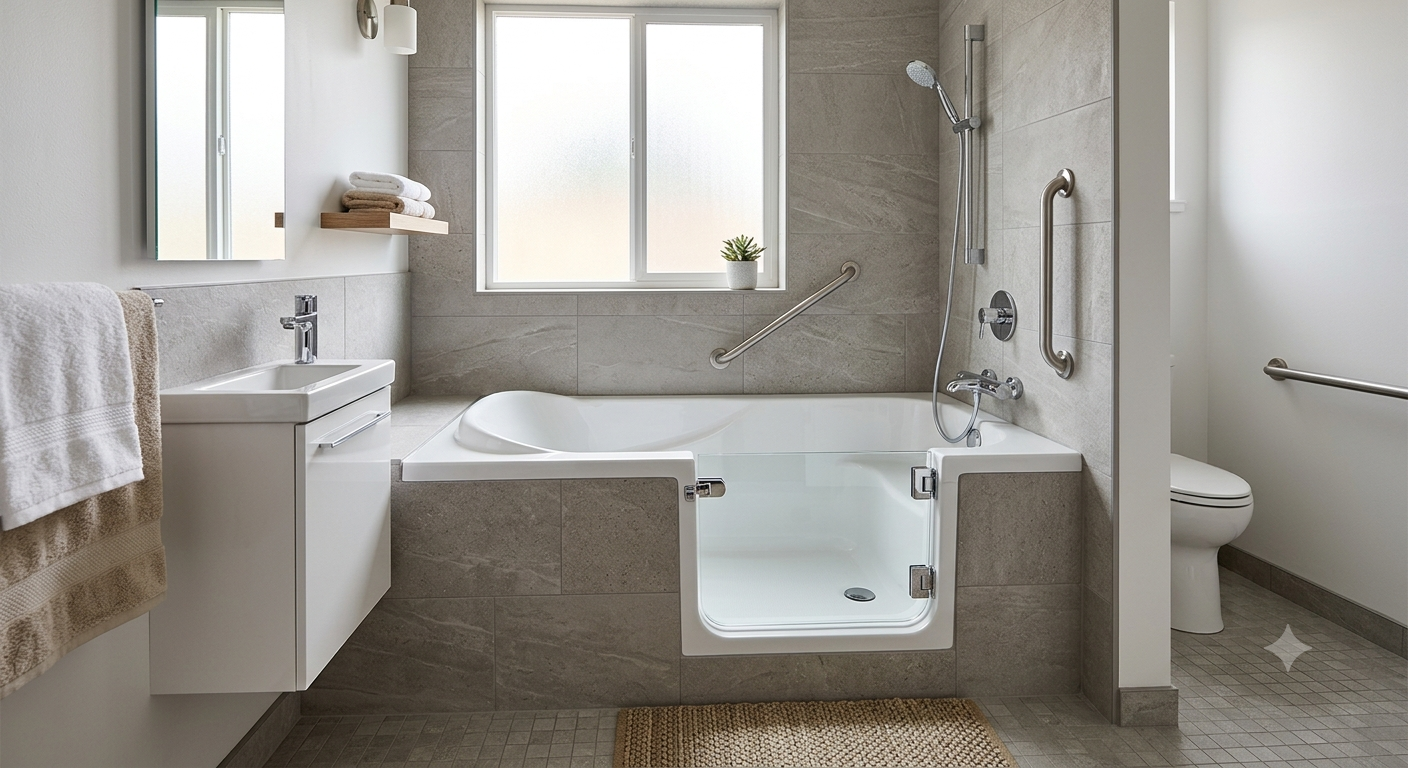
This category doesn’t get enough attention, and it should. Walk-in drop-in tubs, like the Spa World Venzi line, have a side door that swings open so you can step in without climbing over a high tub wall. They’re built into a deck just like any other drop-in model, but the access door changes the whole safety equation.
I helped my parents retrofit their downstairs bathroom with one of these after my dad had a knee replacement, and it was honestly one of the more meaningful projects I’ve worked on. Watching someone go from dreading bath time to feeling confident and independent again is worth way more than any backsplash tile choice.
The seal on the door is the part to get right. These tubs use a watertight gasket that needs to compress evenly every time the door closes, and if your deck isn’t built perfectly level, you’ll get leaks. I’d recommend a level laser tool during installation, not just a bubble level, because the margin for error here is small.
Fill and drain time is also longer than people expect, since you have to fill the tub after you’re already seated inside and wait for it to drain before opening the door. It’s a real adjustment if you’re used to a regular tub, but for the right person, it’s a complete game-changer.
7. The Minimalist Zero-Edge Drop-In Tub for a Modern Look
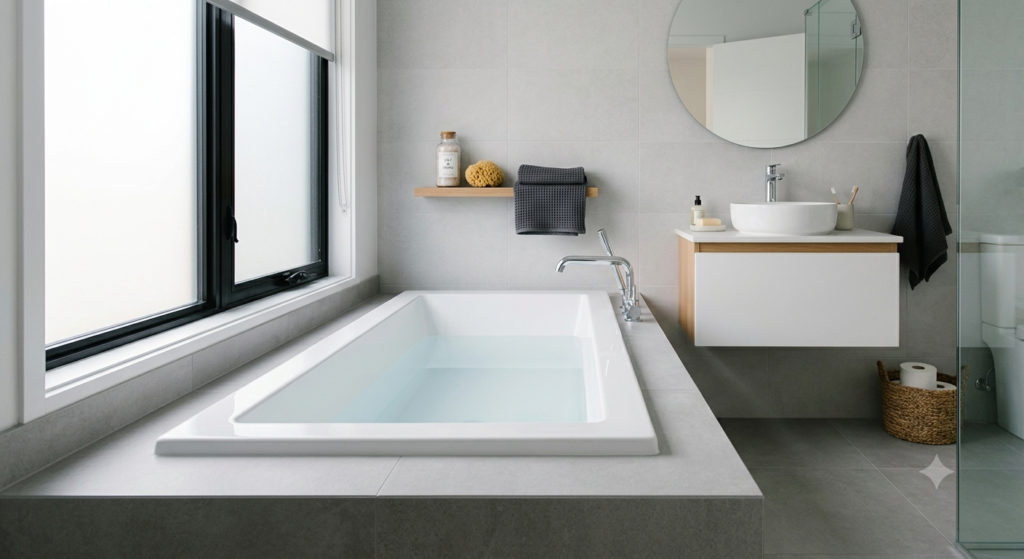
If your style is closer to a boutique hotel than a cottage, a zero-edge or “infinity” style drop-in tub might be your match. Models like the American Standard Studio Zero-Edge bathing pool have a low-profile rim with clean lines and almost no visible lip, which creates a sleek, architectural look when set into a stone or large-format tile deck.
This style works best in bigger bathrooms where the tub deck itself becomes a design feature rather than something you just step over. Pair it with a waterfall faucet and a matching tile deck, and the whole setup reads like something out of a design magazine, even on a modest budget if you choose your materials carefully.
The flat, low profile also means less splash containment than a deeper traditional tub, so I’d steer you away from this style if you have toddlers who treat bath time like a swim meet. It’s a style choice best suited to a primary bathroom used mostly by adults.
Construction-wise, the deck framing needs to be perfectly square and level since the visual impact depends entirely on clean, even lines around the tub. This is not the project to rush on a weekend if precision isn’t your strong suit. Hire it out if your miter saw skills are shakier than your design taste.
Quick Side Note: Don’t Skip the Deck Material Decision
Before you check out, one bonus consideration. The tub you pick matters less than the deck material surrounding it. Large-format porcelain tile gives a clean, grout-light look. Natural stone is gorgeous but needs sealing and costs more. Solid surface decking is the easiest to keep watertight long-term. Whatever tub you choose from the list above, spend real time picking the deck finish, because that’s actually what people see and touch every day.
Real Talk: What Can Go Wrong With Drop-In Tubs
Here’s the part nobody puts in the glossy product listing.
Weight is the number one issue. A drop-in tub, plus the mortar bed it usually sits on, plus a full tub of water, plus a human body, adds up fast. I’ve seen DIYers skip checking their subfloor and joist span entirely, and it almost always ends in a saggy floor or a very awkward conversation with an inspector. If you’re not sure your structure can handle it, get a contractor to check before you order anything.
Mortar bed installation is the second headache. Most drop-in tubs need a bed of deck mud or thinset underneath for support, since the tub itself isn’t load-bearing on its own edges. Skipping this step to save time is, in my experience, a total waste of effort that comes back to bite you within a year as cracks and flexing show up.
Drain orientation confuses more people than it should. Left-hand drain, right-hand drain, reversible drain — double, triple check this against your existing plumbing rough-in before you order. I’ve returned more tubs for this exact mistake than I’d like to admit, and shipping a 100-pound tub back is not a fun afternoon.
And honestly, I’d skip jetted tubs entirely if you’re not committed to the maintenance. They look incredible in photos, but a jetted tub that nobody cleans regularly turns into a genuinely gross situation inside those jet lines. If that’s not a chore you’ll actually do, a simple deep soaker will make you happier in the long run.
Final Soak: My Parting Advice
A drop-in tub is one of the few renovation choices that lets your personality show through the deck design just as much as the tub itself. Pick the shape and depth that fits how you actually bathe, not how it looks in a staged photo, and don’t cheap out on the structural prep underneath it.
What’s your bathroom layout working with right now, a small alcove, an awkward corner, or a wide-open primary suite? Drop your situation in the comments below, and I’ll tell you which of these seven I’d pick if it were my own bathroom.