
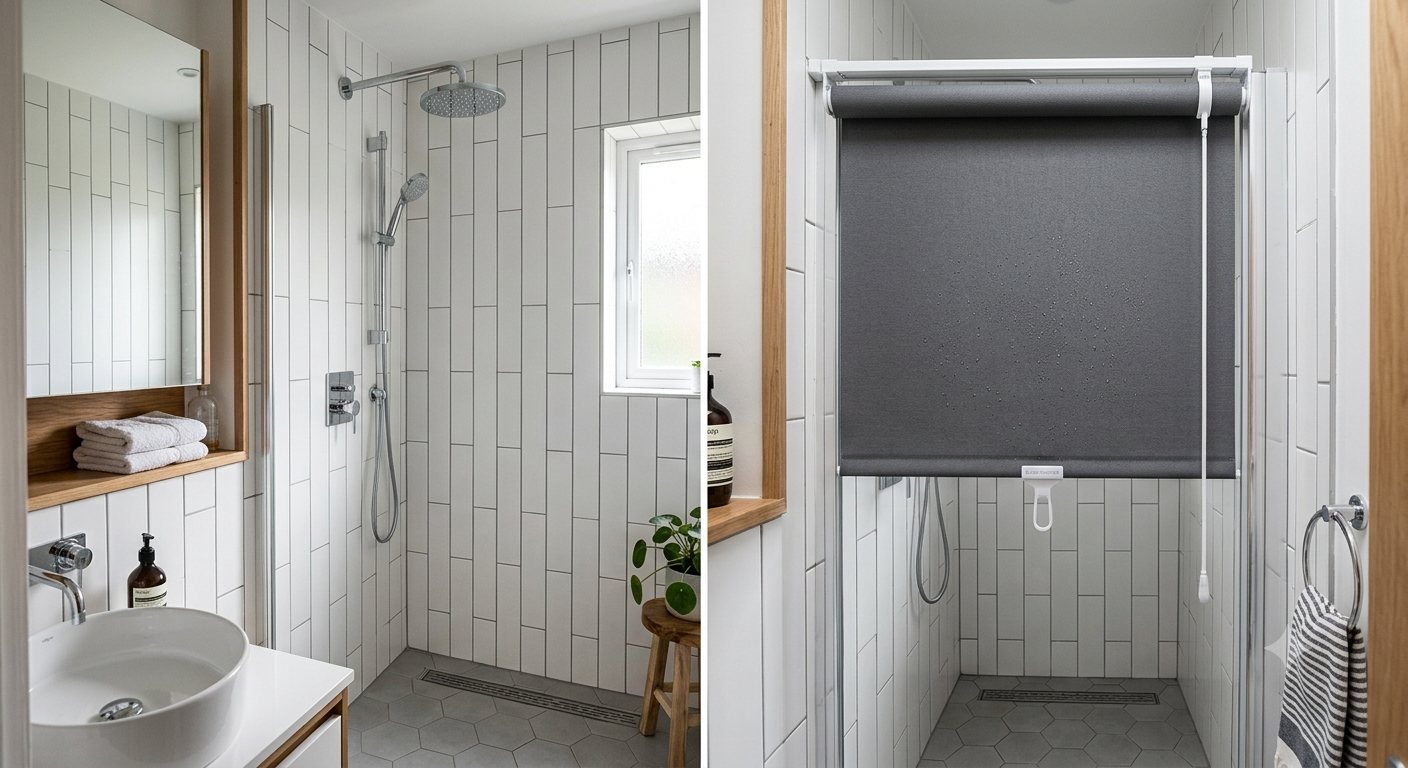
You know the moment. You pull back the curtain, and that clingy, slightly slimy plastic wraps itself around your leg like it’s trying to keep you in the shower against your will. Then you notice the pink mildew spots creeping up from the bottom hem. Again.
I’ve replaced more shower curtains than I can count, and at some point I stopped buying new ones and started looking for ways to ditch the curtain altogether. If you’re tired of scrubbing mildew, wrestling with a curtain that won’t stay put, or just want your bathroom to look like a hotel instead of a dorm room, you’re in the right place.
Below are seven shower curtain alternatives that real people are actually buying — several of them sit in the best-seller lists on Amazon for a reason. I’ll tell you which ones are worth your money, which ones I regret, and where to save your cash for something else entirely.
Why I Stopped Using a Regular Shower Curtain
A shower curtain is cheap, sure. But “cheap” and “good value” aren’t the same thing. Curtains trap moisture in their folds, they need a liner to actually work, and that liner needs replacing every few months if you don’t want your bathroom smelling like a gym bag.
My turning point was a rental I lived in for two years. The landlord refused to fix the bathroom fan, and within four months, every curtain I bought had black spots along the bottom. I went through three curtains before I gave up and bought a tension-rod glass-look screen instead. Never looked back.
If any of this sounds familiar — the constant washing, the curtain hooks that snap, the moment the curtain billows in and sticks to your wet skin — keep reading.
1. Semi-Frameless Sliding Glass Shower Doors
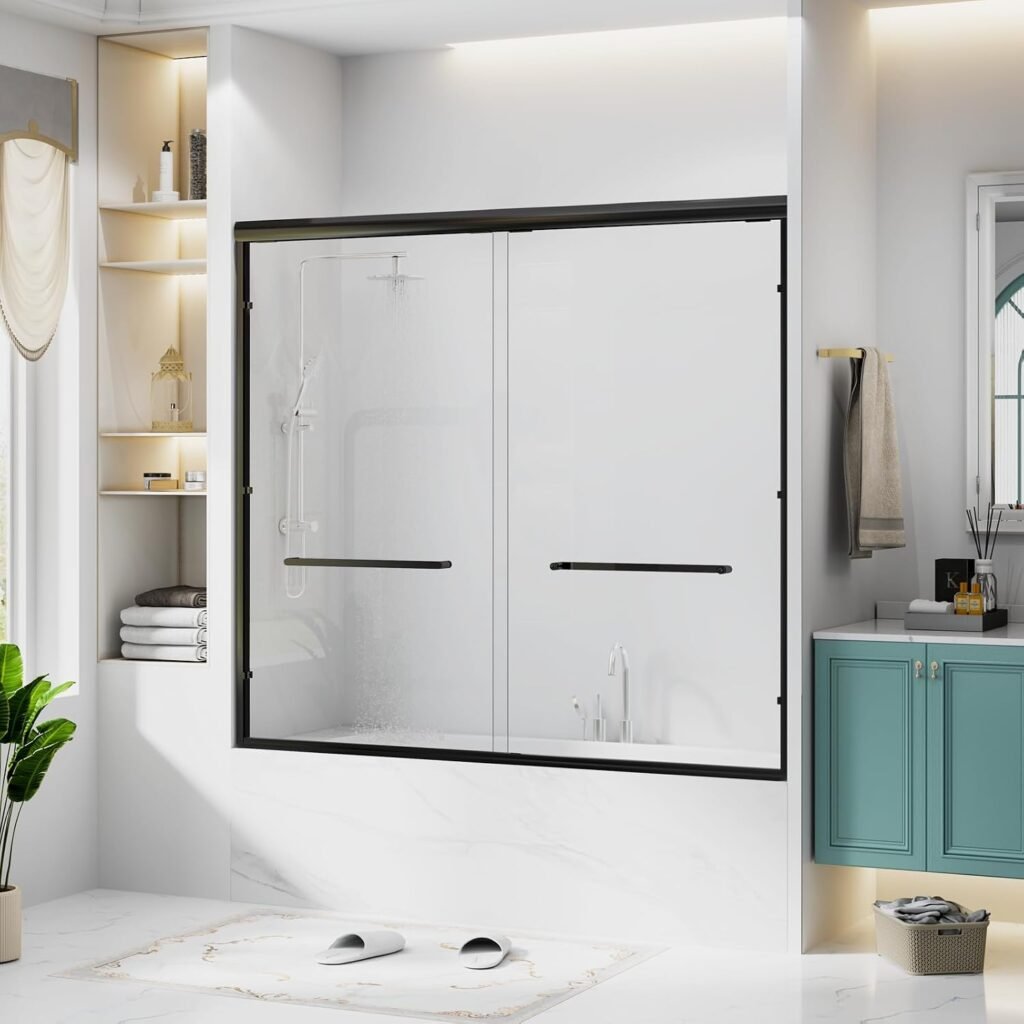
This is the upgrade everyone wants but nobody thinks they can afford. Good news: frameless sliding glass door kits have gotten a lot cheaper, and a handful of DIY-friendly versions now show up regularly among the best-selling shower doors on Amazon.
A sliding glass door does three things a curtain never will. It contains water completely without ballooning into the room, it never needs replacing because of mildew, and it instantly makes a bathroom look more expensive than it actually was to install. I put one of these in my own bathroom on a Saturday afternoon, and I’m not exaggerating when I say it was the single highest “wow per dollar” upgrade I’ve ever done to a house.
Here’s my honest opinion: skip the bypass doors with the thick aluminum frame if you can. They look dated within a few years, and the metal track collects soap scum almost as fast as a curtain collects mildew. Frameless or semi-frameless kits cost more upfront, but they age much better and they’re easier to keep clean since there’s less hardware for grime to hide in.
The catch is your tub or shower base needs a flat lip for the track, and you need to measure twice (I measured once and ended up with a door that hit the faucet handle — don’t be me). Budget a full day for installation even though the box says “two hours.” It’s never two hours.
2. Fixed Glass Shower Screens (No Door Needed)
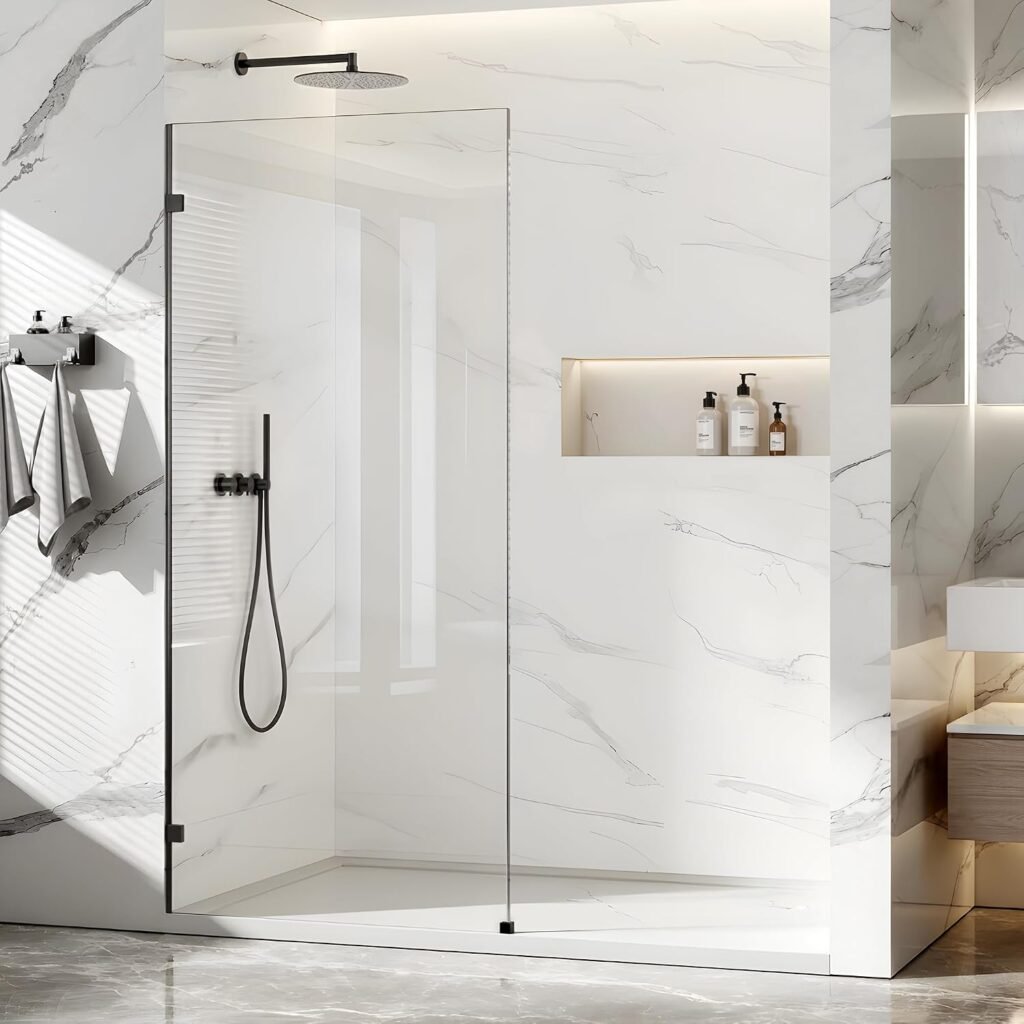
If a full sliding door feels like overkill, a fixed glass shower screen is the alternative nobody talks about enough. It’s a single glass panel that blocks the splash zone without enclosing the whole shower, and it’s one of the fastest-growing categories I’ve seen pop up in Amazon’s bath search results.
A fixed screen works best in a tub-shower combo where you don’t need a full seal, just something to stop water from soaking the bath mat. I installed one for my mother-in-law because she has mobility issues and a sliding door track on the floor was a tripping hazard. The screen clips onto the tub wall, needs zero floor track, and she can step in and out without lifting her leg over anything.
The honest downside is that a fixed screen won’t stop every drop of water like an enclosed door will. If you’ve got a rainfall shower head or kids who treat bath time like a water park, you’ll still get some splash past the edge. I’d call this the right pick for a calmer, low-pressure shower setup, not a daily power-wash situation.
It’s also one of the more affordable glass options, which matters if you’re renovating on a budget but still want that spa-like, curtain-free look. Pair it with a small squeegee and wipe-down habit, and you’ll barely ever need to clean it.
3. Bi-Fold or Accordion Glass Shower Doors
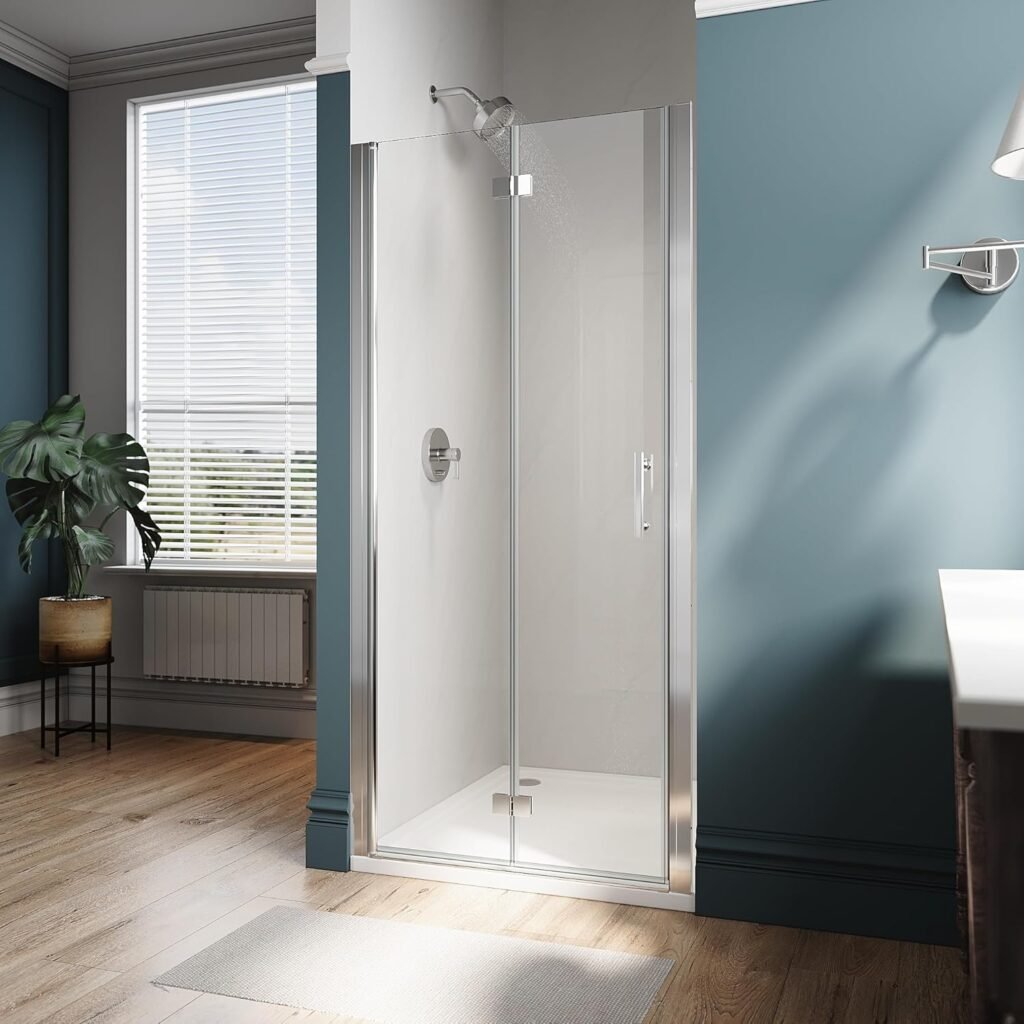
This is the alternative I recommend most often for small bathrooms, and it’s quietly become a favorite among shoppers looking for space-saving bath upgrades. A bi-fold door folds in on itself like an accordion instead of sliding along a track, which means it needs almost no clearance to open.
I put one of these into a tiny half-bath that used to have a curtain rod crammed two feet from the toilet. There was no room for a swinging door or even a sliding track that extended past the tub. The accordion style solved it completely — it folds flat against the wall and frees up the whole walking path.
People searching for “small bathroom shower door ideas” usually land on this option, and I think it deserves the attention. It’s not as sleek as a single frameless panel, since you’ll see the seams where it folds, but it makes up for that with flexibility. It also tends to run cheaper than full sliding systems, which is a nice bonus if you’re remodeling room by room.
One thing I’ll warn you about: the hinges are the weak point. Cheaper accordion doors develop a wobble after a year or two of daily folding. Spend the extra ten or fifteen dollars for a model with metal hinges instead of plastic ones, and it’ll last considerably longer.
4. Roller or Roman Shower Blinds
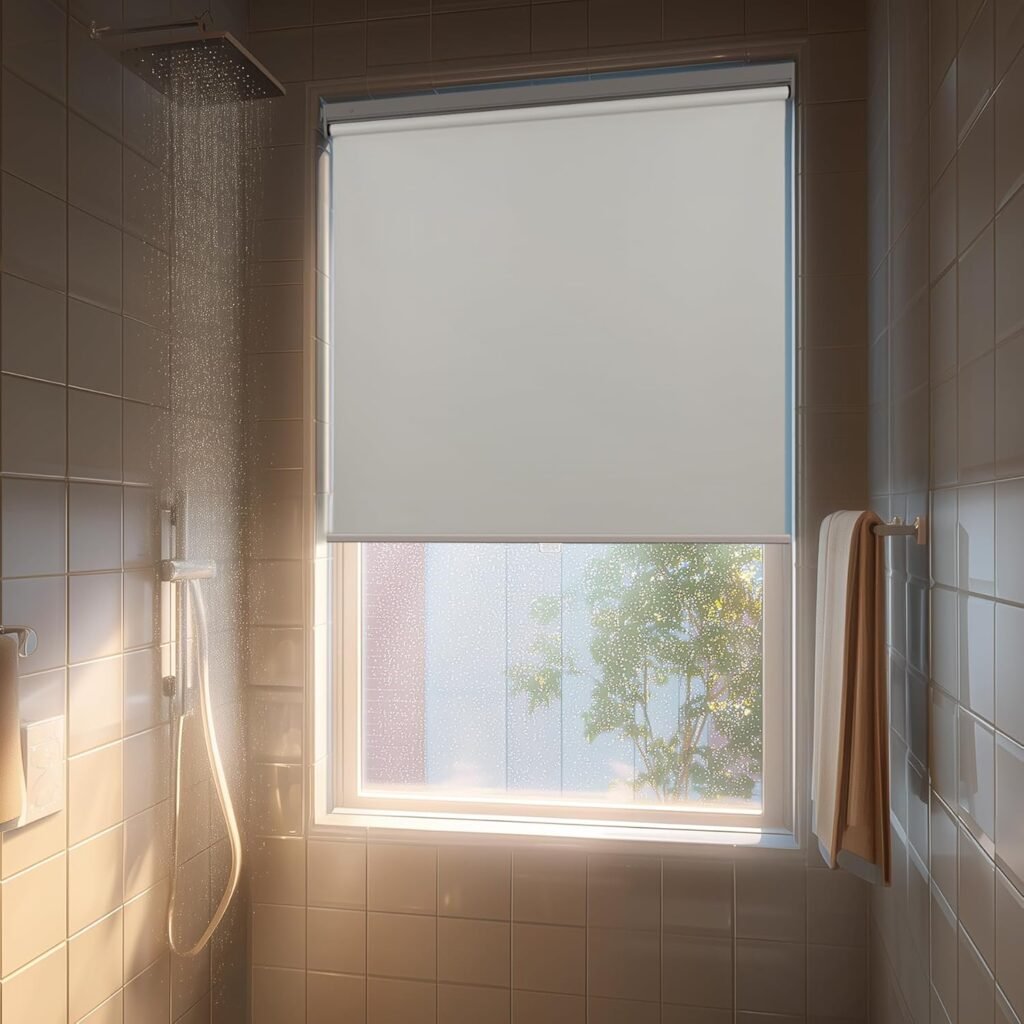
Shower blinds are the alternative that surprised me the most. I assumed fabric blinds and constant water exposure would be a disaster, but waterproof PVC and PEVA roller blinds are specifically made for wet environments, and they’re a legitimate best-seller category on Amazon’s bath accessories pages.
What I like about a shower blind is the way it rolls up out of sight when you’re not using the shower. Your bathroom suddenly looks bigger and less cluttered, because there’s no fabric hanging there twenty-four hours a day collecting dust and humidity. For a guest bathroom, this is a genuinely smart move — it photographs well and there’s nothing limp and damp greeting visitors.
I’ll be honest about the tradeoff, though. A roller blind doesn’t seal the shower the way glass does, so water can sneak around the edges if your water pressure is strong. I’d put this in the “nice for light use” category rather than the daily-grind, two-kids-and-a-dog category. If your household showers gently and you mostly care about looks, get the blind. If you’ve got teenagers who treat the shower like a car wash, go with glass.
Installation is genuinely the easiest of anything on this list — most mount with adhesive brackets or a simple tension fitting, no drilling required. That makes it a great rental-friendly option too.
5. Bamboo or Wood-Slat Shower Screens
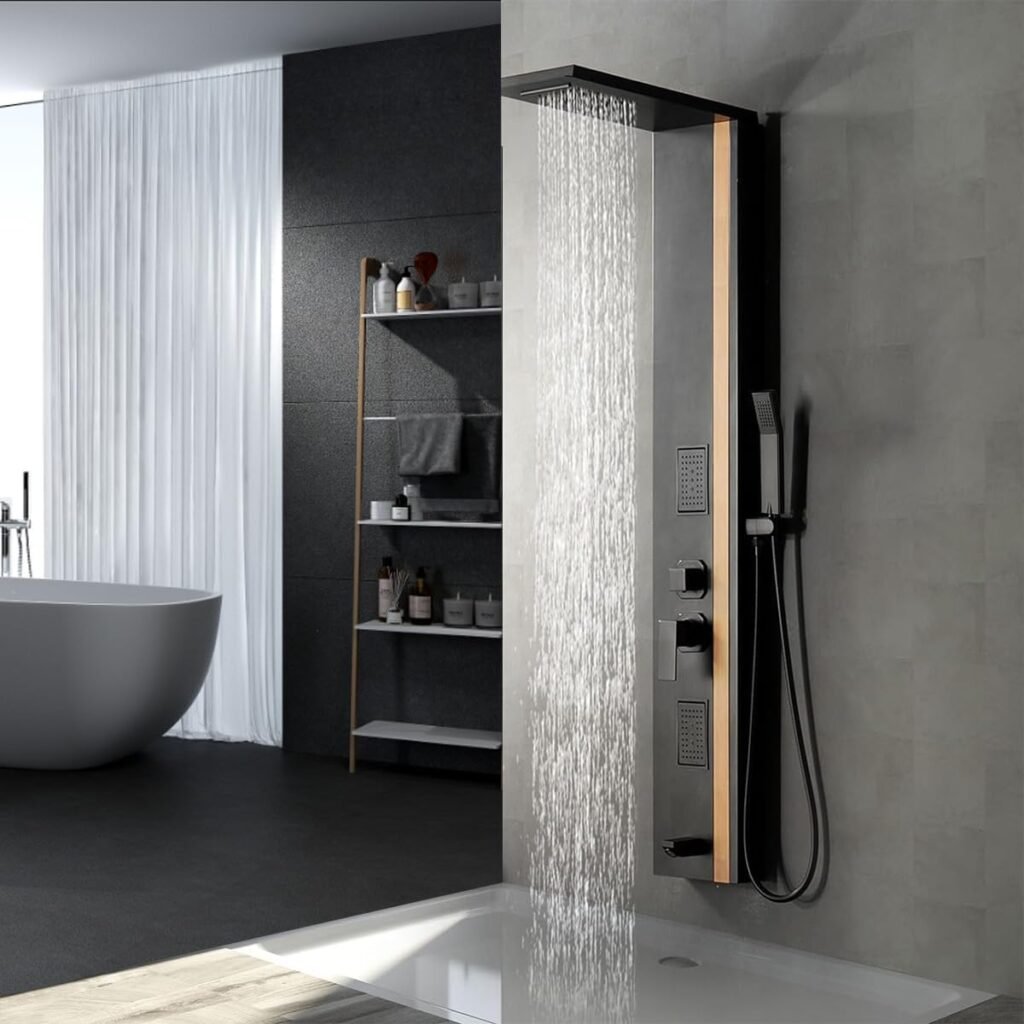
I’ll admit I was skeptical about putting wood anywhere near a shower, but bamboo shower screens and curtains have earned a real following for good reason, and they show up constantly when people search for natural or spa-style bathroom decor.
Bamboo brings a texture and warmth that glass and plastic simply can’t fake. If you’re going for that Japanese soaking-tub, boutique-hotel vibe, this is the alternative that actually nails it. I used a bamboo roll screen in a powder room redo for a client a few summers back, and it was the single piece everyone complimented, more than the tile, more than the fixtures.
That said, bamboo needs more upkeep than glass. It’s treated to resist water, but it’s not invincible, and I’d recommend wiping it dry after each use if you want it to last. In a high-humidity bathroom without good ventilation, I’ve seen bamboo screens start to discolor within a year. If your bathroom fan is doing its job, you’ll get several good years out of it.
This isn’t the pick for a primary, everyday family shower. Think of it as the statement piece for a guest bath, a half-bath, or a tub you use more for soaking than scrubbing.
6. Barn-Door Style Sliding Shower Doors
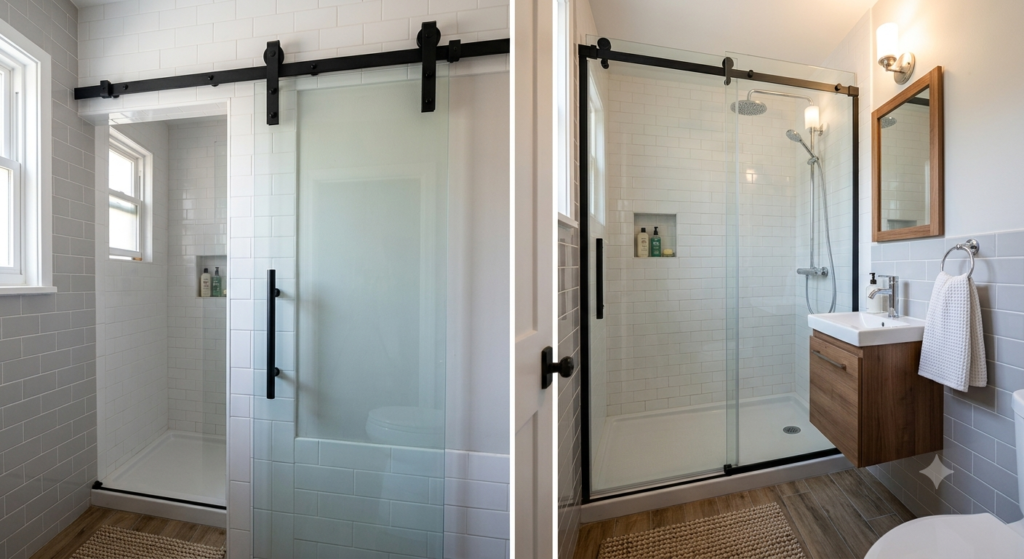
The farmhouse trend made its way into bathrooms a while back, and barn-door style shower doors have stuck around because they genuinely solve a problem: they don’t need a bottom track at all. The door hangs from a top rail, which means no metal strip on the floor to trip over or scrub soap scum out of.
I put one of these in for a friend’s farmhouse-style remodel, and the thing that sold me wasn’t even the look — it was the cleaning. No floor track means no grime line, no mildew ring, none of the gunk that builds up in a standard sliding door’s bottom channel. If you’ve ever tried to clean out a shower door track with a toothbrush at 11pm, you understand why that matters.
Style-wise, this works best when the rest of your bathroom already leans rustic or modern-farmhouse. Drop a sleek black barn-door hardware kit into a glossy, contemporary bathroom and it can look out of place, like it wandered in from a different house.
It’s also one of the pricier glass options on this list, mostly because of the hardware. If your budget is tight, this is the one I’d push to the bottom of your wish list, behind the sliding door and the fixed screen.
Quick Bonus Pick: The Magnetic Weighted Curtain Panel
I didn’t want to pretend every alternative needs to be glass, wood, or fabric in a frame. If you’re not ready to remodel anything and just want a cheap fix this weekend, a heavy-duty EVA panel with magnetic weights along the bottom hem is the closest thing to a curtain that behaves like a real barrier. It clings to the tub instead of billowing in, and it costs less than dinner out.
It’s not a long-term solution, and it’s still technically a curtain, just a smarter one. But if you rent, or you’re testing whether you even want to commit to a full shower remodel, this is the low-risk way to dip your toe in.
Real Talk: What’s Not Worth the Hassle
I promised you the unfiltered version, so here it is.
Frameless glass looks incredible in photos and online reviews, but it’s a nightmare to keep streak-free if your water is hard. Unless you’re willing to squeegee it after every shower, you’ll be staring at water spots within a month. I now keep a $6 squeegee hanging right next to my shower, and it’s saved me more cleaning time than any “miracle” glass cleaner ever has.
Accordion doors with plastic hinges are a false economy. I’ve replaced two sets of hinges on a cheap bi-fold door because I tried to save thirty dollars upfront. Spend the money on metal hardware the first time.
Bamboo and wood screens are gorgeous, but they’re a poor match for a bathroom with no fan or window. If your mirror fogs up every single shower and stays foggy for twenty minutes, skip the wood. It will warp or mildew faster than the marketing photos suggest.
And here’s my biggest unpopular opinion: don’t install a full sliding glass enclosure in a small bathroom just because it’s trending. I’ve seen people cram a heavy glass system into a space that really called for a simple fixed screen or a blind, and the room ends up feeling boxed in instead of bigger. Match the alternative to your actual bathroom size, not to what looked good on someone else’s renovation account.
My Final Take
If I had to pick one alternative for almost any bathroom, it would be the fixed glass screen. It’s affordable, it’s low-maintenance, and it solves the actual problem — water on the floor — without turning a weekend project into a full demolition. Save the sliding doors and barn-door hardware for when you’re ready to go all in on a real remodel.
What’s living in your bathroom right now, a sad vinyl curtain or one of these upgrades? Tell me what you’re working with down in the comments, and if you’ve got a horror story about a shower door gone wrong, I want to hear it. I’ve probably made the same mistake.