
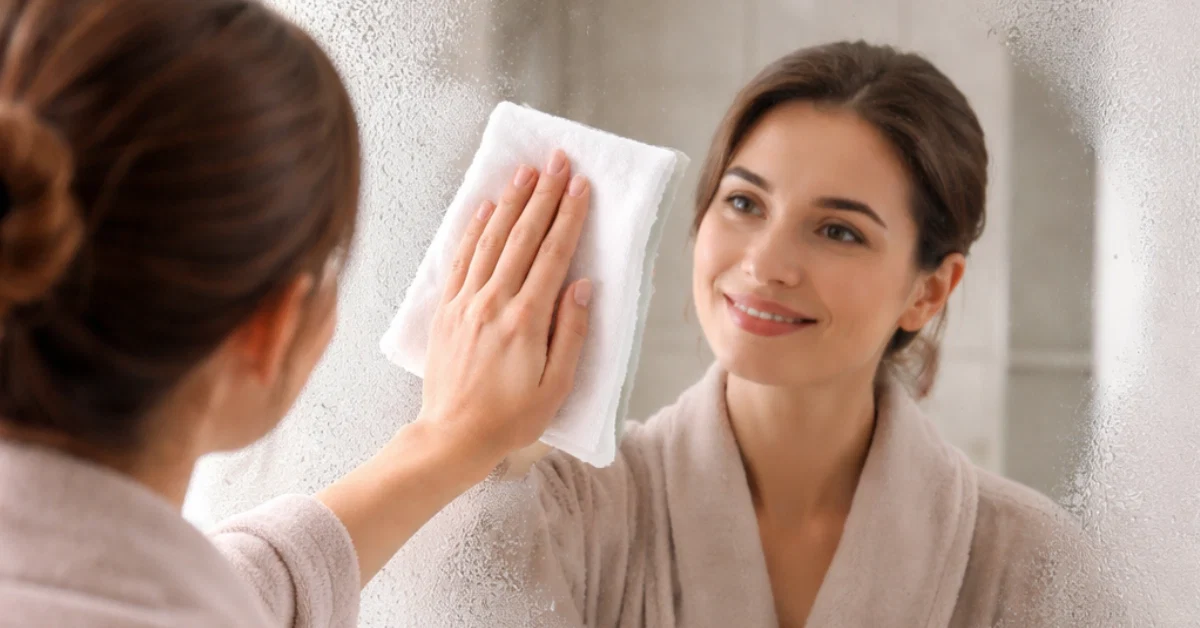
You’re running late, you hop out of the shower, and your mirror looks like it’s wearing a wool sweater. You wipe it with your palm, get a streaky smear that’s somehow worse than the fog, and end up doing your hair by feel and a prayer.
I’ve been remodeling bathrooms for homeowners for over a decade, and I promise you, this is one of the top three complaints I hear during every single consultation. Right behind “why does my shower drain smell” and “can we please get rid of that popcorn ceiling.”
The good news? A foggy mirror isn’t some unsolvable mystery of physics. It’s condensation, plain and simple, and there are real fixes for it. Some cost nothing. Some cost a little. One involves a heated pad you’ll wonder why you didn’t install years ago. I’m going to walk you through all of them, starting with the free stuff and working up to the “just handle it permanently” options.
Why Your Bathroom Mirror Fogs Up in the First Place
Before we fix it, you need to know what’s actually happening on that glass.
Hot shower water turns into water vapor. That warm, moist air floats around your bathroom looking for the coldest surface it can find to land on. Your mirror, being glass and usually sitting against an exterior or poorly insulated wall, is almost always the coldest thing in the room. The vapor hits that cold glass, cools instantly, and turns back into tiny water droplets. That’s your fog.
So really, mirror fogging is a temperature problem wearing a disguise. Fix the temperature difference or the moisture level, and the fog goes away. Every method below attacks one of those two things.
Quick Fixes: Stop Bathroom Mirror Fog Without Spending a Dime
1. Crack a Window or Run the Fan Before You Shower
This sounds too simple to work, but it’s the single biggest lever you have. Turn on your bathroom exhaust fan a full five minutes before you turn on the shower, not after. Most people flip it on when they’re already fogged out, which is like trying to bail out a sinking boat instead of patching the hole first.
If you don’t have a working fan (or yours sounds like a dying lawnmower and moves about as much air), that’s a separate project, but for now, crack the window a couple inches if the weather allows it. Moving air keeps humidity from building up to the saturation point where it starts condensing on your glass.
2. Shave Cream Trick
Take a dollop of ordinary shaving cream, the foamy kind, not gel, and rub it across the mirror in a thin, even layer. Let it sit for about 30 seconds, then wipe it off completely with a clean cloth or paper towel.
What you’re left with is an invisible film that keeps moisture from clinging to the glass. Shaving cream has surfactants in it, similar to what’s in commercial anti-fog sprays, and it genuinely works. I’ve used this trick in rental bathrooms where I didn’t want to install anything permanent, and it held up for close to a week before I needed to reapply it.
3. Dish Soap Wipe-Down
No shaving cream in the house? Dish soap does something similar. Put a few drops on a dry cloth, buff it into the mirror until there’s a thin, almost invisible layer, then buff again with a clean cloth to remove any streaking. The soap breaks up the surface tension of water, so instead of forming those little fog droplets, moisture spreads into a thin, see-through sheet you can see right through.
This one doesn’t last as long as shaving cream, usually a day or two, but it’s genuinely free if you already have dish soap under the sink, which, let’s be honest, everybody does.
Mid-Range Fixes: Products Worth Actually Buying
4. Anti-Fog Spray or Wipes
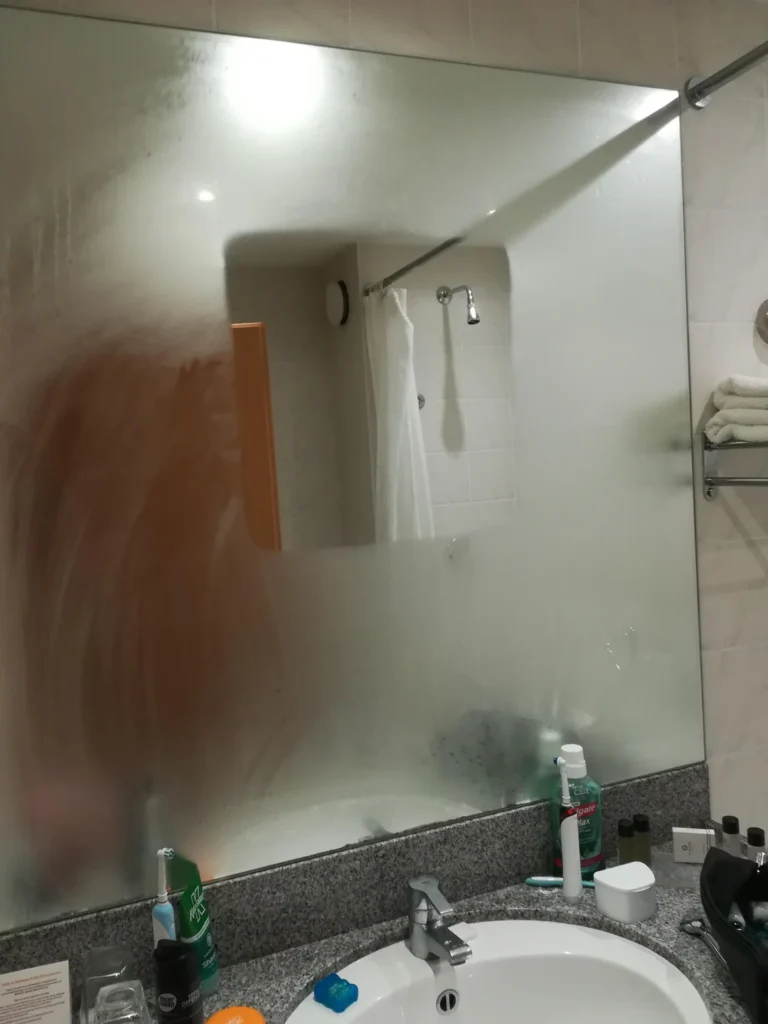
You can grab anti-fog spray at most hardware stores or online for under ten bucks a bottle. Spray it on, buff it in with a microfiber cloth, and you’re set for anywhere from a few days to a couple weeks depending on the formula and how often you shower.
I’ll be straight with you: some of these sprays are basically the same chemistry as the dish soap trick, just bottled and marketed nicer. But a few premium formulas, the ones made for scuba masks and ski goggles, actually outperform the DIY versions by a wide margin. If you’re going to spend money, spend it on one of those instead of a generic bathroom-branded bottle.
5. Anti-Fog Mirror Film
This is a step up from spray. It’s a clear adhesive film you apply directly to your existing mirror, kind of like a giant screen protector for your face. Once it’s on, it’s on for months, sometimes over a year, without reapplication.
Installation takes patience. You’ll want the mirror completely clean and dry, and you need to work slowly to avoid trapping air bubbles under the film. I always tell clients to treat it like tinting a car window: rushed jobs look bubbly and cheap, patient jobs look invisible. Give yourself a full 30 minutes and don’t shower in that bathroom for at least 24 hours after applying it.
Permanent Fixes: Solve It Once and Never Think About It Again
6. Install a Heated Anti-Fog Mirror Pad
This is my favorite fix, and honestly, the one I recommend to almost every client doing a bathroom remodel. A heated mirror defogger pad is a thin electric pad that mounts to the back of your mirror. It runs on low wattage, warms the glass slightly, and because the mirror is now the same temperature as the room instead of colder than it, condensation simply can’t form.
You wire it into a switch, sometimes tied to your bathroom light or fan, or on its own timer. Cost runs anywhere from $30 for a basic pad to $150+ if you’re buying a mirror that already has one built in. Installation is straightforward if your mirror is already off the wall for a remodel, and honestly not too bad even if it’s still hanging, as long as you’re comfortable with basic low-voltage wiring or you hire an electrician for an hour.
That summer I redid my sister-in-law’s guest bath, I installed one of these pads almost as an afterthought. She texted me two weeks later just to say the mirror thing was “witchcraft.” That’s the reaction you’re going for.
7. Upgrade Your Bathroom Exhaust Fan
If your fan is undersized for your bathroom, no trick or spray is going to fully solve your fogging problem, because you’re fighting a losing battle against constant humidity buildup. Bathroom fans are rated in CFM, cubic feet per minute, and you want roughly one CFM per square foot of bathroom, with a minimum of 50 CFM even in small powder rooms.
Swapping a fan is a weekend project for most DIYers comfortable with basic electrical work, and it solves way more than fogging. It cuts down on mold, protects your paint and drywall, and gets rid of that lingering damp smell that creeps into bathrooms with poor ventilation. If your current fan came with the house and you have no idea how old it is, there’s a decent chance it’s underpowered by today’s standards.
Quick Side Note: Mirror Placement Matters More Than You’d Think
Here’s something contractors think about that homeowners rarely do. A mirror mounted directly across from or right next to the shower gets hit with the most direct blast of steam and fogs first and worst. If you’re doing a remodel and have any flexibility in layout, positioning the mirror farther from the shower, or adding a partial glass door or curtain that contains steam better, cuts down on fogging before you even need any of the fixes above.
What About Double-Pane or “Smart” Fog-Free Mirrors?
If you’re doing a full bathroom remodel and haven’t bought your mirror yet, it’s worth knowing that some mirrors now come with anti-fog technology baked right in, no separate pad to wire in later. These usually have a defogger element sandwiched between the mirror and its backing, or a special coating applied at the factory that behaves a bit like the film option above, minus the DIY installation headache.
They’re pricier than a standard mirror, sometimes double or triple the cost, and I won’t pretend they’re necessary for everyone. But if you’re already budgeting for a vanity mirror with built-in LED lighting, which is a trend I fully support because task lighting near a mirror is genuinely useful, adding the defogger option is usually a small bump in price for a feature you’ll appreciate every single day. I’ve started specifying these on nearly every full remodel I do now, because clients almost never regret it, and I get zero “why does my new mirror still fog up” calls afterward.
One caution here: cheaper “smart mirrors” sold online sometimes advertise anti-fog features that are really just a thin edge heater that barely warms the center of the glass. Read the actual product specs, not just the marketing bullet points, and look for reviews that specifically mention full-surface fog resistance rather than just edge warming.
Real Talk: What’s Not Worth Your Time (or Money)
I want to be straight with you here, because a lot of “hacks” floating around the internet are a waste of a Saturday afternoon.
Toothpaste on the mirror is one of the most repeated tips out there, and I’ve found that it’s a total waste of effort, even though it technically has some anti-fog properties from the mild abrasives. The problem is it’s inconsistent, it can leave a hazy film that’s honestly more annoying than fog, and getting an even coat without streaks is way harder than it sounds. Skip it.
Vinegar sprays get recommended constantly too, and they do exactly nothing for fogging. Vinegar is great for cleaning mineral deposits off glass, but it has zero anti-fog properties. People confuse “clean mirror” with “fog-resistant mirror,” and they’re not the same thing.
Cheap anti-fog sprays from the dollar store are hit or miss at best. I’ve tried a stack of them over the years, and most either don’t work at all or last about one shower before you’re back to square one. If you’re going the spray route, spend the extra few dollars on a name-brand formula meant for goggles or masks.
And here’s the one that really gets me: running the shower on cold or lukewarm to “reduce steam.” Sure, it technically works, but you’re miserable the whole time, and honestly, nobody sticks with it past week one. Solve the problem at the mirror or the ventilation, not by punishing yourself with a cold shower.
One more thing worth mentioning: heated pads and anti-fog film both require the mirror to be removed or accessed properly for the best results. If you slap film on a dirty, humid mirror without prepping it right, you’ll trap moisture and bubbles under there permanently, and then you’ve got a worse problem than fog. Take the extra 15 minutes to prep the surface properly. It matters more than people think.
I’ll also say this, because I’ve seen it go wrong: don’t wire a heated defogger pad into an outlet or switch that isn’t rated for a wet location, and don’t run the wiring yourself if you’re not confident with it. Bathrooms are one of the few rooms in a house where a sloppy electrical shortcut can genuinely hurt someone. Spend the extra money on an electrician for that one hour of work. It’s cheap insurance compared to the alternative.
My Final Take
If I had to pick just one fix for most people, it’s this: run your fan before your shower, not during it, and layer in the shaving cream trick or a decent anti-fog spray for the mornings you’re in a rush. If you’re already mid-remodel or your bathroom fan is ancient, that’s your sign to install a heated defogger pad and upgrade your ventilation while the walls are open. Future you will thank present you every single foggy morning for the rest of the time you live in that house.
What’s your bathroom fog situation like right now, quick fix territory or full remodel territory? Drop a comment below and tell me what you’ve tried. I read every one, and I might just steal your trick for my next client.