
My neighbor Greg installed a hot tub on his deck two summers ago without checking a single weight spec. Six months later, his “spa oasis” had a noticeable dip in the corner, and his deck boards started cupping like potato chips. He still uses it. He just doesn’t invite anyone over who weighs more than 150 pounds.
That’s the thing nobody tells you before you buy a hot tub: the tub is the easy part. The deck is where projects go to die. I’ve built, repaired, and reinforced more hot tub decks than I can count, and I’ve watched plenty of weekend warriors learn the hard way that “it’ll probably be fine” is not a structural engineering plan.
If you’re researching hot tub deck ideas, you’re probably trying to figure out how to fit a 4,000-pound water-filled object onto a structure that was maybe rated for a few patio chairs and a grill. Good news: it’s doable. Better news: I’m going to walk you through seven designs that actually work, plus the mistakes that’ll cost you thousands if you skip them.
1. The Reinforced Ground-Level Platform Deck
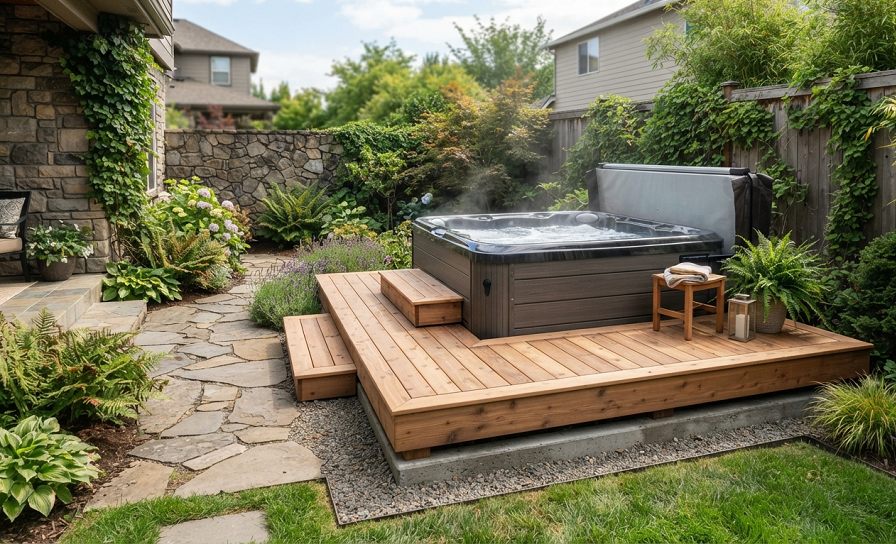
This is my go-to recommendation for anyone asking “can my deck hold a hot tub” without wanting to take out a second mortgage on the build. A ground-level platform sits low, usually 12 to 18 inches off the grade, and spreads the tub’s weight across a beefed-up joist system sitting on concrete footings or helical piers.
The trick here is joist spacing. Standard deck framing runs joists 16 inches on center, which is fine for foot traffic but not for a filled spa. For hot tub support, I drop that down to 12 inches on center, sometimes 8 inches directly under the tub’s footprint. I also double up the beam directly beneath the unit. Yes, it costs more lumber. No, you cannot skip it.
A filled hot tub with people in it can weigh anywhere from 4,000 to 6,000 pounds depending on size. That weight isn’t evenly distributed either, it concentrates at the corners and the equipment bay. A ground-level platform lets you pour extra footings exactly where the load hits hardest, which is something you can’t easily do once a deck is built.
This design also wins on practicality. You’re not hauling water hoses up a flight of stairs, and if something leaks, you’ll see it fast instead of finding a soggy mess in your crawl space three weeks later.
2. The Wraparound Multi-Level Deck With a Sunken Hot Tub Bay
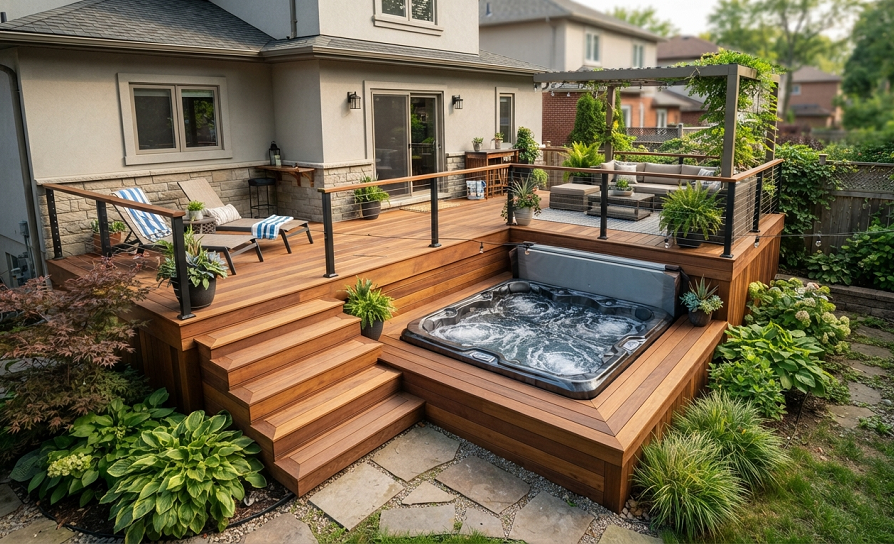
I built one of these for a client in 2019 and it remains one of my favorite projects, mostly because it looks like the tub was always meant to be there instead of bolted on as an afterthought. The idea is simple: you frame a slightly recessed section into a larger multi-level deck so the hot tub sits a few inches lower than the surrounding surface.
This solves the “giant plastic box sticking up in the middle of my deck” problem that ruins so many hot tub installations. Instead of climbing over the rim to get in, you step down into a framed bay that hides most of the tub’s housing. It reads as built-in, even though structurally it’s still sitting on reinforced framing.
For this style, I usually frame the recessed bay with its own independent support system, separate footings, separate beams, so the surrounding deck isn’t taking on extra load it wasn’t designed for. People skip this step to save money and end up with a deck that sags toward the tub bay within a year or two.
One more thing: leave yourself an access panel. I cannot stress this enough. Every hot tub needs electrical and plumbing access for maintenance, and a sunken design that doesn’t include a removable panel turns a 20-minute repair into a demolition project. I learned this one secondhand, watching a guy cut a hole in his own deck with a circular saw because nobody told him to plan for service access.
3. The Floating Deck Foundation (For Smaller, Lighter Tubs)
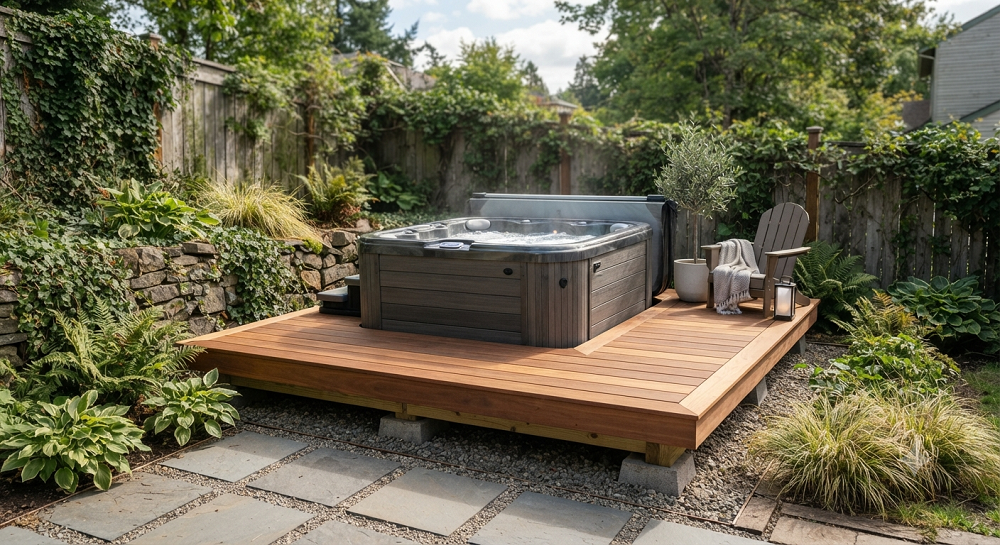
Floating decks, meaning decks that aren’t attached to your house and rest on deck blocks or piers instead of a poured foundation, get a bad reputation for hot tub use, and honestly, sometimes that reputation is earned. But for smaller plug-and-play spas under 400 gallons, a properly built floating deck can work just fine.
The key word is “properly built.” I’m talking about concrete deck blocks rated for heavy loads, spaced tighter than you’d use for a normal patio deck, and a joist structure that distributes weight evenly across all of them. I typically use a minimum of nine support points for a small hot tub footprint instead of the four or six you’d see on a standard floating deck plan.
I’ll be opinionated here: I don’t recommend floating decks for anything over a 6-person tub. The math just doesn’t work without footings that go below the frost line, and at that point you’re basically building a permanent foundation anyway, so you might as well do it right the first time.
What floating decks are great for is renters and people who don’t want to commit to a permanent structure. You can build one in a weekend, and if you move, you can disassemble most of it. Just don’t expect it to handle a full-size 7-person spa unless you’ve seriously overbuilt the substructure.
4. The Cantilevered Deck Extension With Hidden Steel Support
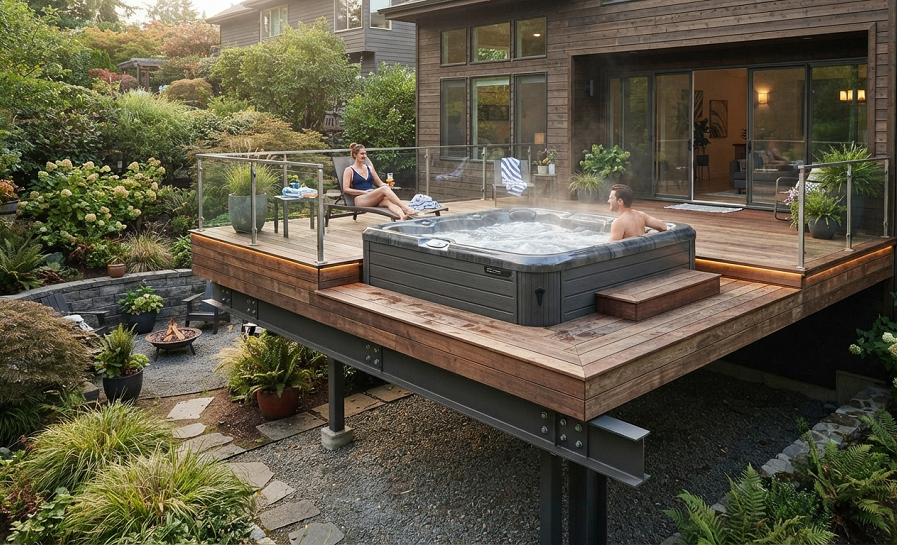
This one’s for people who already have an existing deck and want to add a hot tub without tearing the whole thing down. A cantilever extension lets you push the deck out past its existing support beam, but for hot tub weight, you can’t just rely on standard joist cantilever rules (the usual rule of thumb is a 2-foot overhang max for residential decks).
What I do instead is add steel I-beam or LVL (laminated veneer lumber) supports underneath the cantilevered section, hidden by skirting so it still looks like a normal deck from the outside. This lets you extend further out while still meeting the load requirements for a filled tub.
Honestly, this is the most expensive option on this list per square foot, because steel isn’t cheap and you’ll likely want a structural engineer to sign off on the design. But if you’re working with limited yard space or you’ve got an existing deck you love and don’t want to demo, it’s worth the investment.
A quick gut check before you go this route: get a contractor or engineer to look at your existing ledger board attachment. Most decks weren’t built with a hot tub in mind, and that ledger connection to your house is often the weakest link in the whole system. I’ve seen gorgeous cantilevered hot tub additions that looked perfect for two years until the ledger board started pulling away from the rim joist.
5. The Composite Privacy Deck With Built-In Screening
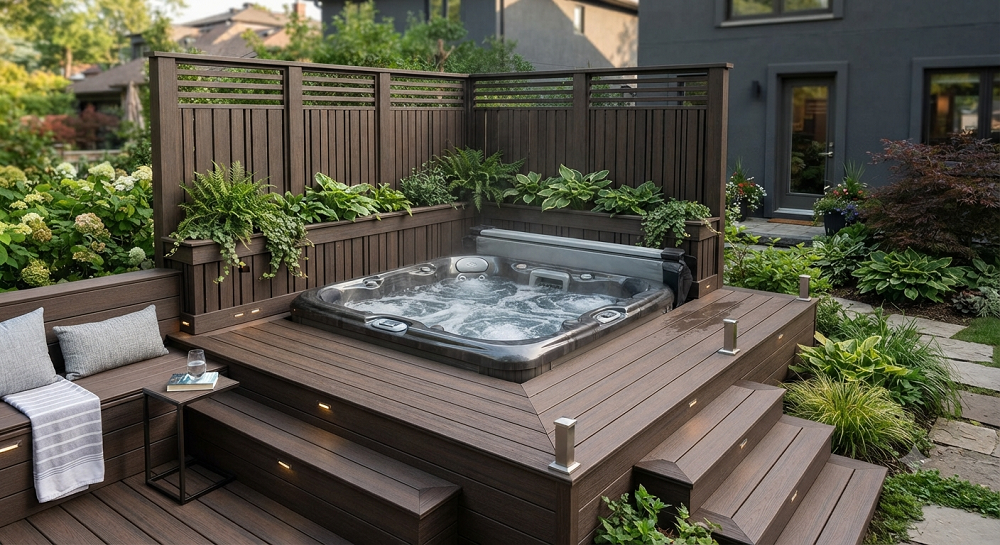
Hot tubs and privacy go together like coffee and Monday mornings. I’ve installed plenty of hot tub decks where the structural engineering was flawless but the client still hated using it because they felt like they were on display for the entire neighborhood.
For this design, I build the structural deck first using the same reinforced framing principles from idea #1, then layer in a privacy screen system using composite lattice panels, horizontal slat fencing, or louvered privacy walls on two or three sides. Composite materials hold up better than wood in a high-moisture environment, which matters a lot when you’re dealing with constant steam and splash.
I’ll also say this: skip the lattice panels with the tiny diamond pattern. They look fine in the store and terrible in real life, they sag, they don’t actually block much sightline, and they trap leaves like nobody’s business. Horizontal slats spaced an inch or two apart give you real privacy without making your deck feel like a cage.
Pergolas pair beautifully with this design too. A slatted pergola roof over the hot tub area cuts down on direct sun (which matters more than people think, UV exposure breaks down hot tub covers fast) while still letting you see the stars at night. Add some string lights and you’ve basically built a backyard resort.
6. The Multi-Purpose Entertainment Deck With Built-In Seating
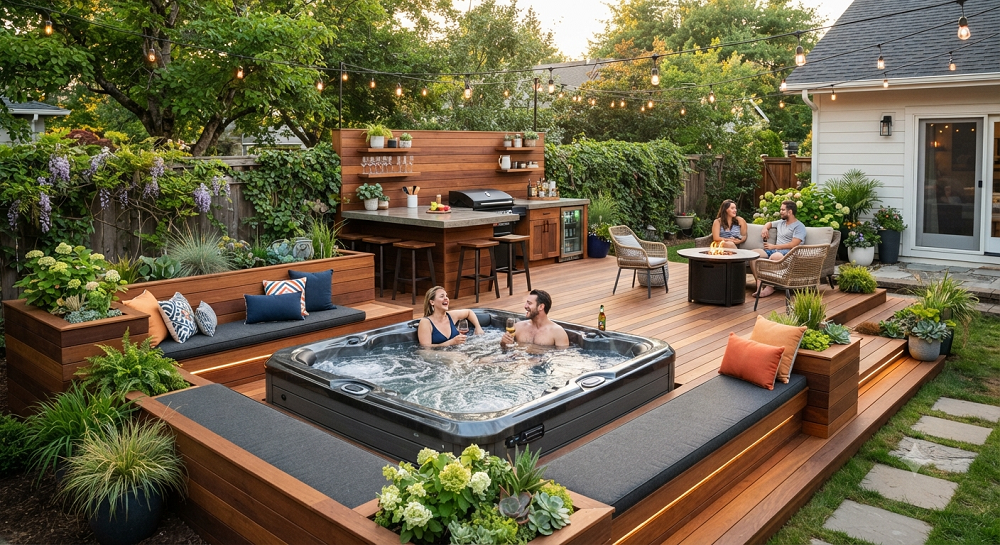
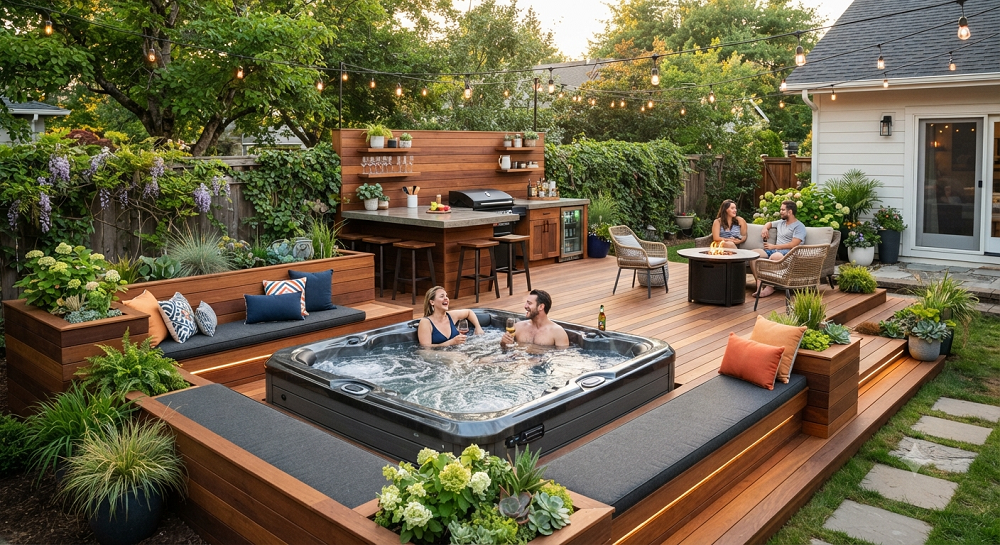
If you want your deck to do more than just hold a hot tub, this is the design I recommend most. Instead of treating the spa as a standalone feature, you build it into a larger entertainment zone with built-in bench seating, a small bar or prep area, and dedicated zones for lounging versus soaking.
Built-in bench seating around the perimeter does double duty, it gives people somewhere to sit while waiting their turn in the tub, and it hides storage underneath for towels, pool noodles, or chemical supplies. I always frame storage benches with removable lids and add a couple of small vents, because trapped moisture under a sealed bench turns into mold faster than you’d believe.
For the layout, I like keeping at least a 36-inch walking path clear around the entire tub. This isn’t just about comfort, it’s about being able to access the equipment panel for service without playing furniture Tetris every time something needs fixing.
A quick side note here: don’t put your hot tub right next to your grill setup unless you love the smell of charcoal smoke while you’re trying to relax. I made this mistake on my own deck years ago and ended up moving the whole grill station to the opposite corner after one too many evenings of choking on smoke while soaking.
7. The In-Ground Deck Hybrid (Hot Tub Set Into the Deck Surface)
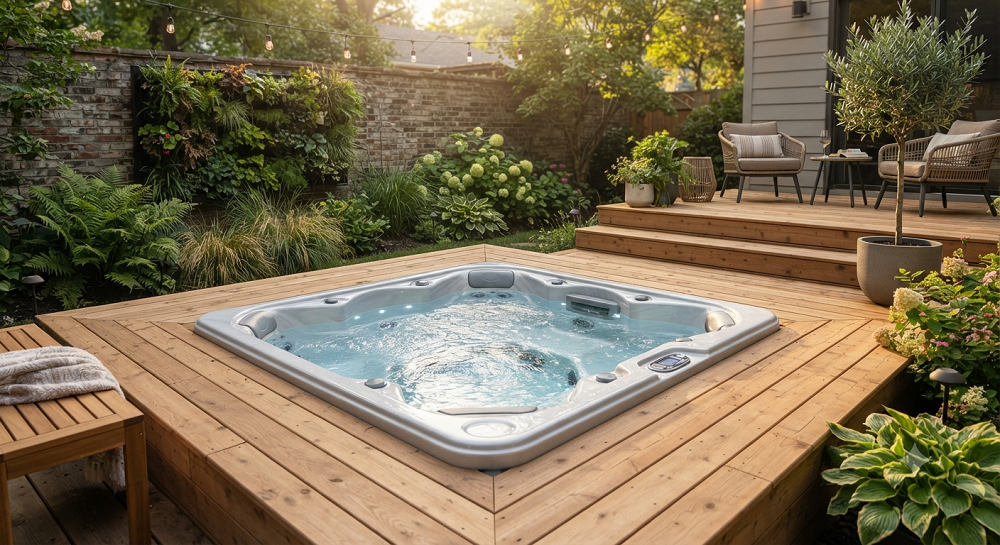
This is the highest-end option on the list, and it’s the one that gets the most “wait, you can do that?” reactions. Instead of placing the hot tub on top of the deck, you excavate and set the tub partially or fully into the ground, then build the deck surface flush around it.
The payoff is huge. You get a sleek, in-ground pool look without the cost of an actual in-ground hot tub installation (which can run two to three times more than a standard above-ground unit). Step access is easier too, since you’re not climbing up and over a tall rim.
The catch, and it’s a real one, is drainage and access. You need a proper excavation with gravel base and drainage solutions so water doesn’t pool around the tub’s exterior shell. You also need a way to pull the entire unit out for major repairs or replacement someday, which usually means building in a removable deck section sized to match the tub’s footprint exactly.
I only recommend this design if you’re working with a contractor who has specifically done in-ground hot tub installs before. This isn’t a YouTube tutorial project. I’ve seen DIY versions of this go sideways fast, mostly because of drainage issues that don’t show up until the first heavy rain six months later.
Real Talk: What Actually Goes Wrong With Hot Tub Decks
Here’s where I get honest about the stuff nobody puts in the glossy magazine spreads.
Permits get skipped more than they should. Most municipalities require a permit for hot tub electrical work and sometimes for the deck modification itself. I get why people skip it, permits cost money and slow you down, but if your insurance company finds out your hot tub deck wasn’t permitted after something goes wrong, you could be looking at a denied claim.
People underestimate the weight by a lot. A 7-person hot tub filled with water and occupants can hit close to 5,000 pounds. That’s roughly the weight of a loaded pickup truck sitting on a small section of your deck. If your contractor or your own framing plan isn’t accounting for that specific number, walk away from the plan.
Electrical access gets treated as an afterthought. Hot tubs need a dedicated GFCI-protected circuit, and that circuit run has to go somewhere. I’ve seen decks built first and the electrician brought in after, which means drilling through finished framing or running unsightly conduit along the surface. Plan your electrical path before you cut a single board.
Maintenance access disappears. This one bites people two or three years in. If you build a beautiful skirted, sealed-up deck around your hot tub with no removable access panel, you will eventually need to cut into your own deck to fix a pump or a heater. Always build in a hatch or removable panel sized to actually fit a technician and their tools.
Wood decking and chlorine splash don’t mix well long-term. Standard pressure-treated lumber will survive, but it’ll gray and splinter faster around the hot tub zone thanks to constant moisture and chemical splash. I almost always recommend composite decking for at least the area immediately surrounding the tub, even if the rest of the deck is real wood.
Final Thoughts
A hot tub deck isn’t just a deck with a tub plopped on it, it’s a small structural project that deserves real planning. Pick the design that fits your space and your budget, but don’t cut corners on the framing, the footings, or the electrical. That’s the stuff that turns into an expensive headache later, and trust me, Greg’s sagging corner is still a running joke in our neighborhood.
What’s your situation, are you working with an existing deck you’re trying to upgrade, or starting completely from scratch? Drop your questions or your own hot tub deck horror stories in the comments below, I read every one of them.