
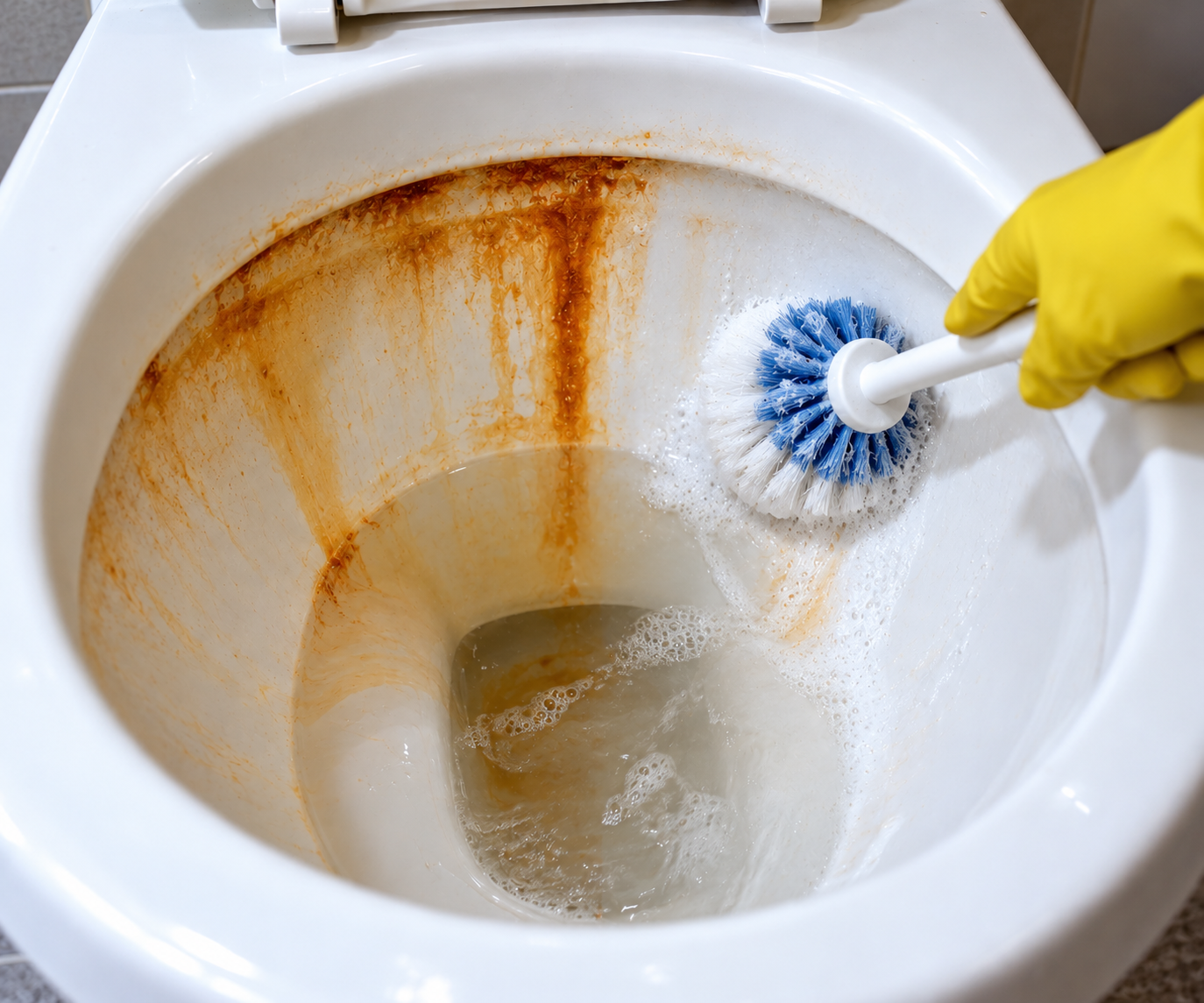
Orange streaks in the bowl, usually starting at the waterline or fanning out from the rim jets, look like rust. Most of the time that is exactly what they are. But the stain has to be identified correctly before you pick a cleaner, because the wrong product can set it permanently or, in the worst case, produce toxic gas.
Two questions decide everything: what is actually causing the stain, and what is in the bottle you were about to reach for?
Is It Rust, Iron Bacteria, or Something Else?
Orange-brown staining in a toilet has a few common sources, and they behave differently.
Dissolved iron in the water. Water from wells, and sometimes from older municipal pipes, can carry dissolved iron. It is clear when it leaves the tap, but once it is exposed to air and sits in a bowl, it oxidizes into rust-colored deposits. This is the most common cause. The stain tends to appear along the waterline, in the trough under the rim, and anywhere water sits or trickles slowly.
Corroding pipes or a corroding tank. If the stain shows up in the tank as well as the bowl, or the water is tinted when you first run it after a period of non-use, the iron may be coming from your plumbing rather than the water source. Cast iron pipes and old galvanized steel are the usual culprits.
Iron bacteria. Certain bacteria feed on iron in water and leave behind a slimy, rust-colored film. This is more common in well water. The giveaway is texture: a slippery or gelatinous residue rather than a hard, gritty stain, sometimes with a swampy or musty smell.
Mineral scale mixed with iron. In hard-water areas, limescale builds up and traps iron, producing a rough, orange-tinged crust. This is harder to shift than a simple surface stain.
Not rust at all. A pinkish or orange slime, especially in a bowl that is rarely flushed, can be bacterial growth such as Serratia marcescens. It wipes away easily and is a different problem from iron staining.
A quick test helps. Scrub a small patch with a toilet brush and plain water. Slime that comes off easily is likely bacterial. A stain that stays put, especially a hard-edged one that follows the waterline, points to iron or mineral deposits.
Why Bleach Is the Wrong Tool
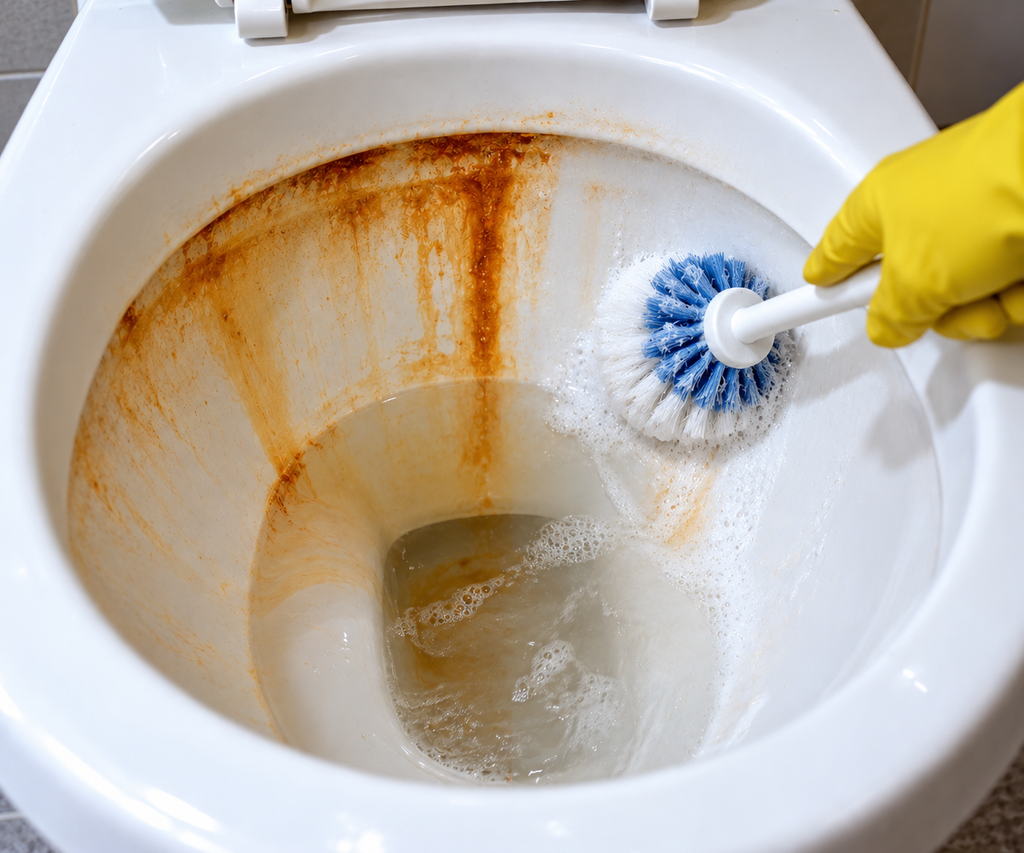
Chlorine bleach is what most people grab first, and it is the worst choice for rust. Bleach is an oxidizer, and iron stains are already oxidized iron. Bleach does not dissolve them. On some stains it can make the discoloration darker or more stubborn, and the failure convinces people the stain is permanent.
Rust is removed by dissolving it, which means using an acid or a chelating agent that binds the iron and lifts it away. That distinction should guide the whole cleaning process.
Never Mix Cleaners in the Bowl
This is the safety point that matters most. Many toilet bowl cleaners contain acids (hydrochloric acid is common), and many households also keep bleach nearby. Mixing bleach with an acid releases chlorine gas, which can cause serious breathing problems. Mixing bleach with ammonia-based products produces chloramine vapors, which are also hazardous.
Some practical rules:
- Use one product at a time.
- If you have used any bleach recently, flush thoroughly and ventilate before applying an acidic cleaner. Do not assume the bowl is clean just because the water looks clear. Residue can remain under the rim.
- Open a window or run the extractor fan.
- Wear rubber gloves and eye protection. Splashback from a scrubbed bowl is more likely than most people expect.
- Keep children and pets out of the room while cleaning, and keep products out of reach afterward.
- Follow the label. Contact times and dilution rules vary by product.
Gentle Methods to Try First
For light staining, start with the mildest approach that could plausibly work. The advantage is safety and low cost. The limitation is that mild acids work slowly and may not touch older, baked-on deposits.
White vinegar
Distilled white vinegar is a weak acid (acetic acid), and it can dissolve light iron staining. The trick is keeping it in contact with the stain, because a bowl full of water dilutes it quickly.
- Lower the water level. Turn off the supply valve behind the toilet, flush, and the bowl will refill only partway. You can also push water down with the brush.
- Pour in vinegar until it covers the stained area, or soak paper towels or toilet paper in vinegar and press them over the stains.
- Leave it for several hours or overnight.
- Scrub with a nylon brush and flush.
Expect it to work on pale or recent stains and to struggle with heavy, long-standing ones.
Citric acid
Citric acid powder, sold as a cooking ingredient or a descaler, is often more effective than vinegar on iron because citrate binds iron. A common approach is to dissolve a few tablespoons in a cup or two of hot (not boiling) water and apply it the same way as vinegar. Boiling water can crack porcelain, particularly in a cold bowl, so use hot tap water instead. Exact quantities are not standardized, so start modestly and follow any directions on the product you buy.
A paste for waterline and rim stains
For stains above the water, a paste of citric acid or a rust-removing powder and a little water clings to vertical surfaces better than liquid does. Spread it on, leave it for the time the product recommends, then scrub.
When You Need a Dedicated Rust Remover
If vinegar or citric acid barely changes the stain, a purpose-made rust remover is the next step. Look for a product that is explicitly labeled safe for toilets or porcelain and that names rust as the target. Check the ingredients and the label directions rather than relying on the front-of-bottle claims.
Two categories are worth knowing:
- Oxalic acid cleaners. Products containing oxalic acid, such as some powdered rust and stain removers, are effective on iron stains in porcelain. Oxalic acid is toxic if swallowed and irritating to skin and eyes, so gloves, eye protection, and ventilation are not optional. Rinse thoroughly.
- Phosphoric or hydrochloric acid toilet cleaners. These work faster but are harsher. They are intended for toilet bowls, but they are the products most likely to cause problems if mixed with bleach, and they can damage metal parts. Keep them away from chrome, brass, and the rubber seals in the tank.
Whatever you choose, do a test in a small, hidden area first if you are cleaning anything other than standard glazed porcelain, and never leave a product on longer than the label allows.
Cleaning Methods That Look Tempting but Cause Damage
Pumice stones and abrasive pads. Some guides recommend a pumice stone for stubborn stains. It can work, but only on a wet, glazed surface and with very light pressure. The glaze is what keeps a toilet smooth and resistant to staining. Scratch it and the new rough surface collects stains faster than before. Steel wool and scouring powders carry the same risk.
Dropping in-tank tablets. Drop-in cleaners that sit in the cistern can degrade rubber flappers and seals over time, and they do not address iron coming from the water supply. If rust is the issue, they are a poor fix.
Letting a strong acid sit overnight. More time is not always better. Prolonged contact can damage fittings and, with some products, the toilet’s finish.
Stopping the Stains From Coming Back
Cleaning is only half the job if the iron is coming from your water. Without addressing the source, the stain will reappear, sometimes within weeks.
Check where it starts. If only the toilets are stained, and only the bowl rather than the tank, the problem may be limited to how water sits. If sinks, bathtubs, and laundry also show orange staining, the iron is in the water supply.
Test the water. If you are on a well, a water test will show the iron level. Iron staining generally begins at fairly low concentrations, so a result that looks small can still be enough to stain fixtures. Municipal customers can ask their supplier whether there has been recent pipe work or flushing, since disturbed pipes can temporarily release rust.
Consider treatment. For well water, options include water softeners (which can handle some dissolved iron), oxidizing filters, and dedicated iron filters. Which is appropriate depends on the type and amount of iron, so a water test and advice from a water treatment professional are worth having before spending money. If iron bacteria are involved, the well may need disinfection, which is a job for a professional.
Replace corroded parts. If the tank interior is rusting or an old fill valve is shedding rust, replacing the component is a more lasting fix than repeated scrubbing.
Flush regularly. In a guest bathroom or an unused property, stagnant water encourages staining. Flushing every week or so keeps the water moving.
When to Call a Plumber
Rust that appears in every fixture, discolored water at multiple taps, rusty water that continues after running the cold tap for a few minutes, or visibly corroded pipes all suggest a plumbing problem rather than a toilet problem. A plumber can assess whether pipe replacement or a water heater issue is involved. Stains that persist after a proper acid treatment may also mean the porcelain surface is worn or chipped, and in that case no cleaner will help much.
Questions Readers Often Have
Can I use a pumice stick on rust?
Only with great care. A wet pumice stone used lightly on glazed porcelain can lift stains, but pressing hard or working on a dry surface scratches the glaze. Most people are better off using an acid-based cleaner.
Why does the stain only appear at the waterline?
Water sits at that level, so iron has the longest time to settle and oxidize there. The same applies under the rim, where small amounts of water linger.
Is it safe to flush a rust remover down the toilet?
Products labeled for toilet use are intended to be flushed. If you use a household acid such as vinegar or citric acid solution, flushing is routine. Check the label of any commercial product, and if you have a septic system, look for manufacturer guidance about use.
Wrap Up
Work out whether the iron is coming from your water or your pipes before you invest in cleaners, then match the method to the stain: vinegar or citric acid for light marks, an oxalic acid product for older ones, and nothing containing bleach at any stage. If the stain returns within a few weeks, the cleaner was never the problem.