
You just cleaned the bathroom. The floor’s spotless, the mirror’s streak-free, and yet the second you step into the shower, that funky smell hits you like a wet dog rolled in eggs. You check the drain. Water flows fine. No hair clog, no standing water, nothing visibly wrong. So why does it smell like something crawled in there and died?
I get this question more than almost any other bathroom complaint, and it’s one of the most misunderstood problems in home maintenance. Most people assume “no clog” means “nothing’s wrong down there,” but drain smells and drain clogs are two completely different animals. You can have a perfectly clear pipe and still have a smell that makes you want to shower somewhere else.
The good news: this is almost always fixable in an afternoon, and most fixes cost less than a pizza. Let’s get your bathroom smelling normal again.
What Kind of Smell Are You Actually Dealing With?
Before you start scrubbing, take one more sniff and try to describe the smell to yourself. It sounds silly, but the type of odor actually narrows down the cause fast, and it saves you from wasting a weekend on the wrong fix.
Rotten egg or sulfur smell usually points to sewer gas escaping through a dry trap or a vent problem. Musty, wet-basement smell is more often mold or mildew growing somewhere in or around the drain assembly, not the pipe itself. A sour, almost sweaty smell is classic biofilm, that slimy buildup of soap and skin cells coating the inside of the pipe. And a smell that only shows up after the shower runs for a few minutes often traces back to the overflow drain warming up and releasing trapped gunk.
I keep this mental checklist handy because it’s saved me from tearing apart a perfectly fine trap when the real issue was a grimy overflow cover the whole time.
Why Your Shower Drain Smells Even Though It’s Not Clogged
Before you pour another bottle of drain cleaner down there (please don’t, I’ll explain why in a minute), it helps to understand what’s actually causing the odor. A clog blocks water. A smell is caused by gas, bacteria, or a dry trap, and those three culprits need three different fixes.
- Your P-trap has dried out. Every drain has a curved pipe underneath called a P-trap. It holds a small pool of water that blocks sewer gas from creeping up into your bathroom. If a shower doesn’t get used often, that water evaporates and the gas has a clear path straight into your house.
- Biofilm is throwing a party in your pipe. Soap scum, skin cells, and hair don’t need to fully clog a pipe to smell bad. A thin, slimy layer called biofilm can coat the inside walls of your drain and rot away, producing a smell without ever blocking water flow.
- It’s not the drain at all — it’s the overflow. Bathtub and some shower drains have a small overflow hole up near the top. Gunk builds up in there constantly, and it’s almost never cleaned because nobody thinks to look.
- Sewer gas is sneaking in from a vent issue. Sometimes the smell isn’t local to your shower at all. A poorly vented plumbing system can push sewer gas back into the house, and it just happens to be most noticeable in the shower because that’s where the drain opening is largest.
The First Thing to Try: Refill the P-Trap
This fixes the smell for a huge chunk of the people who email me about this, especially if the shower in question is a guest bathroom or one you don’t use daily.
- Pour about a quart of water slowly down the drain.
- Wait 10 minutes.
- Smell test.
If the odor’s gone, you found your culprit. My rule of thumb: any drain that doesn’t get regular use — guest bath, basement shower, laundry room floor drain — needs a cup of water poured down it every couple of weeks. I keep a reminder on my phone for the ones in my own house because I forgot about my basement shower drain for four months once and the whole basement smelled like a swamp by the time I figured it out.
How to Clean Biofilm Out of a Shower Drain
If refilling the trap didn’t do it, the smell is probably coming from gunk stuck to the pipe walls. Here’s my go-to method, and it’s the same one I use in my own bathrooms twice a year as maintenance.
- Pull the drain cover or stopper. Most pop-up or push-button stoppers twist off or pop out with a firm pull. Check for a small screw underneath if it won’t budge.
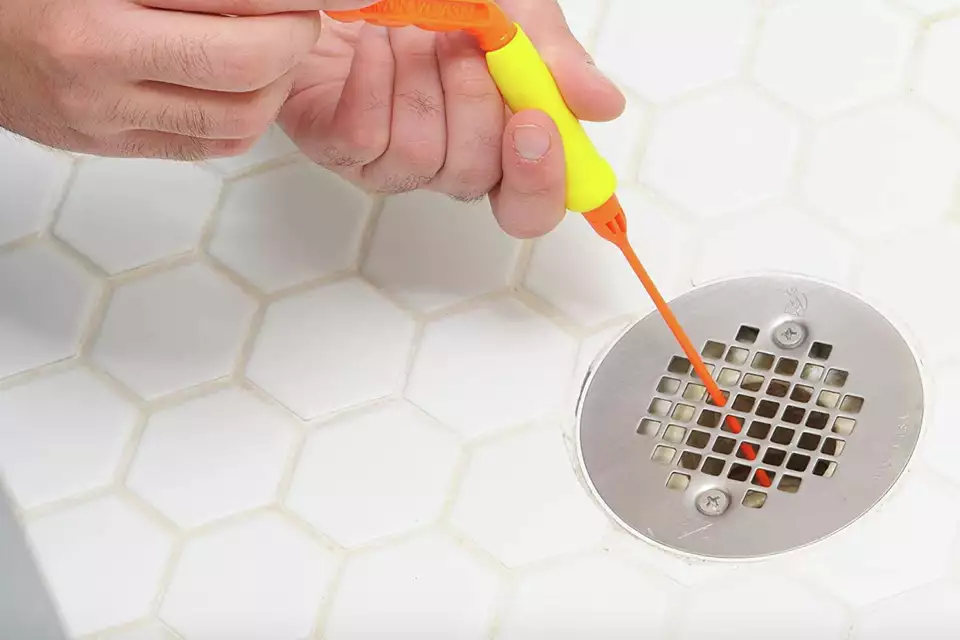
- Physically remove visible gunk. A bent wire coat hanger or a $6 plastic drain-cleaning tool (they look like a barbed zip tie) works great here. Pull straight up and you’ll be shocked at what comes out, even from a drain that “isn’t clogged.”
- Pour half a cup of baking soda down the drain.
- Follow with a cup of white vinegar. It’ll fizz. That’s the reaction breaking down grime, not just a fun science trick.
- Let it sit for 15 minutes.
- Flush with a full pot of boiling water.
I’ve found that this baking-soda-and-vinegar combo works better than most store-bought enzyme cleaners for the price, and it won’t eat through your pipes the way harsh chemical cleaners can.
Repeat this once a month if you’ve got hard water or long hair in the house, and you’ll likely never deal with drain smell again.
A quick note on tools: don’t reach for a wire coat hanger with a sharp cut end unless you’ve smoothed it down first. I scratched up the inside of a chrome drain cover pretty badly doing this in my first apartment, and it never looked quite right again. Spend the six bucks on the actual plastic drain tool. It’s barbed specifically to grab hair and gunk without scraping metal or plastic finishes.
Also worth knowing: plastic PVC drains and older metal drains respond a little differently to this process. PVC is more forgiving and can handle the boiling water step without issue. If your home has older metal piping, let the water cool for a minute or two before pouring, since extreme heat can occasionally stress old joints and seals over time.
Deep Clean the Overflow Drain Too
This is the step almost everyone skips, and it’s often the actual source of a mystery smell in a bathtub-shower combo.
- Remove the overflow plate. It’s the metal or plastic cover near the top of the tub, usually held by one or two screws.
- Pull out the linkage if there is one. Older tubs have a trip-lever mechanism attached to a long rod. It’s usually caked in hair and soap scum.
- Clean the rod and the cavity with an old toothbrush and the vinegar solution from the last step.
- Reassemble and test.
I skipped this step on my own tub for years because I genuinely didn’t know it existed. The first time I pulled that plate off, I understood immediately where the smell had been coming from the whole time.
Try an Enzyme Drain Cleaner for Ongoing Buildup
If mechanical cleaning gets you 80% of the way there but a faint smell lingers, an enzyme-based drain treatment is your next move. These use bacteria that actually eat the organic gunk lining your pipes instead of just masking it.
Pour it in before bed, since it needs several hours of undisturbed contact time to work. Use it weekly for a month, then monthly as maintenance. I’m opinionated about this one: skip the “fresh scent” gimmick versions. You want the plain enzyme formula, not a version that’s 40% air freshener, because the fragrance ones tend to skimp on the actual bacterial concentration that does the real work.
TRY OUT THIS EFFECTIVE SHOWER DRAIN ODOR ELIMINATOR!

When the Smell Points to a Bigger Plumbing Vent Problem
If you’ve refilled the trap, scrubbed the pipe walls, cleaned the overflow, and run enzyme cleaner, and the smell is still hanging around (especially if multiple drains in the house smell the same way, or the smell gets worse on windy days), you’re probably dealing with a venting issue, not a drain issue.
Signs it’s a vent problem and not a drain problem:
- Gurgling sounds when other fixtures drain
- Smell shows up in more than one room
- Smell is stronger after running the washing machine or dishwasher
This one isn’t a DIY weekend fix. A blocked roof vent or a poorly designed vent stack needs a licensed plumber, sometimes with a camera snake to find the blockage. I’d rather tell you that upfront than have you spend a Saturday scrubbing a drain that was never the problem.
I ran into this exact issue in a rental I managed a few years back. Every fix imaginable got tried on that shower drain, fresh trap water, full pipe scrub, new gasket on the stopper, and the smell kept creeping back within a week. Turned out a bird’s nest had partially blocked the roof vent stack. Once a plumber cleared it, the smell was gone permanently. The lesson: if you’ve done the basics and the smell keeps returning on a schedule, stop treating the symptom and get the actual airflow checked.
Real Talk: What’s Not Worth Your Time (or Money)
Here’s where I get honest about what actually works versus what’s a waste of a Saturday.
- Skip the bleach. It might kill the smell for a day, but bleach doesn’t dissolve the organic gunk causing it, so the odor comes right back. It also reacts badly if any ammonia-based cleaners are anywhere nearby, and it’s rough on your pipes and septic system if you have one.
- Don’t reach for chemical drain openers as a smell fix. Those products are designed to eat through clogs, not odor-causing biofilm, and they’re honestly overkill and kind of dangerous for a problem that a $2 box of baking soda solves better.
- Scented gel drain inserts are a short-term band-aid at best. They cover the smell for a few days and do nothing about the actual cause. I’ve tried basically every version on the market for testing purposes, and none of them held up past a week.
- Don’t assume it’s mold in the grout right away. Grout mold has a musty smell, not the rotten-egg or sewage smell most drain issues produce. If you’re scrubbing tile grout and ignoring the drain, you might be cleaning the wrong thing entirely.
- Quick side note: if the smell is specifically like rotten eggs and strong enough to notice from another room, and refilling the trap doesn’t fix it, get it checked sooner rather than later. That specific smell can indicate a sewer gas leak, and while it’s rarely dangerous in small amounts, it’s not something to let slide for months.
How to Keep Your Shower Drain Smelling Fresh Long-Term
A few habits will keep you from ever landing back on this page:
- Use a drain hair-catcher. They’re cheap and they stop the majority of biofilm-causing gunk before it even gets into the pipe.
- Flush every drain (used or not) with hot water weekly.
- Do the baking soda and vinegar treatment monthly.
- Clean the overflow plate twice a year.
- If a bathroom sits unused for more than two weeks, pour water down every drain in it before you leave and again when you get back.
None of this takes more than five minutes a month once it’s a habit, and it’s a whole lot less annoying than tearing into a bathroom smell mystery every few months.
Final Thoughts
A smelly shower drain with no visible clog isn’t a mystery once you know where to look. It’s almost always the trap, the biofilm, or the overflow, and all three are fixable without calling anyone. Start with the cheapest, easiest fix (the water refill) and work your way up from there before you assume the worst.
Have you run into a drain smell that none of these fixes solved? Tell me what worked (or didn’t) for you in the comments below. I read every one, and honestly, some of the best tricks I use now came from readers who found workarounds I hadn’t tried myself.