
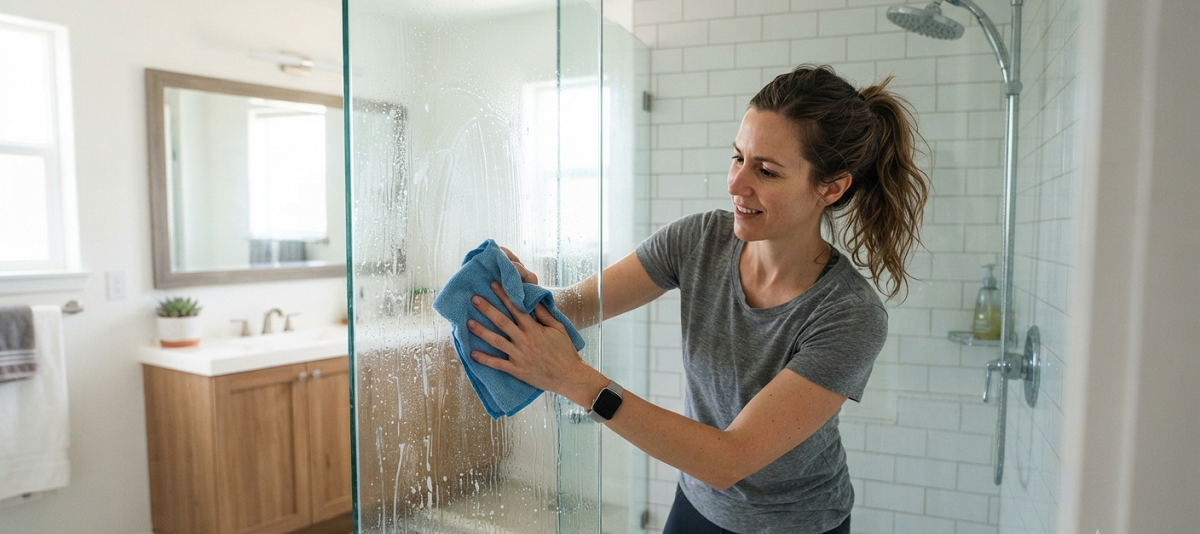
You step out of the shower, glance at the glass door, and there it is again. That cloudy, chalky film that makes your bathroom look like it hasn’t been cleaned since the Clinton administration, even though you scrubbed it three days ago.
I get it. Hard water stains are sneaky. They build up fast, they make a brand-new shower look ten years old, and they seem to laugh in the face of whatever blue spray bottle you grabbed at the store.
I’ve fixed this exact problem in my own bathroom twice (once in a house with water so hard you could practically chew it), and I’ve helped two neighbors tackle theirs too. There was one house where the previous owners had basically given up and just hung a shower curtain over the glass door to hide the damage. I found that out after I’d already closed on the place, which was a fun surprise for moving weekend.
The good news: you don’t need harsh chemicals or a professional cleaning crew. You need the right natural ingredients, a bit of technique, and about 20 minutes of your Saturday morning.
Let’s get your glass back to “sparkling,” not “somewhat less foggy.”
Why Hard Water Stains Shower Glass in the First Place
Before we get into the fix, it helps to know what you’re actually dealing with.
Hard water contains high levels of dissolved minerals, mostly calcium and magnesium. Every time water splashes on your glass and evaporates, it leaves those minerals behind. One shower won’t do much damage. But shower after shower, week after week, those mineral deposits build into a stubborn film.
This is why the stains always seem worse at the bottom of the door or wherever water pools and dries slowly. That’s where the mineral concentration is highest.
If you live somewhere with notoriously hard water, this buildup happens faster. I lived in a house once where the water was so mineral-heavy that a glass of tap water left a ring in the sink overnight. My shower door looked like frosted glass within two months, and it definitely wasn’t the “spa-like” frosted look I was going for.
There’s also a difference between fresh mineral film and old, hardened deposits. Fresh film wipes away with almost nothing. Old deposits harden into a chalky layer that bonds to the glass surface, sort of like how limescale builds up inside a kettle. The longer it sits, the more it cures onto the glass, which is why that six-month-old stain takes so much more effort than last week’s.
You can usually tell how bad your water is just by looking at your fixtures. White, crusty buildup around your faucet spout or showerhead holes is a dead giveaway. If your showerhead sprays in a weird, uneven pattern, that’s mineral buildup clogging the holes, and it’s a sign your glass is fighting the same battle.
Knowing this matters because it tells you the fix isn’t really about scrubbing harder. It’s about dissolving those mineral deposits, which means you need something acidic.
The Best Natural Ingredients for Removing Hard Water Stains
You don’t need a cabinet full of specialty cleaners. Almost everything that actually works is already in your kitchen.
- White vinegar is the workhorse here. It’s mildly acidic, which means it breaks down calcium and magnesium deposits without damaging most glass or metal fixtures. I keep a spray bottle of straight white vinegar under my bathroom sink at all times, right next to the toilet brush.
- Baking soda is your scrubbing partner. On its own, it’s a mild abrasive. Mixed with vinegar, it creates a paste that clings to vertical glass instead of sliding off, which is exactly what you need for a shower door.
- Lemons work in a pinch, and they smell a lot better than vinegar if you’re sensitive to that sharp smell. The citric acid does similar work to vinegar, just a bit more gently.
- Borax is optional but genuinely useful for heavier buildup. It’s a natural mineral powder that boosts cleaning power when mixed with vinegar. I don’t reach for it every time, but if my door hasn’t been cleaned in a few months, it earns its spot on the counter.
- Essential oils are purely optional, but I add a few drops of tea tree or lemon oil to my vinegar spray bottle. It doesn’t boost the cleaning power at all, honestly, but it cuts down on the vinegar smell, and tea tree oil has some natural antimicrobial properties that help with soap scum too.
Here’s what I want to be upfront about: none of these ingredients work as fast as a harsh commercial acid cleaner. If you want instant results, this isn’t that method. What you’re trading is speed for something that won’t irritate your lungs, won’t damage your grout as badly, and costs pennies instead of dollars per use.
What You’ll Need Before You Start
Grab these before you get started so you’re not dripping vinegar across the bathroom floor looking for a sponge halfway through.
- A spray bottle
- White vinegar (a full cup, sometimes more for larger doors)
- Baking soda
- A non-scratch sponge or microfiber cloth
- A squeegee or a dry microfiber towel
- Rubber gloves, if your skin is sensitive to vinegar’s smell or acidity
That’s it. No specialty tools, no trip to the hardware store required.
Step-by-Step: How to Clean Hard Water Stains Off Shower Glass Naturally
Here’s the exact method I use, in order.
Step 1: Heat Up Your Vinegar
Warm vinegar works faster than cold vinegar because heat helps break down mineral deposits. Microwave a cup of white vinegar for about 30 seconds, just until it’s warm to the touch, not boiling.
Step 2: Spray the Glass Generously
Pour the warm vinegar into a spray bottle, or just use it straight from the cup with a cloth. Coat the entire glass surface, focusing extra attention on the cloudiest spots.
Step 3: Let It Sit
This is the step everyone skips, and it’s the reason their scrubbing doesn’t work. Give the vinegar 10 to 15 minutes to actually dissolve the mineral film. Set a timer. Go fold laundry. Don’t touch it yet.
For stubborn, older stains, I’ll sometimes press paper towels soaked in warm vinegar directly against the worst spots and let them sit for a full 20 minutes. The paper towels keep the vinegar in contact with the glass instead of dripping straight down, which means more of the acid actually goes to work on the mineral film instead of ending up in the tub.
Step 4: Make Your Baking Soda Paste
While you wait, mix baking soda with just enough water (or vinegar) to form a thick paste, about the consistency of toothpaste.
Step 5: Scrub in Circular Motions
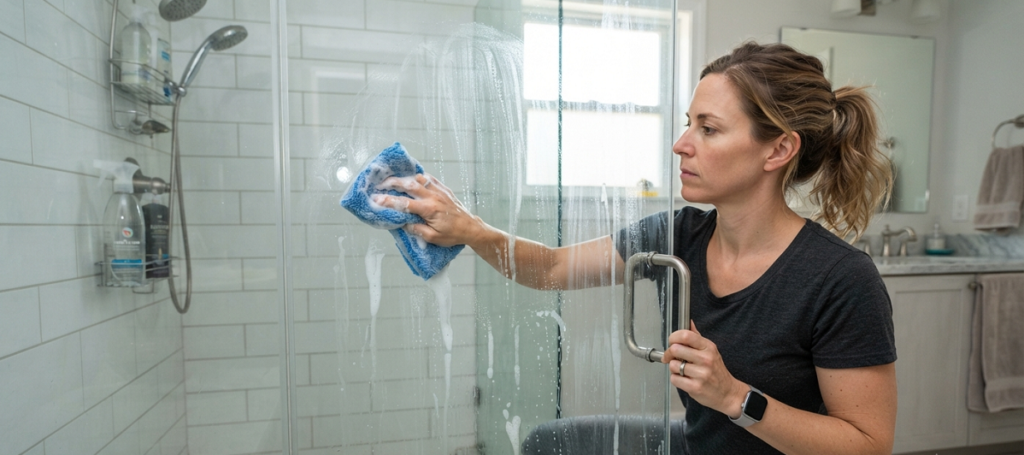
Apply the paste to a non-scratch sponge or microfiber cloth and work it into the glass using small circles. Focus on stained areas. You’ll actually feel the texture change under your hand as the film breaks up.
Take your time here. I usually spend a good 5 to 7 minutes working the paste across the whole door, not just the visible cloudy patches. Mineral film builds up in a thin layer everywhere, even on spots that don’t look stained yet, so a full pass keeps the whole surface consistent instead of leaving patchy clean spots next to hazy ones.
Step 6: Rinse Thoroughly
Rinse with warm water, making sure you get all the baking soda residue off. Leftover paste can dry into its own chalky film, which defeats the whole purpose.
Step 7: Dry the Glass Immediately
This step matters more than people think. Use a squeegee or a microfiber towel to dry the glass completely. Water that air-dries is exactly what caused the stains in the first place.
Step 8: Don’t Forget the Track and Edges
The bottom track of a sliding shower door is where mineral buildup goes to hide. Dip an old toothbrush in vinegar and scrub along the track and any metal edges or hinges. This is the spot most people skip entirely, and it’s usually the first place stains creep back from.
Preventing Hard Water Buildup on Shower Glass (So You’re Not Doing This Every Month)
Cleaning is only half the battle. If you don’t change anything else, the stains come right back.
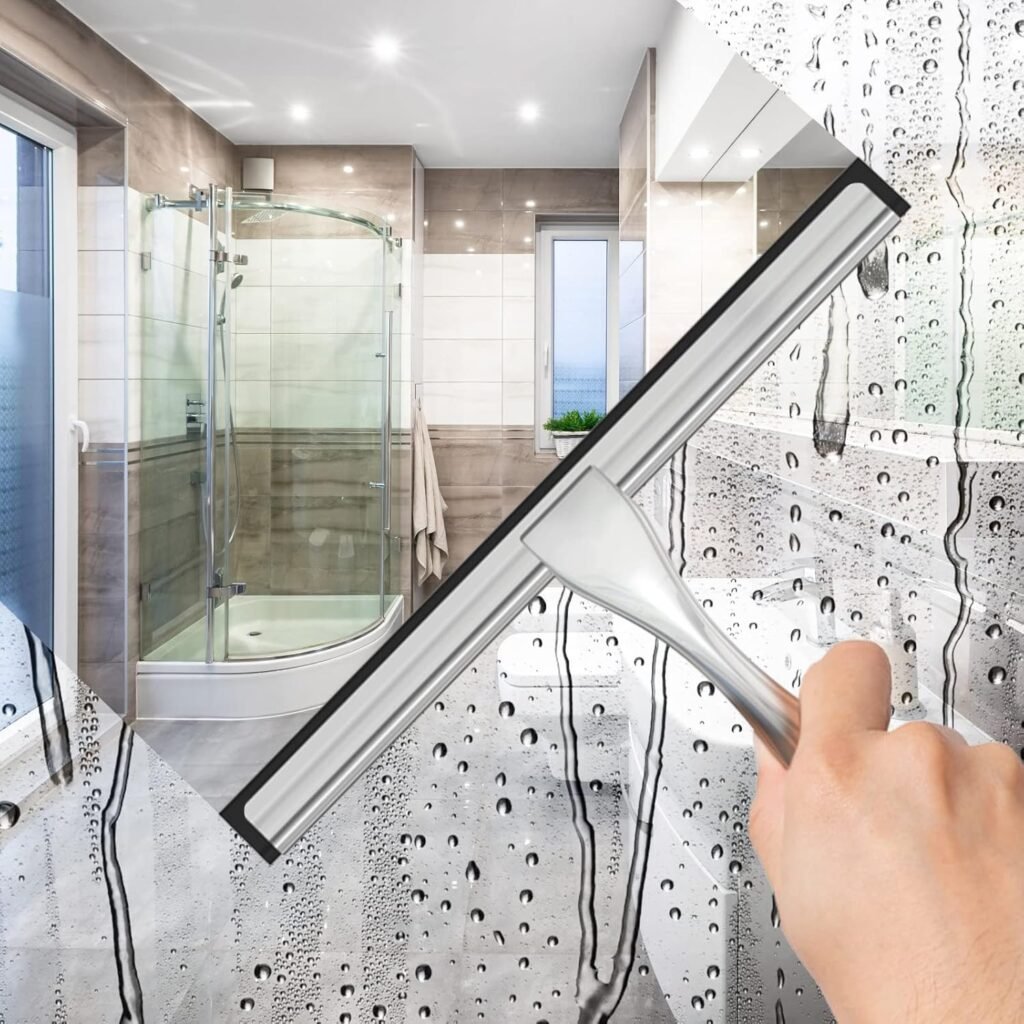
- Squeegee after every shower. I know, it feels like one more chore. But 15 seconds with a squeegee after each shower prevents 90 percent of future buildup. I keep mine hanging on a suction hook right next to the door so there’s zero excuse not to use it. I got my whole family into the habit by making it a rule: whoever showers last has to squeegee the door before they leave the bathroom. It took about two weeks before it became automatic.
- Apply a rinse-aid spray weekly. A simple mix of water and vinegar (about a 1:1 ratio) in a spray bottle, misted on after your last shower of the day, keeps minerals from settling in.
- Consider a water softener if your water is especially hard. This is a bigger investment, and I won’t pretend it’s cheap. But if you’re scrubbing your glass every single week and losing that fight, a whole-house softener or even a shower-head filter can save you hours of frustration long term.
- Wax or seal the glass. A thin coat of car wax (yes, actual car wax) or a rain-repellent product creates a barrier that makes water bead up and slide off instead of clinging and drying. I do this about twice a year, and it genuinely cuts my cleaning time in half.
- Quick side note: if your glass has etching, meaning the mineral damage has actually pitted the surface rather than just coating it, no amount of vinegar will fix that. Etching is permanent damage, not a stain. At that point you’re looking at glass polishing kits or, honestly, replacement.
Real Talk: What Won’t Work (And What Can Actually Make It Worse)
I want to save you some wasted weekends here.
- Skip the harsh abrasives. Steel wool, scouring pads, or anything labeled “heavy duty scrub” will scratch glass. Those scratches actually trap more minerals over time, making future staining worse, not better.
- Don’t mix vinegar with bleach. This one is important for safety, not just effectiveness. Mixing vinegar and bleach creates toxic chlorine gas. Always use these separately, never together, and rinse thoroughly between products if you’re testing different cleaners.
- Straight lemon juice left too long can etch some glass finishes. I made this mistake on a decorative glass panel once, letting lemon juice sit for nearly an hour because I got distracted. The citric acid started dulling the surface. Acid is powerful, but more time isn’t always better.
- Commercial “miracle” cleaners are hit or miss, and pricey. I’ve tried several of the shower-specific sprays that promise to dissolve stains in seconds. Some work fine. Most are just vinegar with fragrance and a markup. I’ve found that spending $12 on a bottle of scented spray is a total waste of money when a $2 jug of white vinegar does the same job.
- Don’t expect a one-time fix on years of buildup. If your glass hasn’t been properly cleaned in a year or more, you may need two or three rounds of this process. That’s normal. Deep mineral deposits build in layers, and they come off in layers too.
Quick Answers to Common Hard Water Stain Questions
How often should I deep clean my shower glass? For most households, once every two to three weeks keeps the buildup manageable. If your water is especially hard, weekly is a safer bet.
Does vinegar damage shower caulk or grout? Prolonged, repeated exposure can wear down grout over time, especially unsealed grout. I avoid soaking caulk lines directly in vinegar and stick to the glass itself. A quick rinse afterward helps limit contact time.
Can I use this method on frameless glass doors? Yes. Frameless doors are actually easier to treat since there’s less metal framing to worry about corroding. The same steps apply.
What if the stains still won’t come off after two or three attempts? At that point, you’re likely dealing with etching rather than surface mineral film. Etching means the glass itself has been chemically pitted, and cleaning products, natural or otherwise, won’t reverse it. A glass polishing kit or professional resurfacing is the next move.
Wrapping Up: Consistency Beats Intensity
Here’s my parting wisdom after years of fighting this exact battle in my own bathroom: the secret isn’t a magic product. It’s consistency. A quick squeegee after every shower will save you more time than any deep-clean session ever will.
Start with the vinegar and baking soda method above, then build the prevention habits in afterward. Your future self, staring at clear glass instead of a chalky mess, will thank you.
Have you tried any of these methods, or do you have your own trick for beating hard water stains? Drop a comment below. I read every one, and I’m always curious what’s working in other people’s bathrooms.