
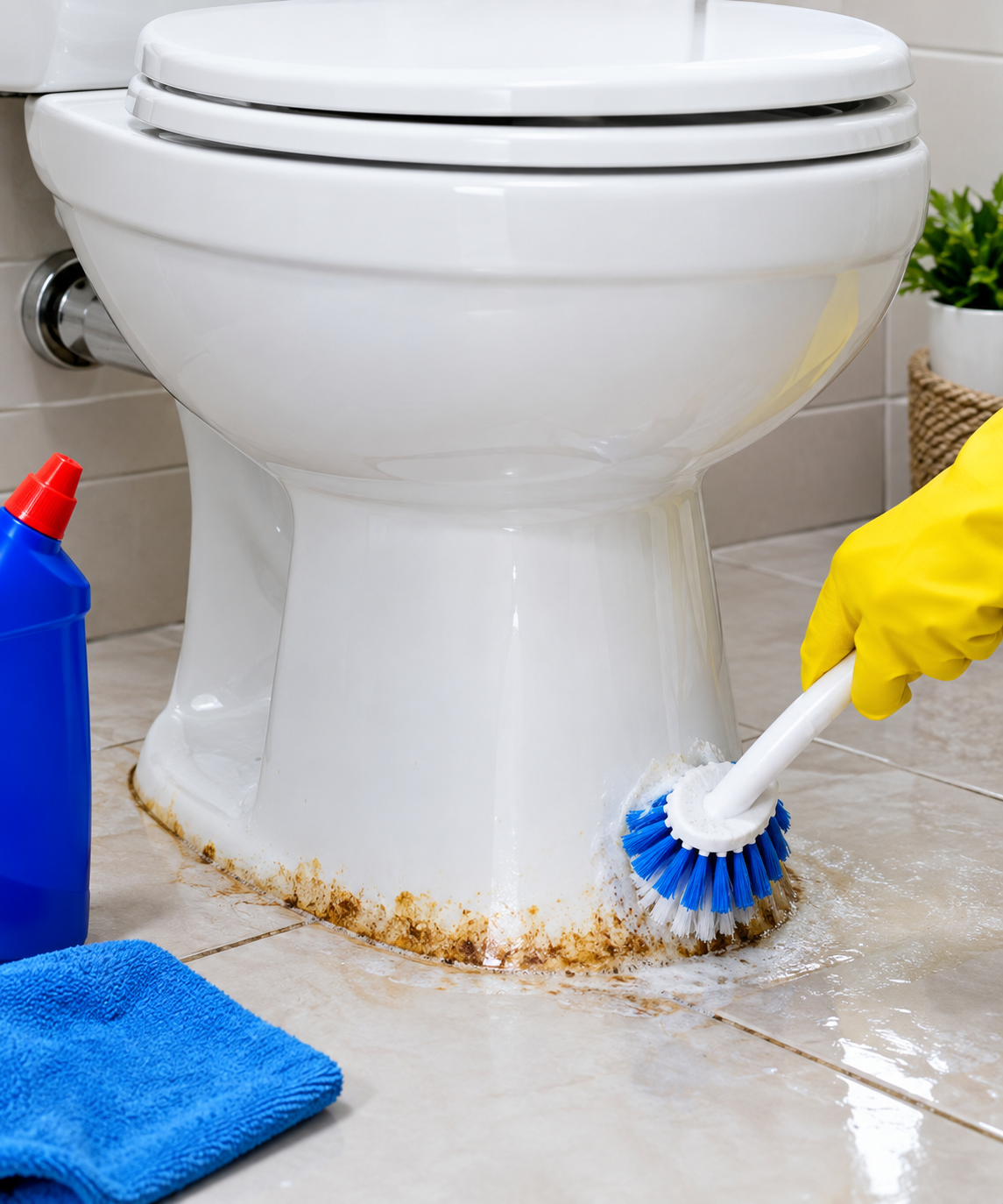
You scrub the bowl, the water runs clear, and twenty minutes later that same brownish ring is sitting right where it was before. That’s the frustrating part of toilet stains near the waterline or at the bottom of the bowl: they aren’t dirt in the usual sense, so ordinary cleaning products often glide right past them without doing much.
Most of the time, the stain isn’t a hygiene failure on your part. It’s mineral chemistry. Understanding what’s actually causing the discoloration makes it much easier to pick a method that works instead of cycling through the same spray bottle over and over.
Why Brown Stains Show Up at the Bottom of the Bowl
The brown or rust-colored ring that collects near the water line, or as a blotch at the bottom, is almost always tied to hard water. Hard water carries a higher concentration of dissolved minerals than “soft” water does, and the two most responsible for brown or reddish-brown discoloration are iron and manganese. When iron in the water is exposed to air, it oxidizes, which is a fancier way of saying it rusts. That rust bonds to the porcelain rather than sitting loosely on top of it, which is why wiping with a rag or a standard bathroom cleaner usually does very little.
Manganese behaves in a similar way but tends to leave a darker, almost blackish-brown stain rather than the classic orange-brown of iron. If your water comes from a private well, iron and manganese staining tends to be more pronounced, since well water often carries higher mineral concentrations than municipally treated water.
There’s a second, less common possibility worth ruling out: if the stain appeared suddenly rather than building up gradually, and especially if the water in the tank or bowl itself looks discolored right after a flush, that can point to sediment or corrosion inside the plumbing or the tank’s fill valve rather than a surface stain on the porcelain. That’s a different problem, and no amount of scrubbing the bowl will fix it — it needs attention to the pipe or tank itself.
Confirming It’s a Mineral Stain and Not Something Else
Before treating the bowl, take a look at where the discoloration sits. A stain that follows the curve of the waterline, or sits below it in a ring or blotch pattern, and that doesn’t rub off easily with a fingernail, is consistent with mineral buildup. If you run a finger over it and it feels slightly rough or gritty rather than smooth, that also points to a mineral deposit rather than surface grime.
Mold or mildew can also cause darker staining, particularly in a toilet that isn’t flushed often (a guest bathroom, for example) or in humid climates. Mold stains tend to look more uniformly dark, sometimes with a slightly fuzzy or pink-tinted edge, and they usually respond to standard disinfecting cleaners in a way that true mineral stains don’t. If a stain lifts noticeably after a round of regular bleach-based bowl cleaner, it was probably organic growth rather than rust or lime scale.
Removing the Stain With Vinegar
White vinegar is mildly acidic, and acid is what dissolves mineral deposits, so it’s a reasonable starting point for a stain that isn’t too severe. It’s slower than store-bought stain removers, but it’s inexpensive and low-risk to the porcelain.
Turn off the water supply to the toilet at the shutoff valve behind the bowl, then flush to drain as much water out of the bowl as you can. A wet/dry shop vac or an old towel can help remove the last bit of standing water so the vinegar sits directly against the stain rather than getting diluted. Pour in enough undiluted white vinegar to cover the stained area — for a stain confined to the bottom of the bowl, a couple of cups is usually enough; for a stain that runs higher up the sides, closer to half a gallon.
Let it sit for at least a few hours, and ideally overnight for a stain that’s been building for a while. Then scrub with a toilet brush and flush. For stains that concentrate near the rim rather than the bottom, a thicker paste made from vinegar and borax, or vinegar and table salt, clings to the vertical surface better than liquid vinegar alone and gives the acid more contact time.
Don’t expect a heavy, long-standing stain to disappear in one pass. Repeating the treatment over a few days is normal, and it’s a better outcome for the porcelain than reaching for something abrasive out of impatience.
Baking Soda and Vinegar for Lighter Buildup
For staining that’s more recent or lighter, baking soda combined with vinegar can be enough, and it has the advantage of being gentle. Sprinkle baking soda directly onto the stained area, then add vinegar on top. The mixture will fizz — that reaction helps lift loosened mineral particles off the surface — and once it settles, a toilet brush can work the paste into the stain. This combination is better suited to maintenance cleaning and mild discoloration than to a stain that’s been sitting for months, since it’s a weaker acid reaction than straight vinegar.
When You Need Something Stronger: Commercial Descalers
For stains that have built up over a long period, or for households on well water with consistently high iron content, plain vinegar sometimes isn’t strong enough on its own. Commercial products formulated specifically for calcium, lime, and rust — CLR is one widely available example — use a more concentrated acid blend designed to dissolve mineral deposits faster than a household pantry ingredient can. Products like these, or brands such as Lime-A-Way, are generally applied directly to the drained bowl, left for a short period (check the label, since times vary by product), and then scrubbed and flushed.
Always follow the label directions exactly, including the recommended contact time and any ventilation instructions — acidic cleaners can produce fumes in an enclosed bathroom, so crack a window or run the fan while you work. Wear rubber gloves. Acidic cleaners can irritate skin with prolonged contact, and if you have kids or pets in the house, keep the bathroom door closed while the product sits and store it out of reach afterward.
One Combination to Avoid
It’s worth saying plainly: never mix an acidic toilet cleaner with bleach or a bleach-based product. The combination can release chlorine gas, which is genuinely hazardous to breathe in a small, poorly ventilated space like a bathroom. If you’ve recently used a bleach-based cleaner in the bowl, flush thoroughly and let the bowl sit empty for a bit before introducing an acidic descaler or vinegar. This isn’t a minor caution — it’s the one rule in toilet cleaning that’s worth being strict about.
Using a Pumice Stone — Carefully
A pumice stone, kept wet, can physically break down mineral deposits that liquid treatments haven’t fully lifted, and it’s a common recommendation for toilet stains. It does work, but it carries real risk if used incorrectly: pumice is abrasive, and scrubbing a dry stone, or scrubbing too hard, can scratch porcelain. Once porcelain is scratched, the surface becomes rougher at a microscopic level, which ironically makes it easier for future stains to grab hold and harder to keep clean — so a shortcut today can create a worse long-term problem.
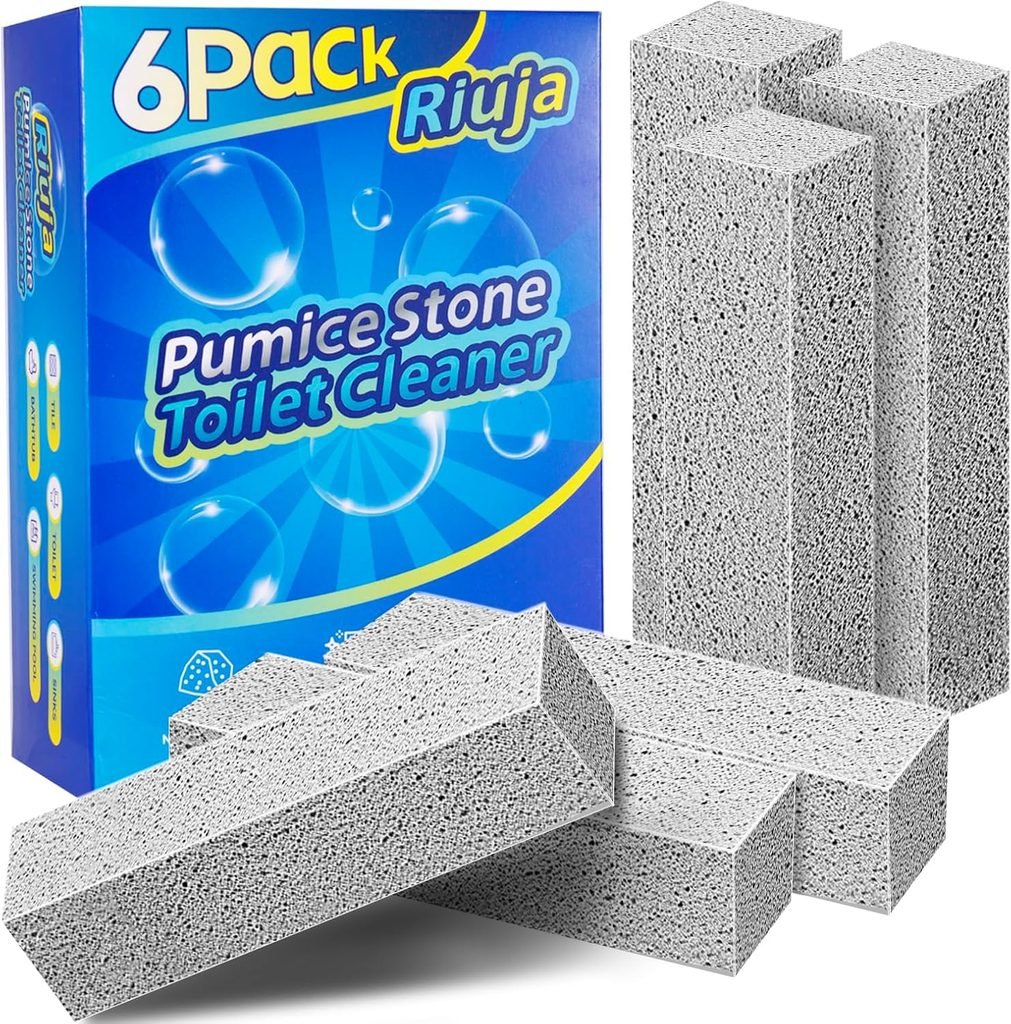
If you use one, keep both the stone and the bowl wet throughout, use light pressure, and test on a small, less visible area first. Some manufacturers also sell toilet-safe pumice sticks specifically designed to be gentler than a generic pumice stone; those are a safer bet than a stone pulled from a foot-care kit. If your toilet has any kind of glaze wear or you’re not confident about the surface, an abrasive sponge or fine synthetic scrub pad is a lower-risk alternative to actual pumice.
Why the Stain Keeps Coming Back
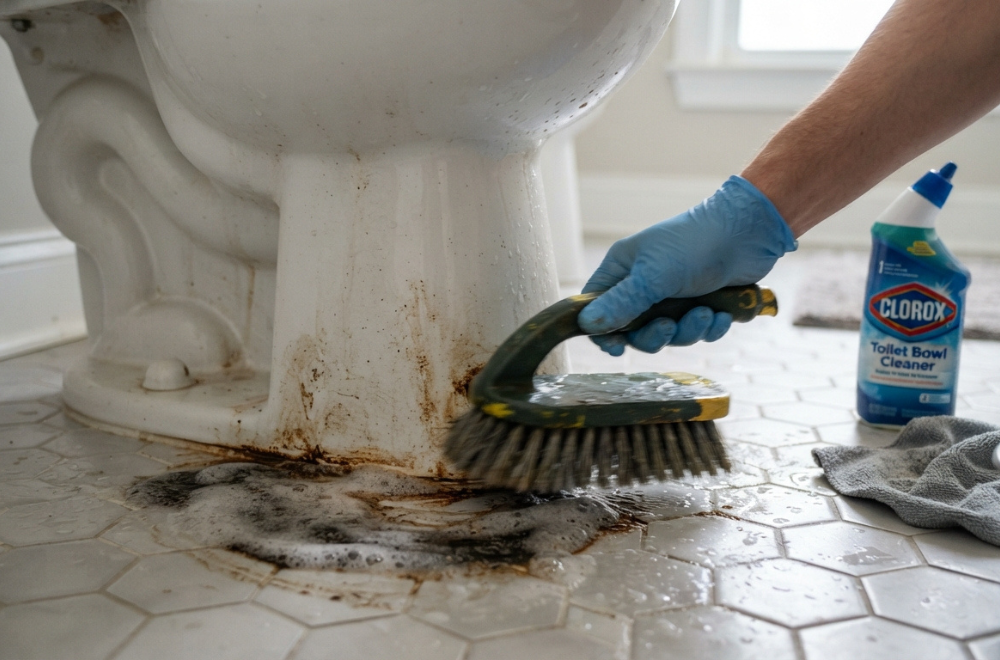
If you’ve cleaned a stain thoroughly and it reappears within a matter of weeks, that’s the hard water mineral content reasserting itself rather than a sign you did the cleaning wrong. As long as the water source contains dissolved iron or manganese, new deposits will keep forming, just more slowly on a clean surface than on one that already has buildup to grab onto.
Two things help slow the return: cleaning the bowl on a regular schedule so mineral film doesn’t get the chance to compound layer by layer, and, for households with consistently severe staining, looking into a whole-house water softener or iron filter. That’s a bigger investment, and it isn’t necessary for everyone, but for well-water households where the stain comes back aggressively every month, treating the water itself addresses the cause rather than the symptom.
Leaving a small amount of white vinegar in the bowl overnight once every week or two, even when there’s no visible stain yet, is a low-effort way to keep new mineral deposits from ever fully setting.
When to Call a Plumber Instead
Most brown staining is cosmetic and doesn’t need professional attention. But there are a couple of situations where it’s worth getting a plumber’s opinion rather than continuing to treat the bowl:
If the water coming into the tank itself looks brown or rust-tinted right after a flush — not just staining on the porcelain, but the water — that points toward corrosion or sediment inside the supply line or the tank’s internal components, which cleaning products in the bowl won’t resolve. And if staining is severe, recurring rapidly, and paired with a metallic smell or taste from your tap water generally, it’s worth having your water tested. That tells you whether you’re dealing with a plumbing issue specific to the toilet or a broader water-quality issue worth addressing at the source.
A Realistic Expectation
A stain that’s been building for years, especially one that’s slightly etched into the porcelain rather than just sitting on top of it, may not come back to a perfectly white finish no matter what you use. In that case, the goal shifts from full removal to noticeable improvement and preventing further buildup — which a consistent light cleaning schedule does far more effectively than any single deep-clean session.