
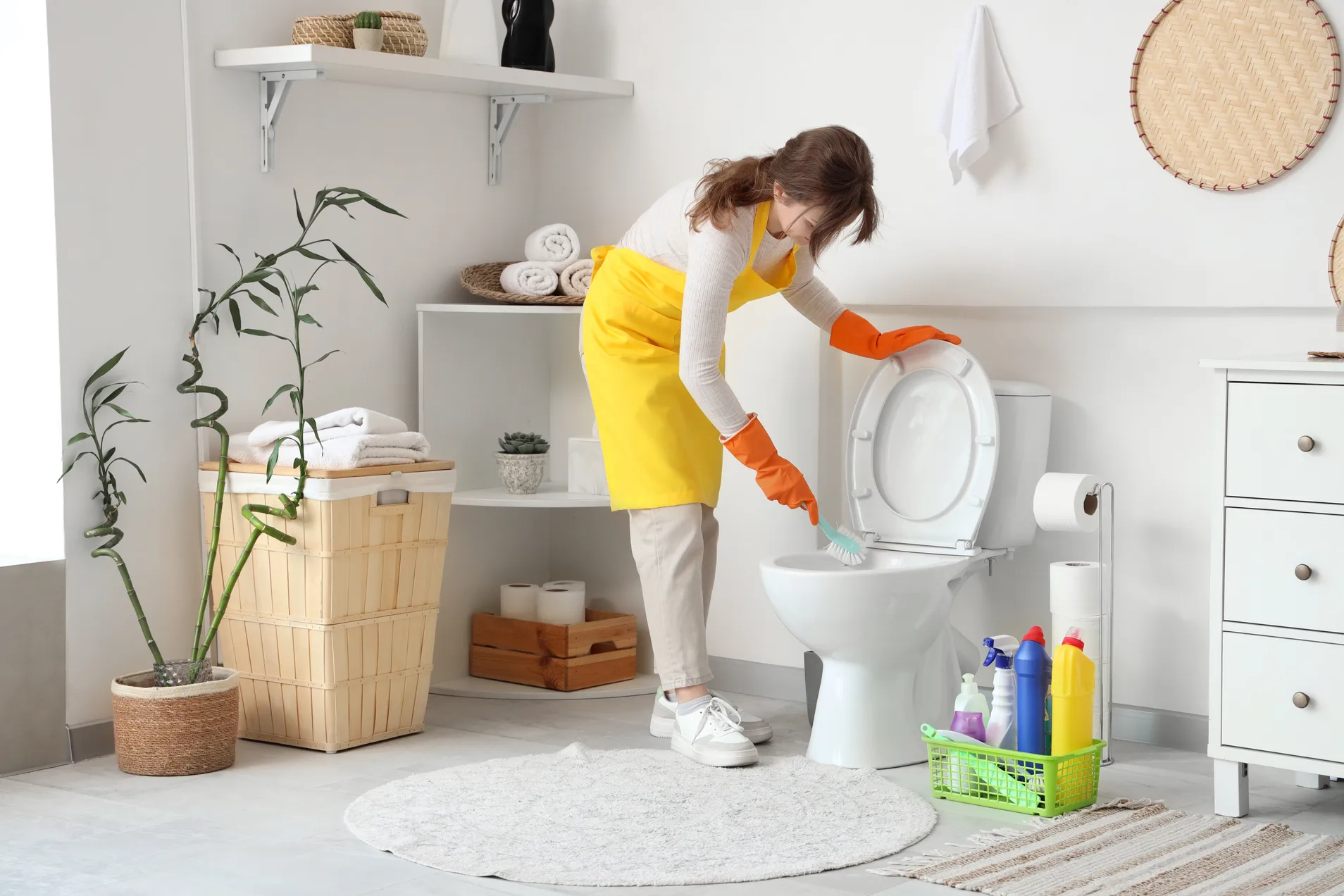
You clean the toilet bowl, wipe the seat, mop the floor, and maybe even scrub around the base. The bathroom looks clean. Then the smell comes back.
If you keep asking, “Why does my toilet smell like urine even after cleaning?”, the problem may not be the toilet bowl at all.
Urine can reach places that ordinary cleaning misses: underneath the toilet seat hinges, around mounting hardware, in grout beside the toilet, along the floor-level caulk, behind the toilet, or even beneath the toilet if there is a plumbing leak. Once urine residue dries on a porous surface, simply wiping it with a general bathroom cleaner may not remove everything that is producing the odor.
There is another possibility that is easy to overlook: what smells like urine may actually be a plumbing odor. A failed toilet seal, a dry drain trap, or a venting problem can allow sewer-related odors into the bathroom.
That distinction matters. If the source is grout, you need a different cleaning strategy. If the smell is coming from beneath the toilet, more scrubbing will not solve it. And if the odor is actually sewer gas, masking it with fragrance is treating the symptom rather than the problem.
The fastest way to solve a persistent toilet odor is therefore to find where the smell is strongest before cleaning anything again.
The smell may be coming from somewhere other than the toilet bowl
A toilet has far more odor-holding surfaces than the inside of the bowl.
Think about everything around it that can collect small amounts of liquid:
- The underside of the toilet seat
- Seat hinges and mounting bolts
- The porcelain around the bowl
- The rear of the toilet
- The floor immediately around the base
- Grout lines
- Caulk around the toilet
- Baseboards behind or beside the toilet
- Bathroom rugs or mats
- The underside of the toilet base
- The area beneath the flooring if a leak has gone unnoticed
This is why a toilet can look perfectly clean while the bathroom still smells unpleasant.
Glazed porcelain is relatively easy to wipe clean because its finished surface does not behave like an absorbent material. Grout is different. Some flooring materials, unfinished wood, caulk, fabrics, and damaged surfaces can also retain contamination.
A mop can pass over a grout line without actually removing material that has penetrated into it. A spray cleaner can make the porcelain smell fresh for an hour without reaching residue hidden beneath a hinge or along the edge of the floor.
So before reaching for a stronger cleaner, change the question from “What should I clean?” to “Where exactly is the odor coming from?”
That small change can save a lot of unnecessary scrubbing.
Why dried urine can keep smelling after the visible mess is gone
Urine is not simply water. It contains substances including urea, uric acid, salts, and other waste products. As urine dries and its components remain on a surface, microorganisms can contribute to the familiar ammonia-like odor associated with old urine residue.
The particularly frustrating part is that dried residue can remain in microscopic spaces that are difficult to reach with ordinary cleaning.
This is especially relevant to porous grout.
Professional cleaning guidance from Clorox describes crystallized urine residue and naturally occurring bacteria as contributors to persistent urine odors, noting that porous surfaces can retain these residues and that re-wetting can make the odor noticeable again.
That explains a common pattern:
The bathroom smells fine when it is dry, then smells strongly after mopping or showering.
Moisture can make previously deposited material noticeable again. Humidity can also make odors easier to detect.
So if the smell reliably returns after the bathroom becomes damp, pay particular attention to the floor, grout, caulk, rugs, and other porous materials around the toilet.
1. Urine may be trapped in the grout around the toilet
If your toilet sits on a tiled floor, start by inspecting the grout.
The area immediately around a toilet is an obvious place for small splashes to accumulate. Over time, repeated contamination can leave residue in grout lines even when the surrounding tile looks spotless.
This is one reason mopping alone can be disappointing.
The mop primarily deals with the exposed floor surface. Grout has texture and pores, so contamination can remain below the level that a quick wipe reaches.
Look closely at:
- The grout directly in front of the toilet
- The grout on both sides of the bowl
- The area behind the toilet
- Grout around the toilet’s mounting points
- Any grout that has become dark, discolored, cracked, or difficult to clean
If the smell is strongest when you put your nose relatively close to the floor rather than near the bowl, that is a useful clue.
How to clean urine-contaminated grout
First remove ordinary dirt and cleaning-product residue from the area. Then use a commercial urine-odor cleaner that is specifically labeled for the particular surface.
Enzyme-based urine cleaners are one option. Some manufacturers also formulate urine removers using hydrogen peroxide and surfactants. There is no single product chemistry that is appropriate for every bathroom surface, so the label matters more than the marketing description.
For example, Clorox’s current urine-remover product is specifically formulated for urine stains and odors and lists toilets and grout among its compatible surfaces.
Apply the product to the contaminated grout according to its directions and give it the required contact or dwell time. Do not immediately wipe it away simply because the surface looks wet.
A stiff grout brush can help work a suitable cleaner into textured grout. Afterward, rinse or wipe as directed and allow the area to dry completely.
If the odor has penetrated deeply into old, damaged, or unsealed grout, one cleaning may not restore the material completely. At that point, professional grout cleaning or, in severe cases, grout repair or replacement may be more practical than repeatedly applying stronger chemicals.
What about sealed grout?
Sealed grout is more resistant to absorption than unsealed grout, but sealing is not a force field.
A grout sealer can deteriorate with age, wear, and repeated cleaning. Existing contamination also needs to be dealt with before resealing.
Do not simply seal over an odor and assume it has disappeared. The source should be cleaned first, allowed to dry, and then the grout can be evaluated for resealing if the particular material and sealer are compatible.
2. The toilet seat hinges may be the real source
This is one of the easiest places to overlook.
The toilet seat is cleaned frequently because it is visible and accessible. The hardware underneath it is another matter.
Urine splash can reach the underside of the seat, hinge covers, mounting bolts, and the small gaps where the hardware meets the porcelain. Dust, moisture, and residue can accumulate there.
Remove the seat if the manufacturer’s design allows it to be removed easily. Follow the seat manufacturer’s instructions rather than forcing the mounting hardware.
Clean:
- The underside of the seat
- Both hinge areas
- Mounting bolts
- Plastic hinge covers
- The porcelain underneath the hinges
- The rear edge of the bowl
Then dry everything thoroughly.
If the odor is strongest around the rear of the seat, you may have found the culprit.
This is also a good time to inspect the seat itself. Some toilet seats contain crevices, rubber bumpers, or other components that can retain moisture and residue. If an inexpensive seat has persistent odor that remains after appropriate cleaning, replacement can sometimes make more sense than trying to clean inaccessible internal areas.
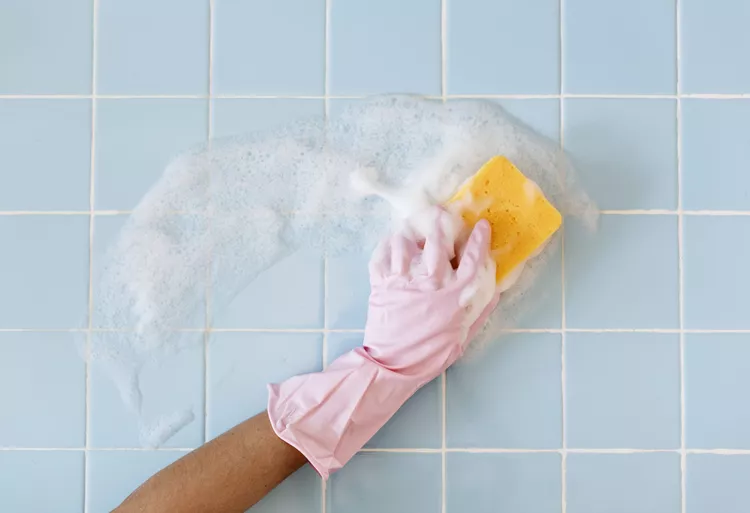
3. Check the floor immediately around the toilet base
The toilet base deserves special attention because it sits where several different problems can overlap.
Urine can collect along the floor-level edge. At the same time, water from a plumbing leak can emerge from underneath the toilet. The two situations can look similar at first.
Start with a dry floor.
Use paper towels or a clean, dry cloth to wipe around the entire perimeter of the toilet base. Then inspect the material for dampness or discoloration.
Pay attention to:
- A recurring damp spot
- Yellow or brown discoloration
- Soft flooring
- Swollen wood or laminate
- Damaged caulk
- A toilet that moves or rocks
- An odor that is much stronger at one particular point around the base
If the floor becomes wet again after flushing, stop treating the problem as a cleaning issue.
A toilet seal connects the toilet to the waste pipe and helps prevent both wastewater and sewer gas from escaping at the connection. A failed wax ring or another failed toilet seal can allow leakage at the base.
Don’t simply caulk around a leaking toilet
This is an important distinction.
Fresh caulk may make the bottom of the toilet look tidy, but it is not a substitute for repairing a failed seal.
If water is escaping from underneath the toilet, covering the joint can hide evidence of the leak. This Old House specifically cautions against using caulk as a solution to a toilet-base leak because it can conceal an active problem and allow hidden water damage to continue.
If you suspect a failed toilet seal, a plumber may need to remove the toilet, inspect the flange and surrounding flooring, and install an appropriate new seal.
4. A failing toilet seal can make the bathroom smell like urine
A persistent odor around the toilet does not automatically mean someone missed a splash.
A toilet is connected directly to the home’s drainage system. The connection at the floor has to remain properly sealed.
If that seal fails, two different problems can occur.
There may be wastewater leakage, which can leave moisture and contamination beneath the toilet.
There may also be an opening through which sewer-related gases can enter the bathroom.
The latter can be particularly confusing because the resulting odor may be interpreted simply as a dirty or urine-smelling toilet.
A toilet seal problem becomes more suspicious if you notice:
- Smell concentrated at the toilet’s base
- Water appearing around the base after flushing
- A toilet that rocks or moves
- Damp flooring
- Staining around the toilet base
- Odor that persists even after surrounding surfaces have been thoroughly cleaned
- A smell that seems to come from beneath the toilet rather than from the bowl
A food-coloring test is sometimes used to distinguish a toilet-bowl leak from other water sources, but it does not replace inspection of the toilet seal itself. If water is appearing at the base, the important question is where that water is coming from.
Because a failed seal can allow contaminated water to reach flooring or the structure below, this is one of the situations where professional plumbing help is sensible. A leaking toilet can cause hidden damage even when the visible amount of water seems small.
5. The odor may actually be sewer gas, not urine
This is the diagnosis that deserves more attention when cleaning does absolutely nothing.
A sewer odor can be mistaken for a urine smell because both can have sharp, unpleasant, ammonia-like characteristics.
The important clue is that sewer-related odors are associated with the plumbing system rather than urine residue on the bathroom surfaces.
Look for other symptoms.
Signs that point toward a plumbing odor
A plumbing problem becomes more likely if:
- The odor comes from more than one fixture
- The smell is strongest near a drain
- A sink or shower drain also smells
- The toilet gurgles
- The water level in the toilet bowl changes unexpectedly
- Drains are slow
- A drain bubbles when another fixture is used
- The odor becomes stronger when other fixtures discharge water
- There has been recent plumbing work
- The toilet smells even after surrounding surfaces have been thoroughly cleaned
These clues are more useful than simply judging the smell.
A properly functioning plumbing trap holds water that acts as a barrier against sewer gases. If that water seal is lost, odors can enter the room. Venting problems can also disturb trap seals.
6. Don’t overlook a dry floor drain or unused bathroom fixture
If your bathroom contains a floor drain, guest-bathroom sink, shower, or another fixture that is rarely used, inspect it too.
A trap normally contains water. That water creates a seal between the room and the drainage system.
When an infrequently used drain dries out, the protective water seal can disappear. Sewer gases can then move through the drain opening.
This is particularly easy to overlook because the toilet may receive all the blame simply because it is the largest fixture in the room.
Try to identify the exact location of the smell.
If the odor is strongest immediately over a floor drain or another seldom-used drain, investigate that fixture before dismantling the toilet.
Running water through a rarely used fixture can restore its water seal. However, if the trap repeatedly loses its water or the smell returns quickly, there may be a plumbing or venting problem that needs investigation.
7. A blocked plumbing vent can create strange toilet odors
Your home’s plumbing vents are not just there to let unpleasant smells escape through the roof.
They also help balance air pressure in the drainage system.
If a vent becomes obstructed, drainage can behave differently. A pressure imbalance can contribute to gurgling, slow drainage, and the loss of water from traps.
Common warning signs include:
- Toilet gurgling
- Bubbling in the toilet bowl
- Water level changes
- Slow drains
- Several fixtures behaving strangely
- Sewer odors from drains
- Odor that appears when another fixture is used
These symptoms point away from ordinary toilet cleaning.
A blocked vent can require roof access or plumbing inspection, so climbing onto a roof to investigate is not a worthwhile DIY task for someone who is not equipped and comfortable doing it safely.
Persistent gurgling combined with foul odors, multiple slow drains, sewage backup, or water backing up into another fixture warrants professional plumbing attention.
8. Bathroom rugs can hold onto the smell
Sometimes the toilet really is clean.
The rug beside it is not.
Bathroom mats are especially easy to overlook because they may look clean while retaining small amounts of urine, water, skin oils, and cleaning residue.
A rug placed directly beside the toilet can receive repeated small splashes. If it is thick, the contamination may move below the surface where it is difficult to notice.
Try removing every washable rug from the bathroom for a few days while investigating the odor.
Wash it according to its care instructions and allow it to dry completely before putting it back.
If the odor disappears when the rug is removed, you have narrowed the problem considerably.
Do the same with:
- Fabric toilet-seat covers
- Bath mats
- Small washable floor runners
- Towels stored beside the toilet
- Any fabric item that repeatedly becomes damp
Don’t assume that spraying an air freshener onto fabric has solved anything. It has not removed the material responsible for the odor.
9. Check the baseboards and wall beside the toilet
The floor is not the only place urine splash can travel.
Look at the lower section of the wall and baseboard surrounding the toilet.
This is particularly important in bathrooms with painted drywall, MDF trim, unfinished wood, or other materials that can absorb moisture.
Inspect for:
- Yellowing
- Swelling
- Peeling paint
- Darkened edges
- Cracking
- Soft areas
- Persistent dampness
- Odor concentrated along the wall
If contamination has entered an absorbent building material, surface cleaning may have limited results.
The EPA’s guidance on moisture and mold emphasizes fixing plumbing leaks and drying affected materials thoroughly. It also notes that porous materials can be difficult to clean completely once contamination has penetrated them.
This does not mean that every smelly baseboard needs to be replaced. It means you should identify whether the material is actually absorbing moisture before repeatedly cleaning the surface.
10. The toilet tank is usually not the first place to investigate
People often assume that an unpleasant toilet odor must be coming from inside the tank.
Normally, the water in the tank should not contain urine because the tank receives clean supply water rather than wastewater from the bowl.
That makes the tank a less likely source of a urine smell than the floor, toilet base, seat hardware, or surrounding materials.
There can still be buildup inside an old or poorly maintained tank, but if your specific complaint is a urine-like smell throughout the bathroom, start with the areas outside the tank.
If the odor is strongest when the tank lid is removed, however, clean and inspect the tank according to the toilet manufacturer’s guidance.
The important point is not to spend an hour scrubbing a low-probability source while ignoring the damp grout directly beside the toilet.
11. Poor ventilation can make a small odor problem seem much worse
Ventilation does not usually create urine contamination, but it can influence how long odors remain noticeable.
A bathroom with poor air movement holds moisture longer. That makes it easier for smells from damp surfaces, rugs, drains, and other materials to linger.
Notice what happens after:
- A shower
- Mopping
- Several people use the bathroom
- The door remains closed
- The exhaust fan is not running
If the odor is dramatically stronger when the bathroom is humid, inspect porous materials first.
Good ventilation is also important during cleaning. The CDC recommends good ventilation when using cleaning and disinfecting products indoors and advises following the product label for protective equipment and application.
The exhaust fan is therefore useful for controlling moisture and improving air exchange, but it should not be used to hide a plumbing leak or persistent contamination.
A simple way to find the source before you clean again
Instead of cleaning the entire bathroom from top to bottom, isolate the smell.
This is much more efficient.
Step 1: Start with a completely dry bathroom
Remove bath mats and rugs.
Allow recently cleaned surfaces to dry.
If possible, give the bathroom enough time for residual cleaning-product fragrance to dissipate.
Step 2: Close the toilet lid
Smell around the exterior of the toilet first.
Compare:
- The front of the bowl
- The sides
- Behind the toilet
- The seat hinges
- The floor around the base
- The grout
You are not trying to take a deep breath of anything unpleasant. You are simply determining where the odor is most concentrated.
Step 3: Check the drains
Smell near the sink drain, shower drain, and floor drain if one exists.
If several fixtures have a similar odor, stop assuming the toilet is the only source.
Step 4: Check after flushing
Observe the toilet base during several flushes.
Look for:
- New moisture
- Drips
- Water movement around the base
- Unusual bubbling
- Gurgling
- Changes in bowl water level
Do not kneel in contaminated water. Use gloves if you need to inspect a potentially contaminated area.
Step 5: Check the grout
If the odor is strongest at floor level, inspect the grout lines around the toilet.
This is where a targeted urine cleaner may make a meaningful difference.
Step 6: Remove the soft materials
Take out rugs, mats, and washable fabric items.
If the smell decreases substantially, clean or replace the offending item rather than continuing to scrub the toilet.
Step 7: Compare dry and humid conditions
If the smell returns after showering or mopping, pay special attention to porous surfaces.
If the smell remains strong even when the bathroom is dry, investigate the toilet base, drains, and plumbing more carefully.
What should you use to remove a persistent urine odor?
The right cleaner depends on the material and the source.
For ordinary dirt on glazed porcelain, a bathroom cleaner appropriate for the toilet’s surfaces may be sufficient.
For suspected urine contamination in grout or another compatible porous surface, a cleaner specifically formulated for urine odor can be more appropriate.
Some products use enzymes; others use oxidizing chemistry such as hydrogen peroxide. Manufacturer directions vary, so do not assume that two products with similar marketing claims can be used interchangeably.
The most important principle is contact with the contaminated material.
If urine has penetrated grout, spraying a little cleaner over the surface and immediately wiping it away may not give the product enough opportunity to work.
Follow the product’s directions for:
- Surface compatibility
- Application amount
- Dwell/contact time
- Rinsing
- Ventilation
- Gloves or eye protection
- Whether the product should be used on sealed or unsealed surfaces
Always test a new product in an inconspicuous area when the manufacturer recommends it, particularly with colored grout, painted surfaces, natural stone, or other materials that can be damaged or discolored.
Don’t mix cleaners to make them “stronger”
This deserves its own warning because persistent toilet odors can be frustrating enough to tempt people into chemical experimentation.
Don’t combine bleach with ammonia-containing products.
Don’t combine bleach with acidic toilet cleaners.
Don’t create homemade combinations of several bathroom products simply because the first product did not remove the smell.
The CDC states that household bleach should never be mixed with other cleaners or disinfectants because dangerous vapors can be released.
Poison Control specifically warns that bleach mixed with ammonia can produce chloramine gas, while bleach mixed with acids can produce chlorine gas. Some toilet cleaners contain acids, making this particularly important in a bathroom.
If you accidentally mix products and develop coughing, burning eyes or throat, difficulty breathing, dizziness, or other concerning symptoms, leave the area and get into fresh air. Seek medical help for significant or persistent symptoms.
Cleaning a toilet should never become a chemistry experiment.
Why bleach is not always the answer
Bleach is useful for certain disinfection applications when used correctly, but persistent urine odor is not automatically a disinfection problem.
You can disinfect a surface and still fail to remove the material responsible for an odor if the contamination is embedded in a porous area.
That is why using progressively stronger disinfectants is not necessarily the logical next step.
The better sequence is:
Find the source → identify the material → choose a compatible cleaner → allow it to work as directed → rinse or remove residue → dry thoroughly → reassess the odor.
If the odor remains, reassess the diagnosis rather than automatically escalating the chemical strength.
Vinegar and baking soda: useful for some cleaning jobs, but don’t assume they solve this one
Vinegar and baking soda are frequently suggested for household odor problems.
The problem is that “natural” does not automatically mean “appropriate for every surface,” and a homemade mixture is not necessarily a specialized urine treatment.
Vinegar is acidic. That matters because some bathroom materials, particularly acid-sensitive natural stone, can be damaged by acidic cleaners.
Baking soda can provide mild abrasive cleaning and odor control in some circumstances, but it should not be treated as a guaranteed solution for deeply embedded urine residue.
More importantly, never use vinegar together with bleach. Mixing an acid with bleach can release chlorine gas.
If you want to use a homemade cleaner, first establish that the surface can tolerate it and that the ingredients are chemically compatible. For a persistent urine odor, a product specifically labeled for urine and the affected surface is usually a more predictable choice.
What if the smell keeps returning after deep cleaning?
At that point, stop assuming that you have failed to clean well enough.
Recurring odor is information.
If the smell returns quickly after a thorough cleaning, consider these possibilities:
The contamination is deeper than the surface
Urine may have entered grout, caulk, flooring, wood, or another porous material.
The source is underneath the toilet
A failed toilet seal can allow water or sewer-related odors to escape.
The source is a drain
A dry trap or drainage problem can create an odor that resembles a dirty bathroom.
The plumbing is not venting correctly
Gurgling, bubbling, slow drains, and changing water levels make this possibility more important.
A soft furnishing is retaining the smell
A rug can repeatedly reintroduce an odor even after the toilet itself is clean.
There is an active moisture problem
A leak can keep an area damp, making odor and microbial growth more persistent.
The solution is not necessarily another round of scrubbing.
It may be time to repair something.
When you should call a plumber
You do not need a plumber for every unpleasant toilet smell. But certain signs move the problem firmly into plumbing territory.
Call a qualified plumber if you notice:
- Water coming from underneath the toilet
- A toilet that rocks or shifts
- Persistent sewer-like odor around the toilet base
- Gurgling from the toilet
- Multiple slow drains
- Water bubbling in the toilet when another fixture drains
- Sewage backing up into a tub, shower, or sink
- Repeated loss of water from a plumbing trap
- An odor that returns despite thorough cleaning and no obvious surface source
- Suspected damage beneath the toilet
- A recurring leak
A blocked vent or main drainage problem can affect multiple fixtures, while a failed toilet seal may be isolated to one toilet. The pattern of symptoms helps a plumber determine where to investigate.
If sewage is backing up, don’t keep flushing the toilet to “see what happens.” Further flushing can worsen a backup.
When the problem is probably cleaning-related
The situation is more likely to be ordinary urine contamination when:
- The odor is strongest around the floor
- Grout smells worse than the tile
- The toilet seat hinges smell
- A bathroom rug smells
- The odor is noticeably worse when the area becomes damp
- There are no plumbing symptoms
- The toilet is stable and dry
- Drains are working normally
- The odor decreases significantly after targeted cleaning
In this situation, focus on the actual odor reservoir rather than repeatedly cleaning the bowl.
When the problem is probably plumbing-related
A plumbing cause becomes more likely when:
- The smell seems to come from the toilet base
- The smell resembles sewage rather than dried urine
- Several drains smell
- The toilet gurgles
- Bowl water levels fluctuate unexpectedly
- There is water around the toilet
- Drains are slow
- Another fixture causes the toilet to bubble or gurgle
- The odor persists regardless of how thoroughly the surrounding surfaces are cleaned
The distinction is valuable because the two problems require completely different solutions.
Urine in grout needs targeted cleaning.
A failed toilet seal needs plumbing repair.
A dry trap needs its water seal restored and possibly further investigation.
A blocked vent needs the plumbing system examined.
No amount of toilet-bowl cleaner can repair a broken seal.
How to prevent the smell from coming back
Once the source is gone, prevention is relatively straightforward.
Clean the toilet beyond the bowl
Include the underside of the seat, hinges, mounting areas, rear of the bowl, and exterior surfaces.
Pay attention to the floor
Don’t mop only the open areas of tile. Clean the grout and edges around the toilet as appropriate for the flooring.
Wash bathroom rugs regularly
Keep toilet-side mats clean and completely dry.
Dry damp areas
Persistent moisture makes many bathroom problems harder to control. The EPA recommends fixing plumbing leaks promptly and drying affected materials thoroughly.
Vent the bathroom
Use the exhaust fan during and after showers according to the bathroom’s ventilation setup. Opening a window can also improve air exchange when practical.
Don’t ignore small leaks
A little water around the toilet base is not something to cover with fresh caulk and forget.
Find out where it came from.
Maintain seldom-used drains
If a bathroom or floor drain is rarely used, periodically running water through it can help maintain the trap’s water seal. If it repeatedly dries out, investigate why rather than simply refilling it indefinitely.
A practical troubleshooting chart
| What you notice | Most likely area to investigate | What to do next |
| Smell strongest on floor | Grout, caulk, rug | Remove rugs and deep-clean compatible porous surfaces |
| Smell strongest behind toilet | Rear porcelain, wall, floor, seal | Inspect for moisture and leaks |
| Smell strongest around seat | Hinges, bolts, underside of seat | Remove/clean seat hardware if appropriate |
| Smell returns after mopping | Grout or porous material | Investigate areas that absorb moisture |
| Smell comes from drain | Trap or drainage system | Check for dry trap or plumbing issue |
| Toilet gurgles | Vent or drainage problem | Have plumbing investigated |
| Water appears at base | Toilet seal or supply connection | Stop treating it as a cleaning issue |
| Several drains smell | Plumbing system | Look for trap, vent, or drainage problems |
| Rug removal makes odor disappear | Bathroom textile | Wash thoroughly or replace if necessary |
| Smell persists after all surfaces are clean | Hidden contamination or plumbing | Investigate beneath/behind toilet and drainage system |
FAQ
Why does my toilet smell like urine even after cleaning?
The odor may be coming from dried urine residue that has reached areas ordinary cleaning does not fully reach, such as grout, seat hinges, floor-level caulk, rugs, or the area behind the toilet. A plumbing problem such as a failed toilet seal or sewer-related odor can produce a similar smell, so identifying the strongest odor location is important.
Why does my bathroom smell like urine after I mop?
Mopping can wet porous materials that contain old urine residue, making the odor noticeable again. Grout, caulk, rugs, and other absorbent materials deserve particular attention if the smell repeatedly appears after cleaning.
Can a toilet wax ring cause a urine smell?
Yes, indirectly. A failed toilet seal can allow wastewater to leak at the base or permit sewer-related odors to enter around the toilet connection. If the odor is concentrated at the base or you see moisture after flushing, the seal should be investigated rather than covered with caulk.
Why does the smell get worse after a shower?
Humidity and moisture can make odors from previously contaminated porous materials more noticeable. If the smell becomes stronger after showering, inspect grout, caulk, rugs, flooring, and other materials around the toilet.
Can a dry drain make a bathroom smell like urine?
Yes. A dry trap loses the water seal that normally helps prevent sewer gases from entering the room. Check seldom-used floor drains, showers, and sinks if the smell seems to originate near a drain.
Should I use bleach to get rid of urine smell?
Bleach can be useful for appropriate disinfection tasks, but it is not automatically the best solution for persistent urine residue in porous materials. More importantly, never mix bleach with other cleaners. Bleach combined with ammonia can produce chloramine gas, while bleach combined with acidic cleaners can produce chlorine gas.
Is an enzyme cleaner better for urine odor?
An enzyme-based urine cleaner can be useful because it is specifically formulated for organic urine contamination. However, performance depends on the product, surface, contamination depth, and application. Follow the product’s directions and make sure it is approved for the material you are treating.
Why does my toilet smell even though the bowl is spotless?
The bowl is only one part of the system. Check the seat hinges, underside of the seat, floor grout, toilet base, rugs, drains, and the area behind the toilet. If those areas are clean and the smell remains, investigate the plumbing.
Should I replace the toilet if it smells like urine?
Not necessarily. A bad smell alone is not a reason to replace a toilet. First determine whether the source is surface contamination, a seat component, flooring, a toilet seal, or the drainage system. Replacement may be appropriate if the porcelain is cracked or another structural problem makes the fixture impossible to clean or repair effectively, but persistent odor by itself does not establish that the toilet is defective.
The fastest solution is usually better diagnosis, not stronger cleaner
A toilet that still smells after cleaning is giving you a useful clue: the source may not be the surface you just cleaned.
Start at floor level. Check the grout, caulk, seat hinges, rugs, and the area behind the toilet. Then inspect the toilet base for moisture. Finally, check nearby drains for a similar odor and watch for plumbing symptoms such as gurgling, bubbling, slow drainage, or changing water levels.
If the smell is clearly tied to urine residue, use a cleaner designed for that type of contamination and compatible with the affected material. Give it the contact time specified on the label instead of immediately wiping it away.
If the smell is strongest beneath the toilet, returns despite thorough surface cleaning, or appears alongside water leakage or sewer-related symptoms, stop treating it as a housekeeping problem. The toilet seal or drainage system may need attention.
And don’t respond to a stubborn smell by mixing cleaners. A bathroom odor is frustrating; toxic fumes are a much bigger problem.
The useful question isn’t simply “How do I make my toilet smell fresh?”
It’s “What material or plumbing component is actually producing the odor?”
Once that is identified, the fix becomes much more straightforward.