
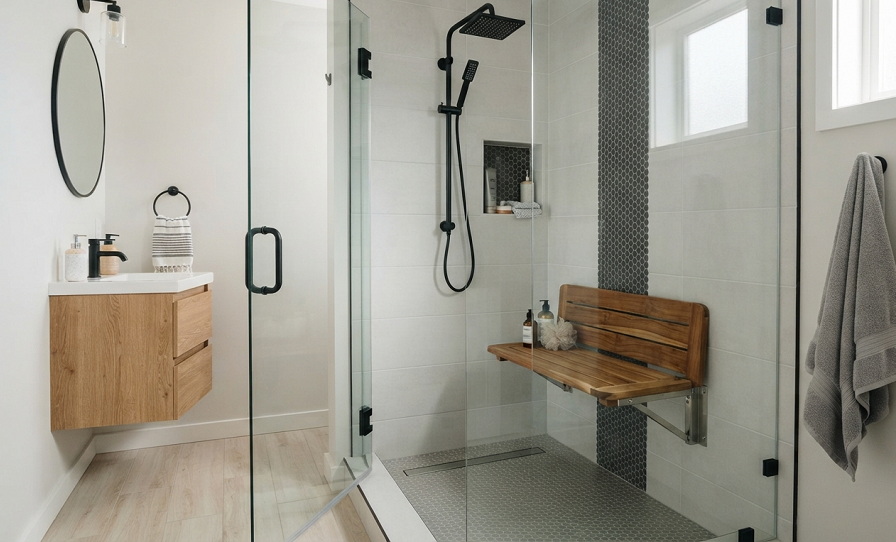
Your bathroom is the size of a walk-in closet, and that giant tub-shower combo is eating up every inch of it. You bump your elbow on the sink every morning. You can’t fit a second person in there without a traffic accident. And that shower curtain? It clings to your leg like it’s trying to make a point.
I’ve remodeled more cramped bathrooms than I can count, and the walk-in shower is almost always the answer. It opens up the room, makes cleaning ten times easier, and honestly just looks better in photos when you’re trying to sell the house. Here are 11 walk-in shower ideas that work in small spaces, plus a few things I learned the hard way so you don’t have to.
1. Go Curbless for a Bigger Visual Footprint
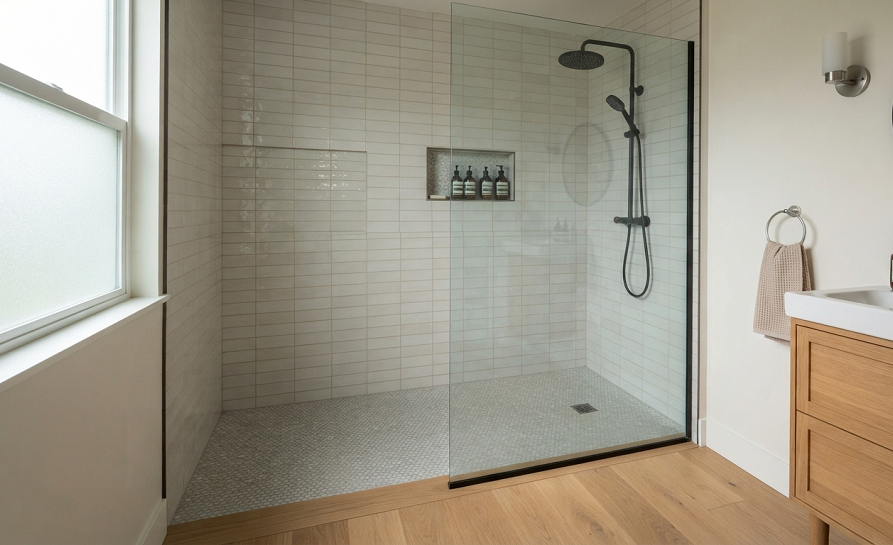
A curbless walk-in shower (sometimes called a zero-entry shower) skips the raised lip at the entrance. Instead, the shower floor sits flush with the bathroom floor, and a slight slope carries water to the drain.
This is my favorite trick for small bathrooms because your eye doesn’t stop at a barrier. The whole room reads as one continuous space instead of two chopped-up zones. It also happens to be the most accessible option if you’re planning to age in place or you’ve got family members with mobility issues.
The catch is that curbless showers need careful waterproofing and a properly sloped subfloor. This isn’t a weekend job for a beginner. I redid my sister’s bathroom this way and we had to lower the joists in that section to get the slope right. It added two extra days to the project, but the payoff was worth it.
If you’re searching “curbless shower small bathroom cost,” expect to pay more upfront than a standard shower pan because of the custom framing and waterproof membrane work. It’s an investment, not a shortcut.
2. Swap the Full Enclosure for a Single Frameless Glass Panel
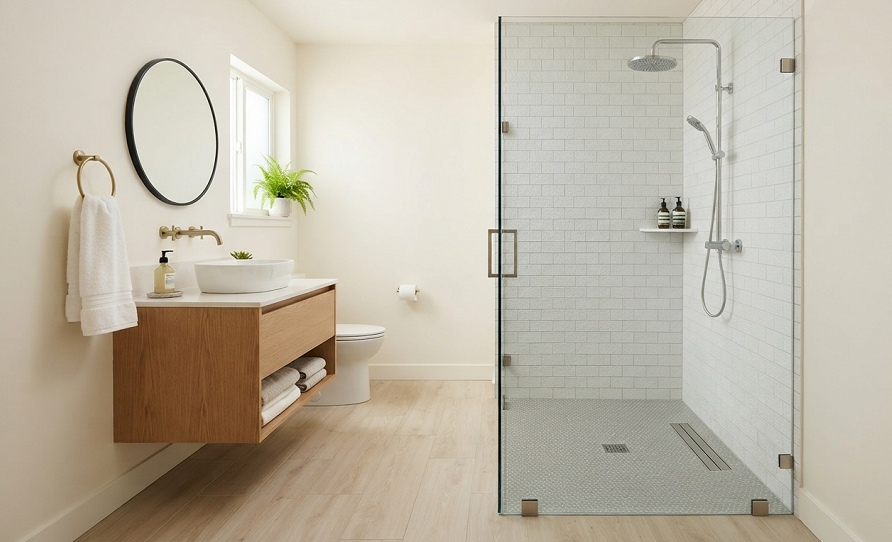
You don’t need four walls of glass to make a walk-in shower feel walk-in. One fixed glass panel next to the showerhead can block spray while leaving the rest of the space open.
This is huge for small bathrooms because full glass enclosures with metal framing visually chop the room into boxes. A single panel keeps sightlines open, which makes the whole bathroom feel roomier than it actually is.
I’ve installed these in bathrooms as narrow as 5 feet wide. The panel does the job of a curtain without the mildew smell and constant clinging-to-your-leg problem. Just make sure your contractor measures for a panel at least 24 to 30 inches wide, or water will sneak around the edge and soak your floor.
Quick note: frameless glass isn’t cheap, but it’s one of those upgrades that photographs beautifully and adds real value if you’re planning to sell.
3. Tuck It Into a Corner
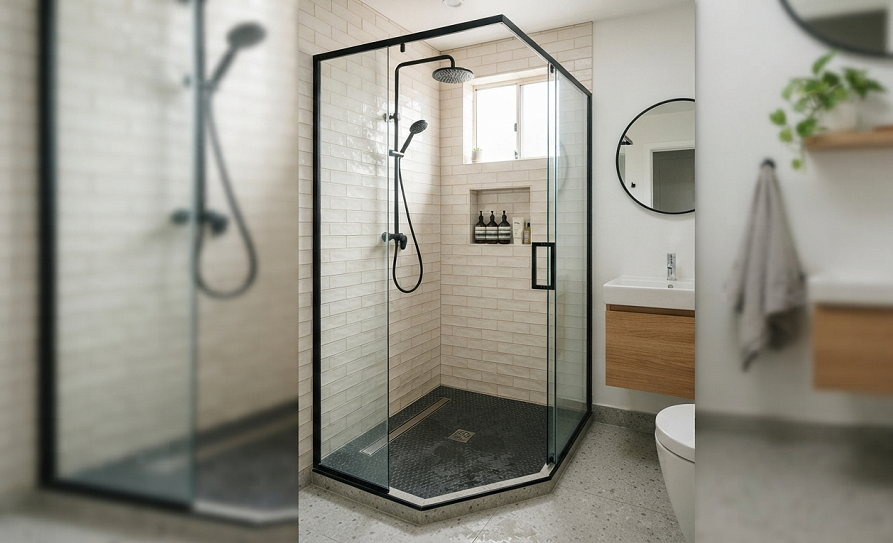
Corner walk-in showers use two existing walls, which means less framing, less plumbing rerouting, and lower labor costs. In a small bathroom, this is often the only layout that makes geometric sense anyway.
Corner units come in neo-angle and square configurations. Neo-angle showers have that five-sided shape you’ve probably seen in apartment renovations, and they’re great for squeezing extra elbow room out of a tight corner without stealing square footage from the rest of the room.
I used a corner layout in my own downstairs bathroom, which is barely 35 square feet. Pairing it with a corner sink freed up enough space that I could finally fit a small linen cabinet. Sometimes the smartest design move is just working with the bones of the room instead of fighting them.
One thing to watch: corner showers can trap steam and moisture in that inside corner if ventilation is weak. Pair this layout with a solid exhaust fan (more on that below).
4. Try a Neo-Angle Shower Stall
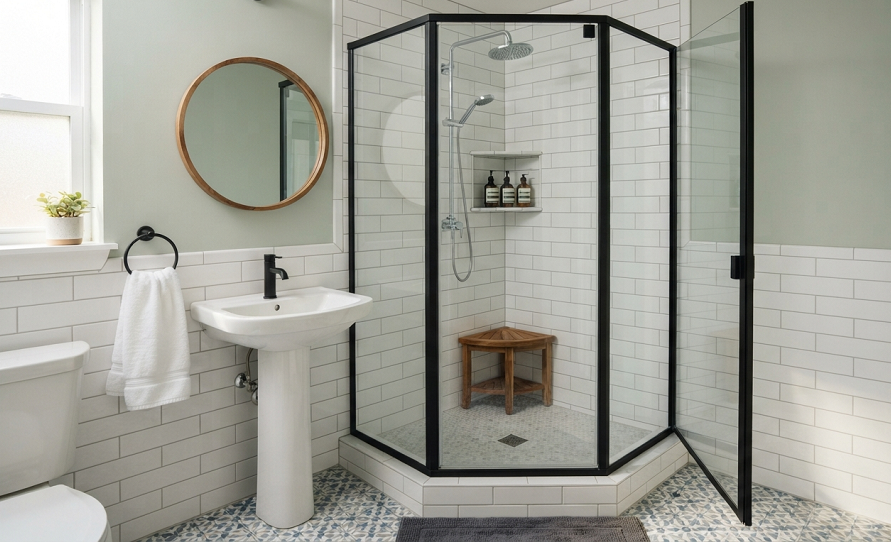
I mentioned neo-angle above, but it deserves its own spot because it solves a very specific small-bathroom problem: awkward leftover corners.
A neo-angle stall has an angled front wall instead of a straight one, which lets you push the unit into a corner while still leaving a comfortable, non-cramped entry point. It’s the shape you’ll see in a lot of prefab kits at big box stores, which also makes it one of the more budget-friendly options on this list.
The downside is that the angled geometry limits your tile customization options if you’re going for a fully custom look. Prefab kits are usually acrylic or fiberglass, and while they’re durable, they don’t have the high-end feel of tile.
If budget is tight and you want this done in a weekend, a neo-angle prefab kit is genuinely one of the fastest walk-in shower upgrades you can do.
5. Choose a Sliding Door Over a Hinged One
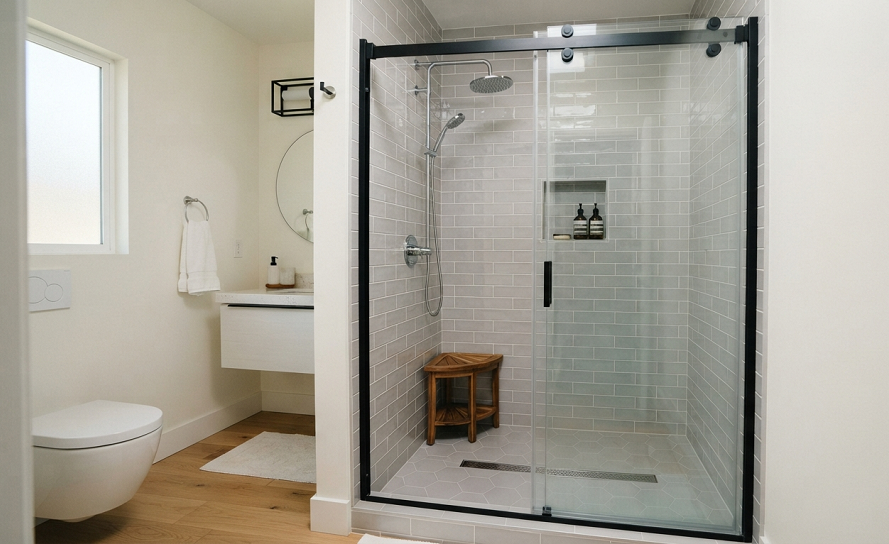
Hinged shower doors need clearance to swing open, and in a small bathroom, that swing radius eats into your usable floor space. A sliding glass door solves this instantly because it glides along a track instead of swinging outward.
I switched a client’s hinged door to a sliding barn-style door last year, and the difference in how the bathroom felt was almost comical. Suddenly there was room to actually dry off without smacking your elbow on the vanity.
Sliding doors do require a wider opening than hinged doors of the same shower size, since the door needs a track to travel along. Measure twice here. I’ve seen contractors order the wrong track length and have to special-order a replacement, which added two weeks to a job that should have taken three days.
For anyone typing “sliding vs hinged shower door small bathroom” into a search bar, my honest opinion is that sliding wins almost every time in tight spaces. The only exception is if your shower opening is under 36 inches, where sliding hardware can feel clunky.
6. Use a Half-Wall Instead of Full Glass
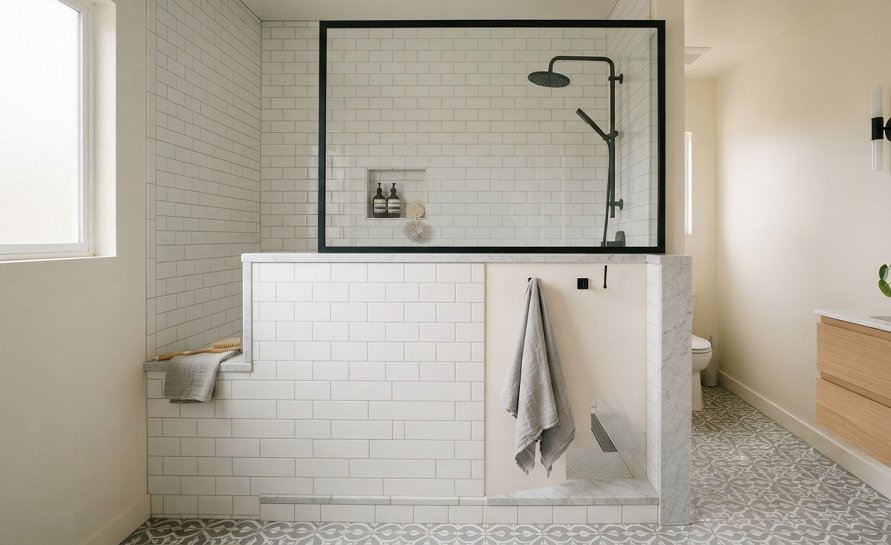
A half-wall, or knee-wall, shower divider is a low tiled wall (usually 36 to 42 inches tall) that separates the shower from the rest of the bathroom without enclosing it completely.
This is one of the most budget-friendly walk-in shower ideas because you’re skipping glass altogether. You just need tile, waterproofing membrane, and basic framing. It also keeps the room feeling open since there’s no glass to clean or streak.
The trade-off is spray control. Without glass above the half-wall, you’ll get some water on the floor outside the shower unless your showerhead is angled carefully. I always recommend a rain-style or fixed showerhead positioned away from the opening if you go this route.
This is a great option if you’re not ready to commit to frameless glass costs but still want that open, walk-in look.
7. Go Big on Tile Size
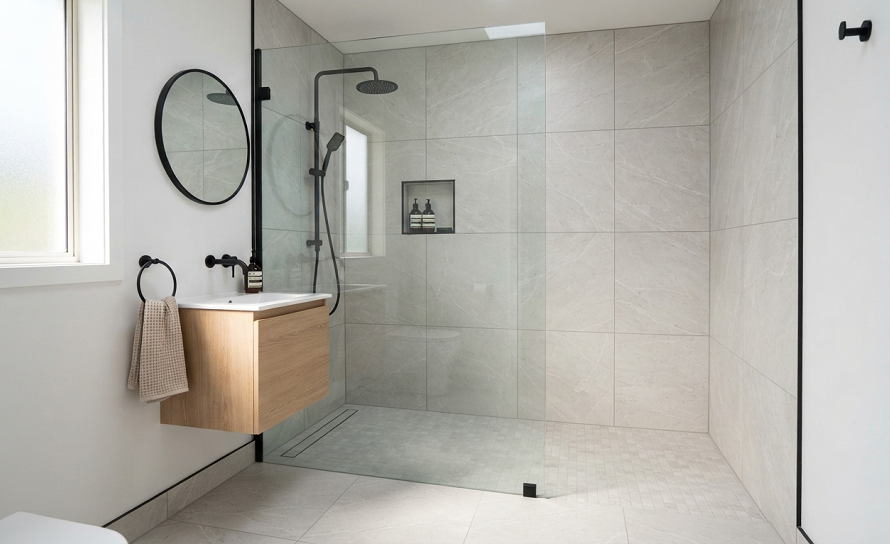
This one surprises people. Large-format tile (think 12×24 inches or bigger) creates fewer grout lines, and fewer grout lines make a small space look bigger. It’s a simple optical trick, but it works every time.
Small mosaic tiles are gorgeous on Pinterest, but I’ve found that they’re a total waste of money in a small walk-in shower if your goal is to make the room feel more spacious. All those grout lines chop up the visual field and actually shrink the room in your eyes, plus they’re a nightmare to keep clean.
Run the same large tile from the shower floor onto the bathroom floor if you can. This “continuous surface” trick blurs the line between the shower and the rest of the room, which is exactly what you want in tight quarters.
If you’re worried about slip resistance with large tile, ask for a matte or textured finish rated for wet areas. Glossy large-format tile in a shower is asking for a trip to the ER, and I say that from personal experience after a very undignified slide in my own bathroom.
8. Build In a Recessed Niche
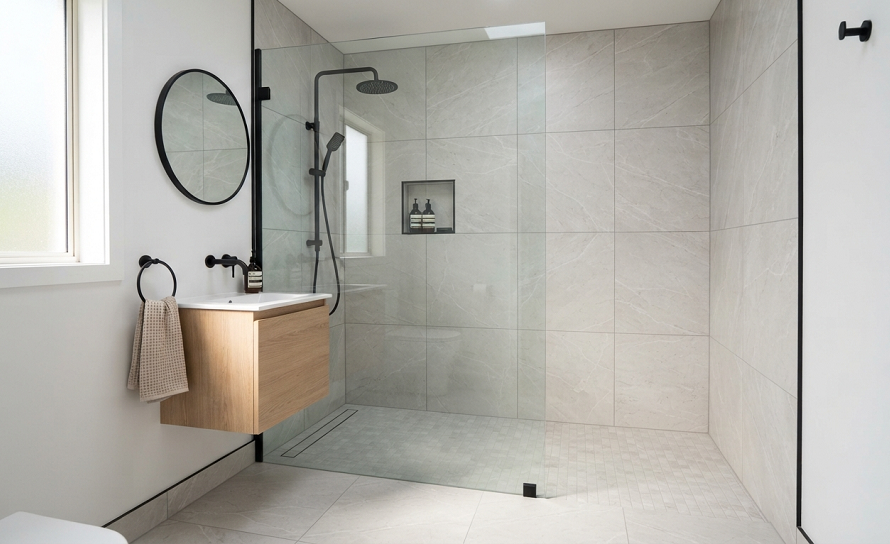
Shower caddies are clutter. A recessed niche, a small built-in shelf carved into the wall, keeps your shampoo and soap off the floor and out of sight lines.
In a small shower, floor space is precious, and a caddy hanging off the showerhead or sitting in the corner just adds visual noise. A niche disappears into the wall and keeps things streamlined.
This needs to be planned before the tile goes up, so bring it up with your contractor early. I’ve had clients ask for a niche mid-project, and retrofitting one after the waterproofing membrane is already down means tearing out finished work. Plan ahead here.
Two niches stacked at different heights work well if you’re sharing the shower with a partner or kids of different heights. It’s a small detail, but it’s the kind of thing people notice in home tours.
9. Add a Small Fold-Down Bench
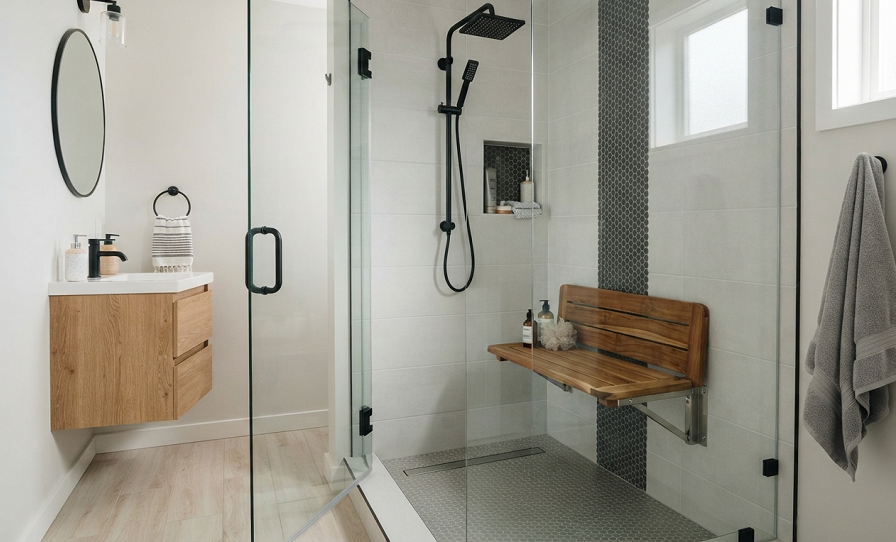
A full bench seat can eat up floor space you don’t have, but a fold-down or wall-mounted teak bench solves that problem. Fold it up when you don’t need it, fold it down for shaving your legs or just sitting when you’re tired.
I put one of these in a rental property bathroom that was maybe 40 square feet total, and tenants specifically mentioned it in reviews. It’s a small feature that reads as a thoughtful, higher-end touch.
Make sure whatever bench you choose is rated for wet environments. Teak and other water-resistant woods hold up well. I made the mistake early in my career of installing a regular wood shelf as a makeshift bench in my own place, and within six months it had warped and started growing something I don’t want to describe.
If a fold-down bench isn’t in the budget, even a built-in ledge at the base of a half-wall gives you a spot to rest a foot while shaving. Small wins count.
10. Combine a Rainfall Head With a Handheld Wand
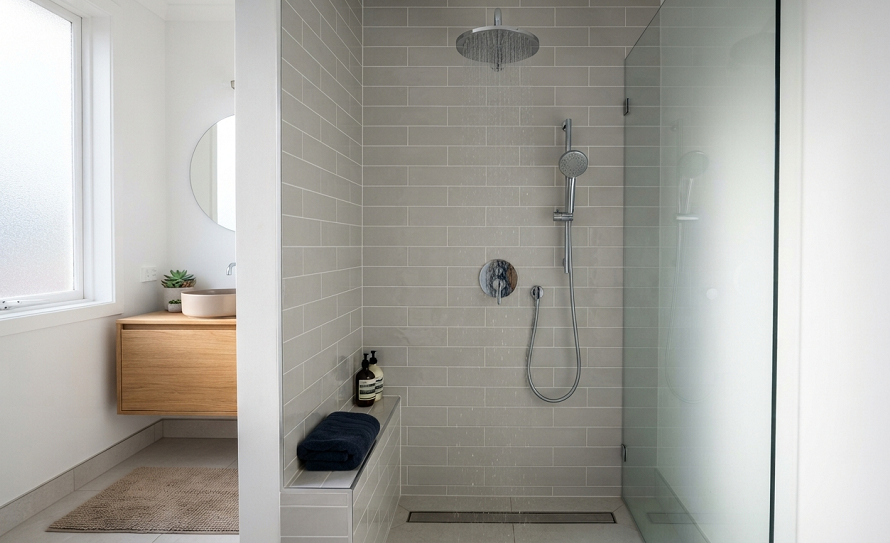
You don’t have to choose between a rainfall showerhead and a handheld one. A slide bar system lets you have both, and it’s one of the most requested upgrades I hear from clients doing a small bathroom remodel.
The rainfall head gives you that spa-like, full-body soak experience. The handheld wand is practical for rinsing kids, pets, or the shower itself during cleaning. In a small shower with less room to move around, having a flexible handheld option makes a real difference.
Installation isn’t complicated if your existing plumbing is in a workable spot. A plumber can usually add the valve and slide bar in under a day. This is one upgrade I tell almost every client to consider, even if they’re on a tight budget, because the day-to-day usability boost is that noticeable.
Just budget for the slide bar hardware separately. A lot of people price out just the showerhead and get surprised when the full kit, valve, and installation labor add up.
11. Keep the Color Palette Light
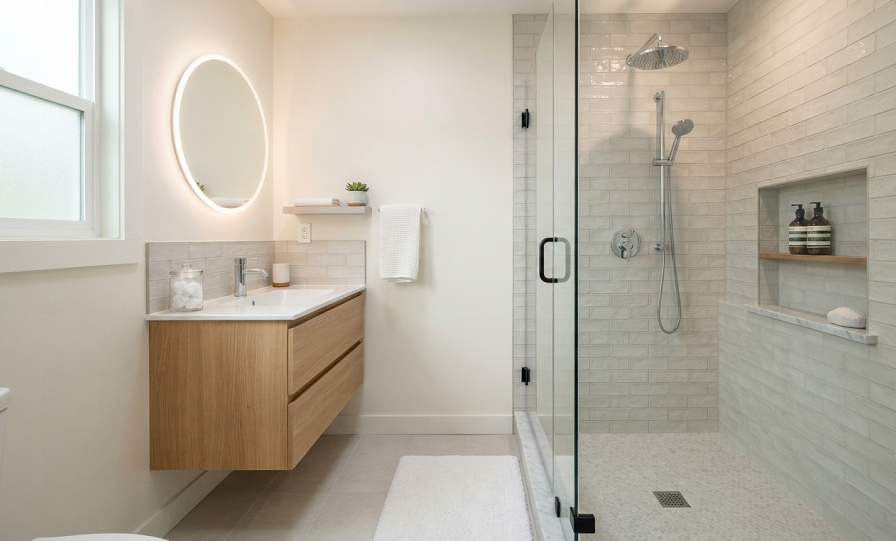
Dark, moody bathrooms look incredible in magazine spreads shot with professional lighting. In an actual small bathroom with one window and a builder-grade overhead light, dark tile can make the room feel like a cave.
Whites, soft grays, and warm off-whites bounce light around the room instead of absorbing it. Pair light tile with a light-colored grout (not stark white, which shows dirt fast) and you’ll get a shower that feels airy instead of cramped.
This doesn’t mean your shower has to be boring. Add one accent, a black matte fixture, a strip of colored tile at eye level, or textured tile on a single wall, and keep everything else light. That contrast draws the eye without shrinking the room visually.
I redid a client’s all-charcoal-tile shower two years after it was installed because they said the bathroom felt like a basement. Lesson learned: trends fade, but a bathroom that actually feels good to stand in every morning doesn’t.
Quick side note: Don’t skip the exhaust fan. Whatever combination of ideas you pick from this list, a small bathroom with a walk-in shower needs solid ventilation, or you’ll be dealing with mold and peeling paint within a year. Size your fan for the square footage of the room, not just the shower stall.
Real Talk: What Can Go Wrong (and What’s Not Worth It)
Here’s the part nobody puts in the glossy remodel photos.
Curbless showers and DIY don’t mix well. If you’re not experienced with waterproofing membranes and floor slope calculations, hire a pro for this specific piece. I’ve seen curbless showers built by well-meaning homeowners leak into the subfloor within a year because the slope was off by fractions of an inch. That’s a five-figure repair waiting to happen.
Frameless glass is expensive, and it shows every water spot. If you’re not going to squeegee your glass after every shower, you’ll be scrubbing hard water stains constantly. I love the look, but I’m honest with clients that it’s a maintenance commitment, not a set-it-and-forget-it upgrade.
Full custom tile showers in tiny bathrooms sometimes aren’t worth the cost. If your bathroom is under 40 square feet and you’re planning to sell within a couple of years, a well-installed prefab shower kit might give you 90% of the visual upgrade for half the price. Not every project needs to be a magazine spread.
Skipping permits is a mistake I see too often. Reconfiguring plumbing or moving a drain usually requires a permit in most areas. Skipping this step can bite you later during a home inspection or insurance claim. It’s not exciting, but it’s cheaper than the alternative.
Ventilation gets forgotten constantly. I mentioned it above, but it’s worth repeating here because it’s the single most common regret I hear from homeowners a year after their remodel. An underpowered or missing exhaust fan turns a beautiful new shower into a mold problem.
Parting Wisdom
A small bathroom doesn’t have to feel small. The right walk-in shower, paired with smart material choices and good lighting, can make a cramped space feel like it belongs in a much bigger house. Start with the layout that fits your actual footprint, not the one you saw on Pinterest, and build out from there.
Which of these ideas fits your bathroom best, or did I miss one you’ve tried yourself? Drop your questions or your own walk-in shower wins in the comments below. I read every one, and I’d love to hear what worked (or didn’t) in your remodel.