
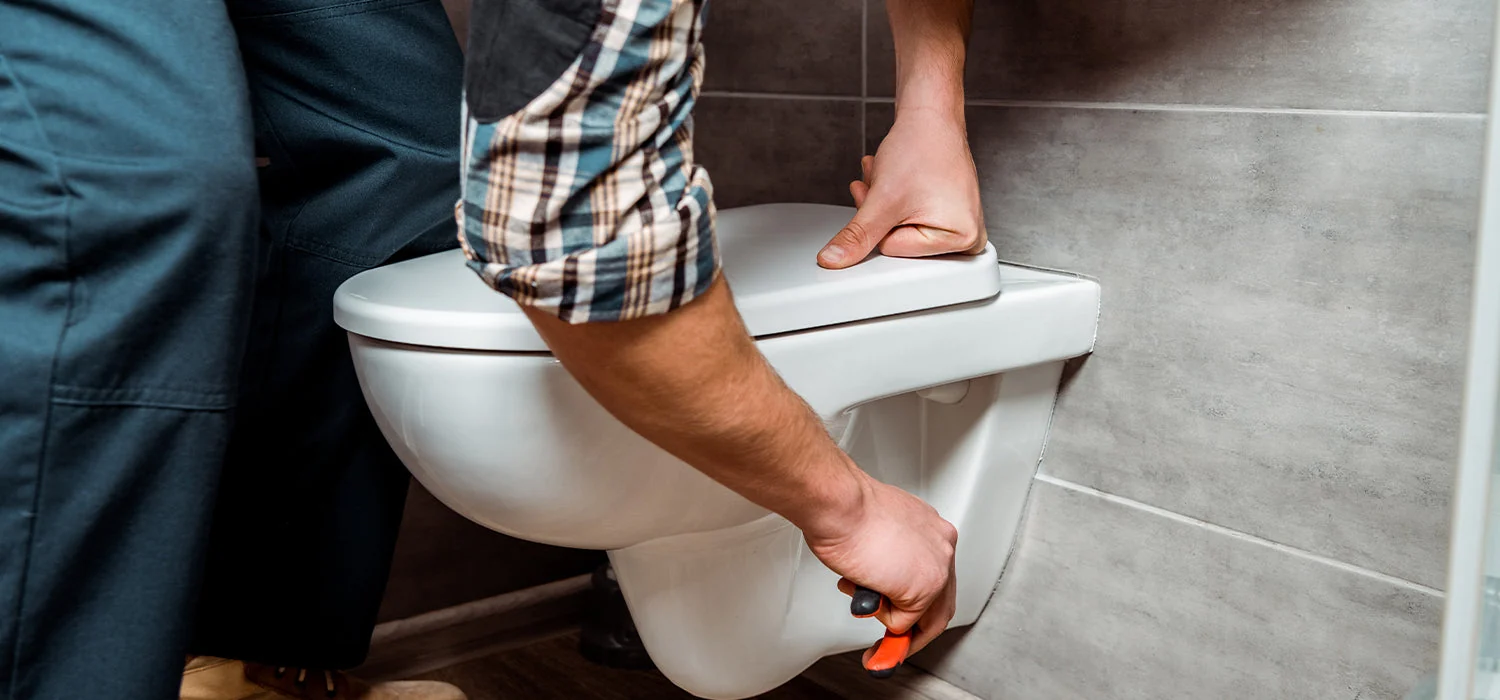
A puddle around the base of the toilet doesn’t always mean a leak. Sometimes the toilet tank itself is doing something closer to what a cold glass of iced tea does on a humid afternoon: pulling moisture straight out of the air and letting it run down the porcelain onto the floor. This is called toilet sweating, or tank condensation, and it’s one of the more commonly misdiagnosed problems in a bathroom. People caulk the base, replace the wax ring, or call a plumber for a leak repair, only to find the water keeps coming back because the actual cause was never touched.
Understanding what’s really happening on the surface of that tank — and why it happens at some times of year and not others — makes the difference between a fix that lasts and one that just delays the next puddle.
What Toilet Condensation Actually Is
Every toilet tank holds water supplied by the household’s cold water line, which in most regions runs somewhere between 50°F and 70°F depending on season and how deep the underground pipes sit. Bathroom air, especially in summer or in homes with a lot of ambient humidity, can be considerably warmer and carry a lot more moisture than that.
When warm, humid air touches the outside of a tank filled with cold water, the porcelain cools the air right at its surface. Air can only hold a certain amount of water vapor at a given temperature — that threshold is called the dew point. Once air near the tank cools below its dew point, it can no longer hold onto all its moisture, and the excess condenses into liquid water on the tank’s exterior. The same principle explains why a cold soda can sweats on a humid day and why bathroom mirrors fog up after a hot shower.
The toilet isn’t leaking. The water forming on the tank is coming from the room’s air, not from inside the plumbing. But because the effect can be steady and sometimes dramatic enough to pool on the floor, it’s an easy thing to mistake for a supply line drip, a cracked tank, or a failing wax ring.
Confirming It’s Condensation and Not a Leak
Before spending money on a fix, it’s worth ruling out an actual leak, because the remedies for each problem are completely different.
A few checks help separate the two:
- Dry the tank completely, then watch it over the next hour without touching anything. If moisture reappears evenly across the tank’s outer surface rather than pooling from one specific spot, that points to condensation.
- Check the water in the toilet bowl. A slow leak from a worn flapper or fill valve often shows up as water trickling into the bowl even when nobody has flushed. Adding a few drops of food coloring to the tank and waiting 15–20 minutes without flushing is a standard way to check: if color appears in the bowl, water is leaking past the flapper, which is a separate mechanical issue unrelated to condensation.
- Look at the base and supply connection. Water specifically pooling around the water supply line fitting, the shutoff valve, or the wax ring at the base of the bowl usually indicates an actual plumbing leak rather than surface condensation, since condensation forms on the tank body itself, not concentrated at connection points.
- Note the timing. Condensation tends to track with humidity and temperature swings — worse on hot, muggy days, after long showers, or when the air conditioning has been off. A genuine leak is usually more constant regardless of weather.
If the water keeps appearing exactly where the supply line connects, or the toilet bowl water level is dropping or refilling on its own, that’s a plumbing repair, not a condensation problem, and it deserves its own troubleshooting rather than the fixes described below.
Why It Happens More in Some Homes Than Others
Sweating toilets aren’t universal even within the same climate, and that’s because the problem depends on the gap between two specific numbers: the temperature of the tank water and the dew point of the bathroom air.
Groundwater temperature matters more than people expect. Homes served by municipal water drawn from deep aquifers or northern regions often have consistently cold incoming water, which widens that temperature gap and makes sweating worse. Homes on wells or in areas with warmer ground temperatures may see far less condensation even in similarly humid climates.
Bathroom humidity sources compound the effect. A bathroom with poor ventilation, frequent hot showers, a bathtub used often, or a laundry area vented indoors will carry more moisture in its air, pushing the dew point higher and making condensation more likely and more severe.
Seasonal changes explain why a toilet might sweat heavily in July and never in January. In summer, outdoor humidity is higher and incoming water is often colder relative to room temperature, especially if the air conditioning keeps the bathroom cool while pipes underground stay even colder. In winter, indoor heating tends to dry the air out, which raises the gap needed before condensation forms — although a poorly ventilated bathroom in a humid winter climate can still sweat.
Toilet design plays a role too. Older toilets and some low-flow models have thinner tank walls or no insulation between the tank’s inner and outer surfaces, which lets the cold transfer straight through to the exterior. Newer toilets marketed as having insulated or double-walled tanks are built specifically to reduce this effect.
Why Ignoring It Is a Real Problem, Not Just a Nuisance
It’s tempting to treat a sweating toilet as a minor annoyance solved by keeping a towel nearby. Left alone, though, repeated condensation creates conditions that damage the bathroom over time.
Water that runs down the tank and pools at the base seeps into the seams around floor tile, into grout lines, and — in bathrooms without water-resistant subflooring — into the wood underneath. Repeated wetting and drying cycles can warp subfloor material, and standing moisture in an enclosed space is exactly the environment mold and mildew need to establish themselves. In bathrooms with vinyl or laminate flooring around the toilet, prolonged moisture exposure can cause the flooring to lift, discolor, or separate at the seams.
There’s also a simple safety issue: a consistently damp floor around the toilet is a slip hazard, particularly in households with older adults or young children.
None of this happens overnight, but a toilet that sweats through every humid week of summer, year after year, is doing slow damage that eventually shows up as a bigger repair than the condensation fix would have cost.
How to Stop a Toilet From Sweating
There isn’t a single universal fix, because the right approach depends on how severe the condensation is, what’s causing the bathroom’s humidity, and how much someone is willing to spend. The options below run roughly from least to most involved.
Insulate the Tank With a Liner
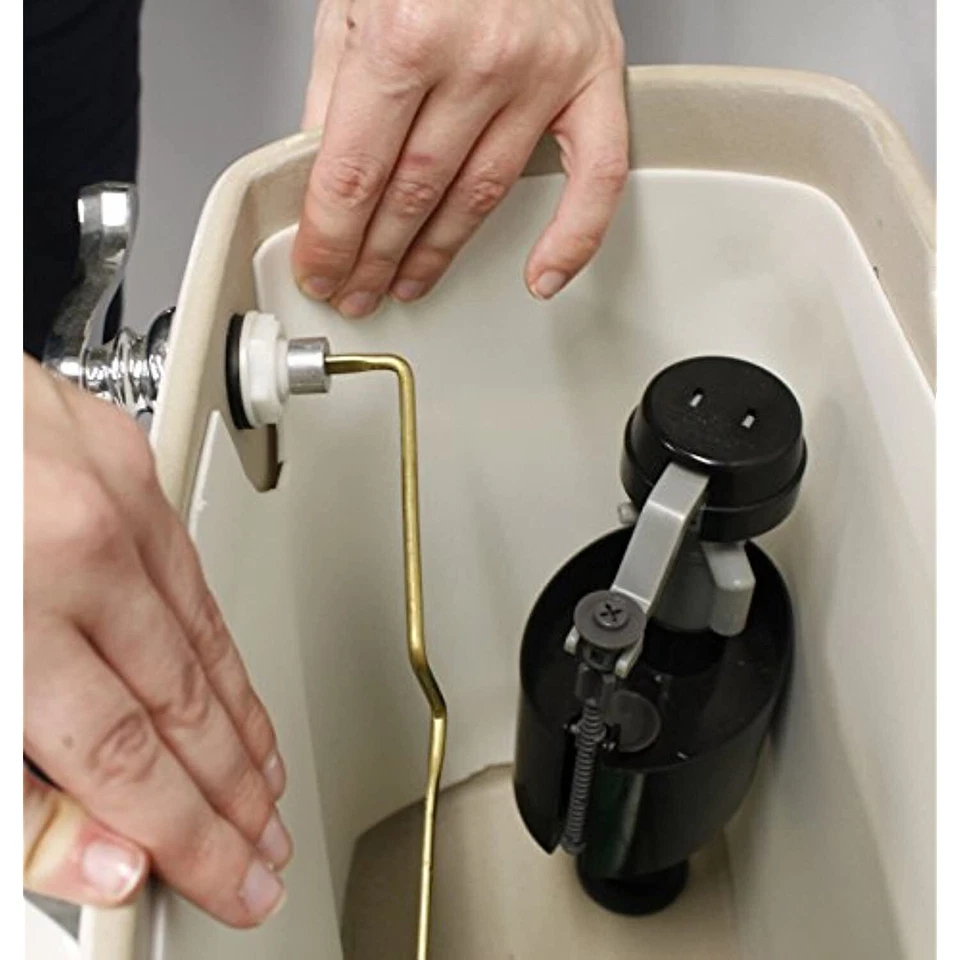
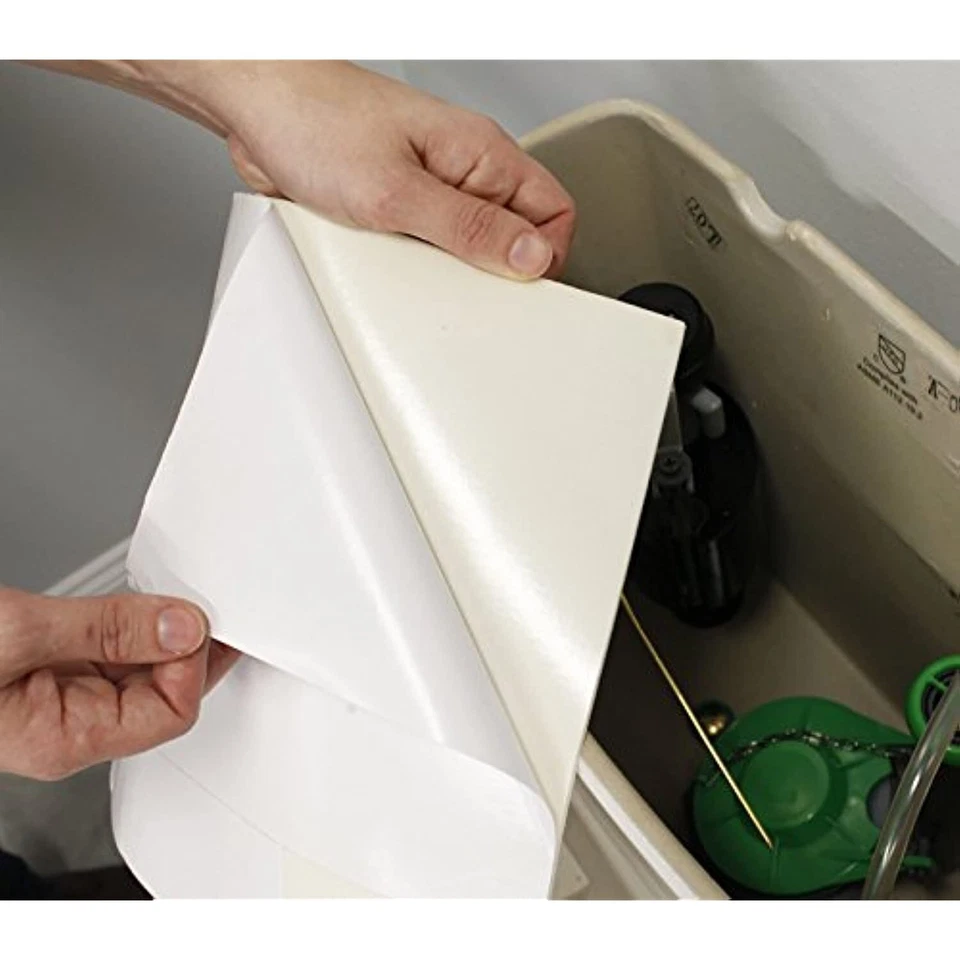
A toilet tank liner is a foam insulation kit installed inside the tank, lining the interior walls so the cold water no longer sits in direct contact with the porcelain that faces the room. With the liner in place, the tank’s exterior surface stays closer to room temperature, which keeps it above the dew point and prevents condensation from forming in the first place.
Installation involves draining and drying the tank fully, cutting the supplied foam pieces to fit the interior walls of the tank, and adhering them in place with a waterproofing sealant, usually included in the kit. It’s a project most homeowners can do themselves in under an hour, and the parts typically cost well under fifty dollars.
The main limitation is that a liner reduces condensation but doesn’t necessarily eliminate it in extreme humidity conditions — in a bathroom with consistently high moisture and very cold incoming water, some sweating may still occur, just less severely. It’s also worth checking that the toilet’s flush mechanism has enough clearance once the liner is installed, since a liner that’s too thick can interfere with the flapper or fill valve.
Install an Anti-Sweat (Tempering) Valve
An anti-sweat valve, sometimes called a tempering valve or mixing valve, is installed on the water line feeding the toilet tank. It blends a small amount of hot water into the cold supply line before it reaches the tank, raising the tank water’s temperature just enough to stay above the room’s dew point without making it noticeably warmer to the touch or affecting how the toilet flushes.
This tends to be the most reliable fix because it addresses the actual temperature gap causing the problem, rather than just insulating around it. It works even in bathrooms with persistently high humidity, since it changes the water temperature itself rather than trying to block heat transfer.
The tradeoff is installation complexity. A tempering valve needs to tap into both the hot and cold water lines, which usually means professional installation, and it needs to be installed with the correct backflow prevention components so hot water can’t push back into the cold line, which is a plumbing code consideration in most areas. Costs vary by region and whether new plumbing runs are needed, but this is generally a job for a licensed plumber rather than a weekend project. It also depends on having a hot water line reasonably close to the toilet’s location; in bathrooms where the toilet is far from any hot water run, installation costs go up accordingly.
Improve Bathroom Ventilation
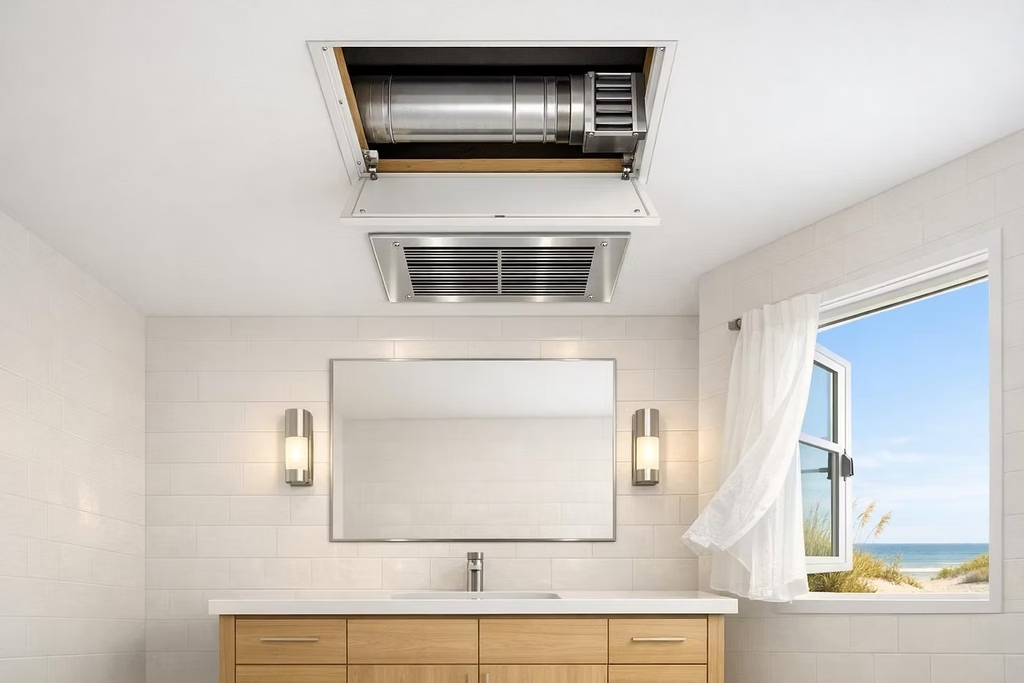
Since condensation is fundamentally about excess moisture in the air, reducing that moisture reduces the problem at its source. An exhaust fan that’s undersized for the room, one that vents into the attic instead of outside, or one that simply isn’t used enough during and after showers, allows humidity to build up and linger.
Practical steps that make a measurable difference:
- Run the exhaust fan during every shower or bath and for at least 15–20 minutes afterward, since humidity peaks after the water has been shut off, not during it.
- Confirm the fan actually vents to the outside of the house. A fan ducted into an attic or crawlspace doesn’t remove humidity from the building; it just relocates it, and can create its own moisture problems in unconditioned spaces.
- Consider a fan with a built-in humidity sensor or a timer switch, which runs the fan automatically for a set period after it detects a humidity spike, useful in households where people forget to turn the fan on or off.
- Crack a window when weather allows, particularly during or after a shower, to help displace humid air faster.
Ventilation improvements help the whole bathroom, not just the toilet, and are usually the right first step even when combined with other fixes, since a lower ambient humidity reduces the load on any other solution.
Use a Dehumidifier for Persistently Humid Bathrooms
In climates with high year-round humidity, or in bathrooms without exterior windows and with limited ventilation options, a small dehumidifier — either a portable unit or one integrated into the HVAC system — can lower the room’s overall moisture level enough to keep the dew point below the tank’s surface temperature.
This tends to be a supplementary fix rather than a first choice, since it addresses the whole room’s air rather than the toilet specifically, and portable units need regular emptying or a drain line to be useful long-term. It’s most worth considering in homes where several rooms show signs of excess humidity, not just the toilet tank, since that pattern suggests a broader moisture issue worth solving at the building level.
Use a Toilet Drip Tray or Catch Pan as a Stopgap
A drip tray placed under the toilet catches condensation runoff before it reaches the floor. This doesn’t stop the sweating, and it’s not a long-term solution, but it can prevent water damage while a more permanent fix — like a tempering valve installation — is being scheduled. It’s worth treating this as a temporary measure only, since standing water in a tray still needs regular emptying and doesn’t address the mold and mildew risk that comes from ongoing surface moisture around the toilet.
Replace the Toilet With an Insulated-Tank Model
Some toilets are manufactured with a double-walled tank design, where an inner tank holds the water and an outer shell provides an air gap or built-in insulation, similar in concept to a DIY liner but engineered into the fixture itself. For a household replacing a toilet anyway, or dealing with severe, recurring condensation that other fixes haven’t resolved, choosing an insulated-tank model when buying a new toilet addresses the problem permanently without relying on an aftermarket liner or a tempering valve.
This is generally not worth doing purely to solve a condensation problem if the existing toilet is otherwise in good condition — a liner or tempering valve is far less expensive — but it’s a useful detail to know when a toilet does need replacing for other reasons.
Common Mistakes When Dealing With a Sweating Toilet
Caulking around the base to “seal in” the moisture. Some homeowners caulk the joint between the toilet base and the floor to stop water from spreading, without addressing where the water is coming from. This traps moisture underneath the toilet against the flooring, which can accelerate hidden damage rather than prevent it. It’s better to leave a small gap for air circulation at the base, or use a removable barrier, until the actual cause of the sweating is resolved.
Assuming a liner will fully solve severe condensation. A tank liner reduces the temperature transfer but can’t fully compensate for a large temperature gap in a very humid bathroom. If sweating continues heavily after a liner is installed, that’s a sign the room’s humidity or the water temperature gap needs to be addressed directly, not that the liner was installed incorrectly.
Running the exhaust fan only while showering. Since humidity peaks in the minutes after hot water stops running, cutting the fan off right when the shower ends leaves the room at its most humid without any ventilation working against it.
Ignoring recurring wetness because “it’s just condensation.” Confirming the source is condensation and not a leak is important, but that confirmation doesn’t make the moisture harmless. Repeated condensation still causes the same kind of water damage a slow leak would, just on a longer timeline.
When to Call a Professional
A plumber’s involvement is genuinely useful in a few specific situations: installing an anti-sweat valve, since it requires tapping into the hot water line correctly and typically needs backflow prevention to meet local plumbing code; diagnosing whether water at the base is condensation or an actual leak when the food-coloring and visual checks aren’t conclusive; and inspecting flooring or subfloor material that has already shown signs of water damage, discoloration, or softness, since that assessment goes beyond what a condensation fix alone can address.
A general contractor or flooring specialist becomes relevant if condensation has been happening unnoticed for a long period and the subfloor around the toilet needs to be opened up and inspected for rot, since that repair is separate from anything related to stopping the sweating itself.
Frequently Asked Questions
Does a sweating toilet mean my home has too much humidity overall? Not necessarily. A toilet can sweat in an otherwise normally humid bathroom simply because the incoming water is unusually cold relative to room temperature. That said, if condensation is severe, happens even with the exhaust fan running consistently, or other rooms in the home also show signs of excess moisture — fogged windows, musty smells, visible mildew — that pattern points to a broader humidity issue worth addressing at the household level, not just at the toilet.
Can I just wipe up the water instead of fixing the cause? Wiping it up prevents the immediate puddle but doesn’t stop moisture from working its way into grout lines, flooring seams, or the space underneath the toilet base between cleanings. For an occasional light sweat during a heat wave, wiping it up is a reasonable short-term response. For a toilet that sweats regularly for weeks at a time, relying on wiping alone increases the odds of hidden flooring damage.
Will a low-flow toilet sweat more than an older model? Not inherently because of the flow rate, but many older toilets and some lower-cost low-flow models have thin, uninsulated tank walls, which makes them more prone to condensation regardless of how much water they use per flush. Tank wall insulation, not flush volume, is the relevant factor.
Is it safe to use hot water in the tank instead of installing a tempering valve? Toilet tanks are designed to be supplied by cold water, and running straight hot water into a tank isn’t a standard or recommended setup — it can affect the seals and components inside the tank over time and isn’t how residential toilets or their fill valves are designed to operate. A properly installed tempering valve blends in only enough hot water to raise the temperature slightly, which is a different and much smaller adjustment than feeding the tank hot water directly.
The Practical Takeaway
A sweating toilet is almost always a temperature and humidity problem, not a plumbing failure, and the fix should match the severity: a foam liner for mild, occasional condensation; better bathroom ventilation as a foundation that helps regardless of what else is done; and a professionally installed tempering valve for a bathroom where the sweating is heavy, constant, or has already left water damage behind. Confirming it isn’t a leak first saves time and money, and treating recurring moisture as worth solving — rather than worth wiping up indefinitely — is what actually protects the flooring underneath.