
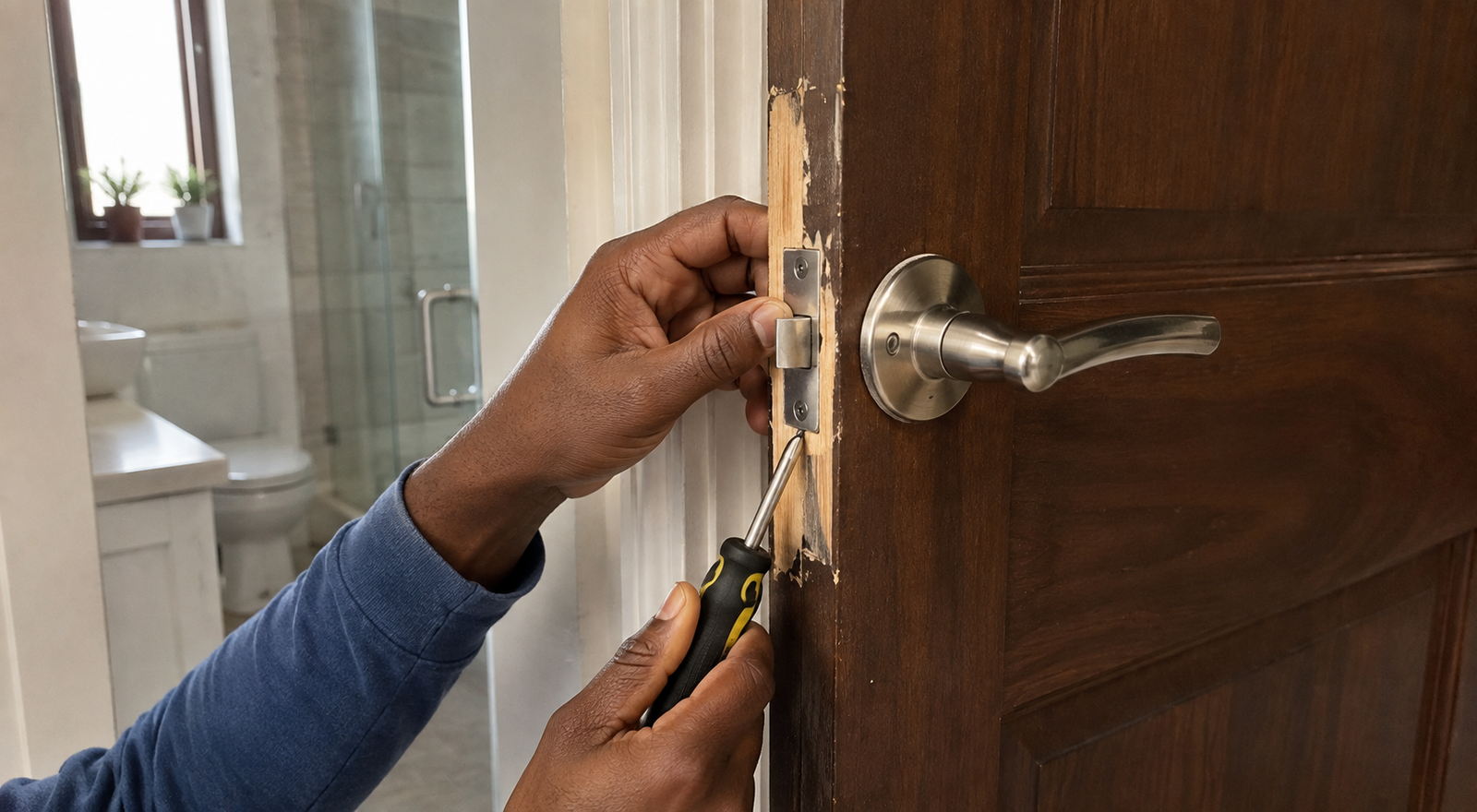
You push the bathroom door shut, walk away, and thirty seconds later it swings wide open like it has somewhere else to be. Or maybe it’s the opposite problem — you prop it open and it slowly creeps shut on its own, which is awkward for everyone involved when someone’s in there. Either way, it’s annoying, and it’s usually not the door’s fault.
Most people assume a misbehaving door means the whole thing needs replacing. Not true. Nine times out of ten, this is a five-minute fix with tools you already own. I’ve fixed this exact issue in three different houses, and the cause was different every single time. So let’s go through the real culprits, one by one, until we find yours.
Loose Hinges Are the Number One Cause of a Bathroom Door That Won’t Stay Shut
Before you do anything else, grab a screwdriver and check your hinges. This is the first thing I check every time, because it’s the fix nine times out of ten.
Over the years, screws work themselves loose from the vibration of the door opening and closing thousands of times. Once a screw loosens even slightly, the whole hinge shifts, and that tiny shift changes the angle the door hangs at. A door that’s even a couple degrees off-plumb will swing on its own, thanks to gravity.
Open the door and look at each hinge. Give every screw a quarter turn with a screwdriver, even the ones that look tight. If a screw spins freely and won’t bite, the hole has stripped out. Don’t panic — this is fixable. Pull the screw, jam a few wooden golf tees or wooden matchsticks coated in wood glue into the hole, snap them off flush, let it dry for an hour, and reinstall the screw. It’ll bite into fresh wood like new.
If you’ve got three hinges and one of them is noticeably looser than the other two, that’s almost always your problem hinge. Fix that one first before touching anything else.
Check If Your House Has Settled (Yes, This Actually Affects Doors)
Houses move. Foundations shift, framing dries out, floors sag a little over the decades. None of this is usually a big deal structurally, but it wreaks havoc on doors because a door that used to hang perfectly plumb is now hanging at a slight angle.
Grab a level and hold it against the door jamb, both the hinge side and the latch side. If the bubble isn’t centered, your frame has shifted out of true. This is incredibly common in older homes, especially anything built before the 1980s on a crawlspace foundation.
You don’t need to rebuild your door frame to fix this. Shimming the hinges is the easy workaround. Cut a thin cardboard shim (a cereal box works fine) to match the size of the hinge plate, slide it behind the hinge before you reinstall the screws, and that tiny adjustment can bring the door back into balance. Sometimes it takes shimming the top hinge, sometimes the bottom — you may need to experiment a little.
I had a hundred-year-old farmhouse where every single door in the upstairs hallway needed a hinge shim on one side or another. The house had settled that much over a century. It’s not glamorous work, but it solves the problem for good.
Humidity and Swelling Wood Change How the Door Fits the Frame
Bathrooms are the most humid room in the house, which means bathroom doors deal with more moisture swings than any other door you own. Wood absorbs that moisture and swells, and a swollen door doesn’t sit in its frame the way it used to.
If your door is swinging open on its own in the winter but sticking or staying put in the summer, humidity is your answer. The wood is physically changing size with the seasons.
The real fix here is sealing the door properly on all six sides, including the top and bottom edges that people always forget to paint or seal. Unsealed edges soak up moisture like a sponge. Pull the door off the hinges, sand any rough or swollen spots, and apply a couple coats of polyurethane or exterior-grade paint to every surface, not just the front and back panels.
Running a bathroom exhaust fan during and after every shower also cuts down on how much moisture the door is exposed to in the first place. If you don’t have one, or yours is weak and just makes noise without actually moving air, that’s genuinely worth upgrading. Less humidity in the room means less wood movement, period.
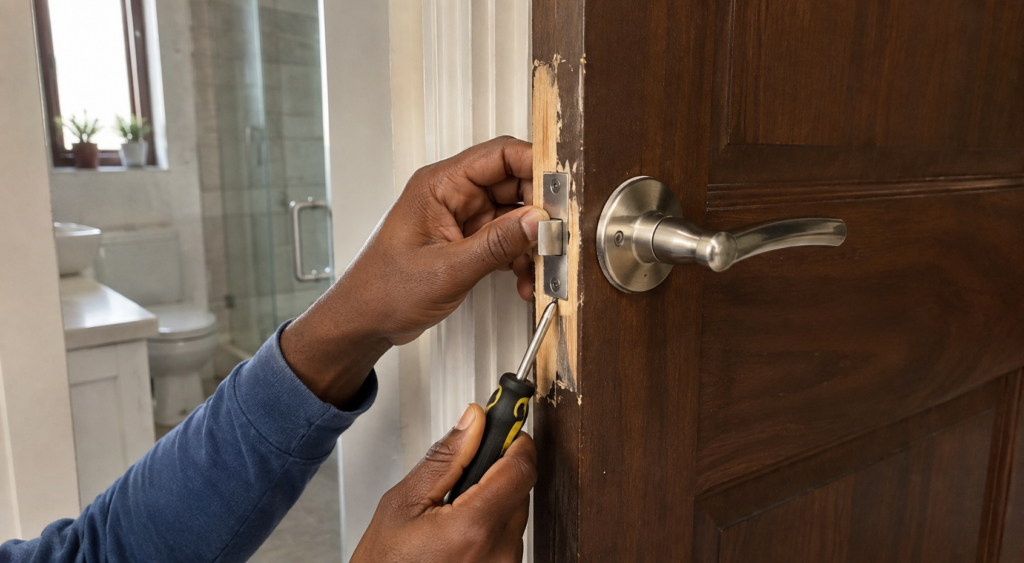
The Latch and Strike Plate Might Be the Actual Problem
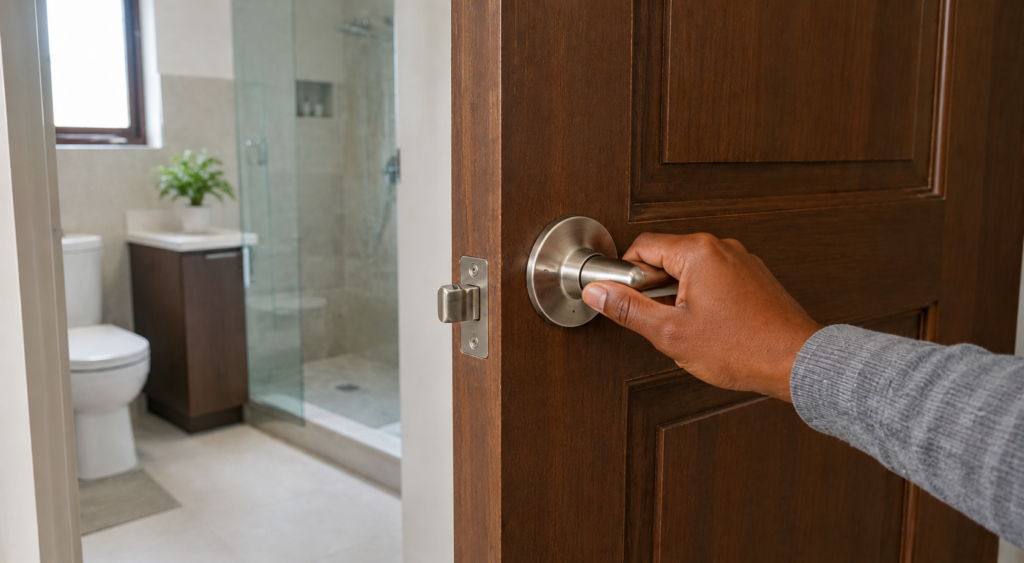
Sometimes the door swings because the latch never fully engages with the strike plate. If the latch bolt isn’t lining up with the hole in the strike plate, the door can look closed while it’s really just resting there, ready to swing open at the slightest breeze from an open window.
Close the door slowly and watch exactly where the latch bolt meets the plate. If it’s hitting above, below, or to the side of the hole instead of sliding cleanly in, you’ve found your issue.
A small misalignment can be fixed by filing the strike plate hole slightly bigger with a metal file. A bigger misalignment usually means the strike plate itself needs to move up, down, or sideways by a few millimeters. Unscrew it, use wood filler in the old screw holes, let it dry, then reposition and screw it back in at the corrected spot. Test the door a dozen times before you call it done, because you want to catch any remaining misalignment now, not after you’ve put the tools away.
Consider Adding a Door Stop or Spring Hinge for a Permanent Fix
If you’ve checked the hinges, the level, the humidity, and the latch, and the door is still misbehaving, it might just need some outside help holding it in place.
A floor-mounted door stop with a rubber bumper is the simplest option and costs about five dollars. It physically blocks the door from swinging past a certain point, which works great if your issue is a door that swings shut when you want it open.
If your issue is the reverse — a door that won’t stay closed — a spring-loaded hinge is the better call. Swap out one of your existing hinges for a spring hinge, and it’ll gently pull the door shut every time, no more swinging wide open on its own. These run about fifteen to twenty dollars for a decent one and install exactly like a regular hinge.
I’ll be honest: I think decorative door knockers marketed as “door holders” are a total waste of money, even if they look charming in a farmhouse-style catalog. Spend the five bucks on the rubber stop instead. It’ll actually do the job.
Quick Side Note: Check the Floor and Rug Situation Too
This one gets overlooked constantly. Sometimes the door isn’t swinging because of the door at all — it’s the flooring. If you’ve recently installed new flooring, a rug, or even just moved a bath mat, the door might be catching on it and getting pushed in whatever direction the friction sends it. Run your hand along the bottom edge of the door and feel for drag marks or scuffing. If you find them, trimming the bottom of the door down by an eighth of an inch with a hand plane solves it fast.
Real Talk: What’s Not Worth the Effort (And What Can Go Wrong)
Here’s where I get honest with you about the stuff that sounds like a good idea but usually isn’t.
Skip the WD-40 on squeaky hinges as a permanent fix. It quiets things down for about a week, then attracts dust and grime that makes the hinge gunkier than before. Use actual white lithium grease or a dry PTFE lubricant instead. It costs the same amount at the hardware store and actually lasts.
Don’t try to fix a badly warped door by forcing it into the frame with extra-strong hinges or by cranking the latch tighter. A warped door needs to be replaced or professionally re-milled. Fighting a warp with brute force just strains the frame and eventually cracks the wood around the hinge screws, which turns a cheap fix into an expensive one.
Be careful with the golf tee and wood glue trick on stripped screw holes if the wood around the hinge is already splitting. Jamming more material into cracked wood can make the crack worse. If you see actual splitting, not just a stripped hole, it’s time to consider a new section of jamb, not a patch job.
And one more thing: if your bathroom door swings open constantly and you live with roommates or family, don’t just live with it out of laziness. I get it, it feels like a small annoyance you can just deal with. But an unlatched bathroom door is a privacy issue waiting to become an embarrassing moment. Fix it this weekend. It genuinely takes less time than a load of laundry.
Final Thoughts
A misbehaving bathroom door is almost never a “replace the whole door” problem. It’s a hinge, a level, a strike plate, or the weather messing with your wood. Work through the list in order — hinges first, then level, then humidity, then latch — and you’ll land on the answer without wasting a whole Saturday on it.
Has your bathroom door been driving you nuts too? Drop a comment below and tell me which fix finally worked for you. I read every one, and I might just steal your solution for the next house I fix up.